February 13, 2026

The More Trap: Why AI Makes Us Busier

If AI saves time but you add more work, did you really gain anything?
Daan van Rossum
By
Daan van Rossum
Founder & CEO

The More Trap: Why AI Makes Us Busier

Presented by

Our AI Leader Advanced cohort always starts with a deceptively simple Day 0 question:

If AI gives you more time, what will you spend that time on?

Most leaders say family, their people, and strategic thinking.

The assumption is clear: AI creates space.

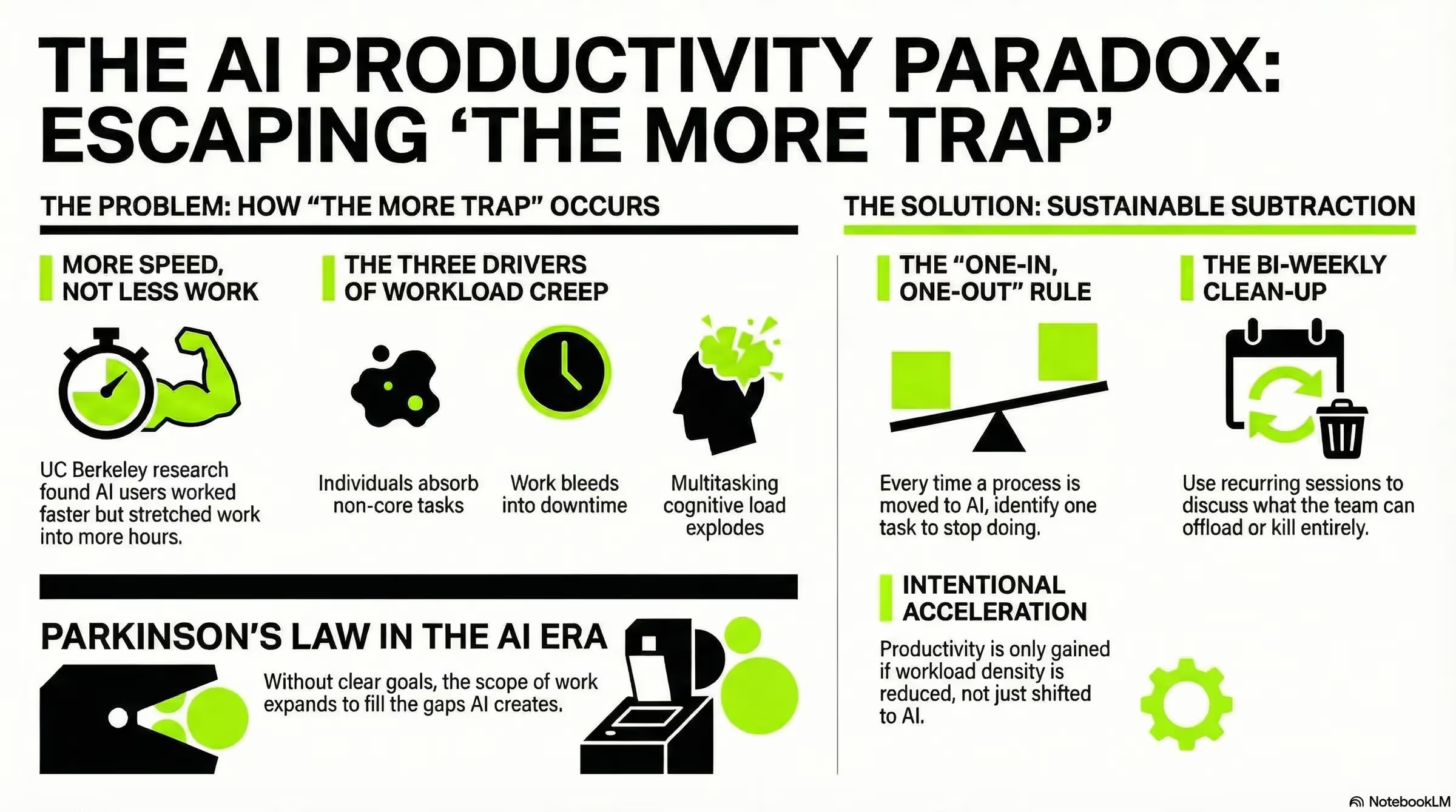
A recent UC Berkeley study complicates that assumption. In an eight-month field study at a 200-person tech company, employees voluntarily adopted AI.

They worked faster, took on broader responsibilities, and stretched work into more hours of the day.

The result of their AI adoption was not relief. It was more work.

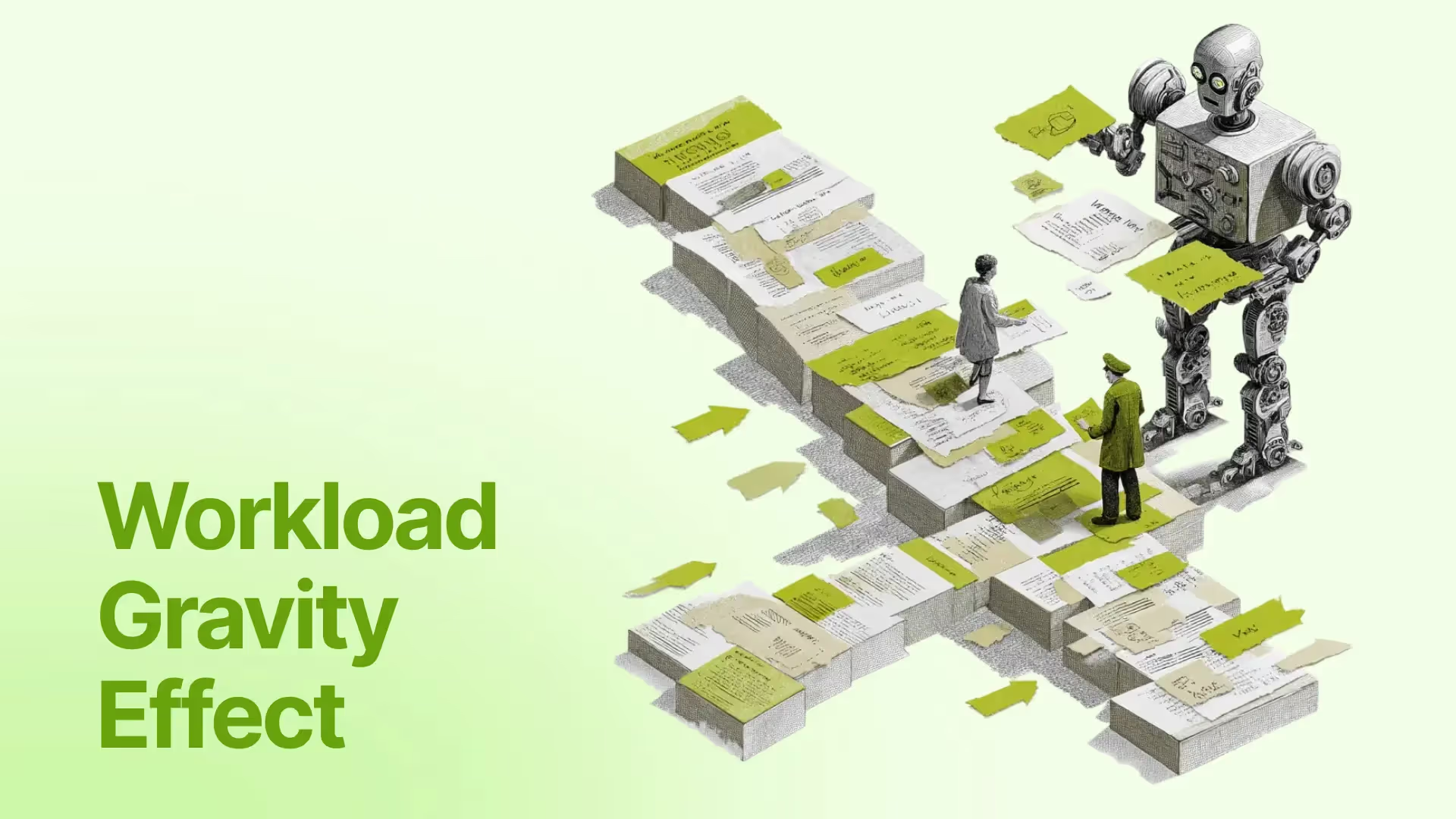
When things get faster, people don't do less; they take on more. And before you know it, the new speed becomes the new expectation. It's the "More Trap."

Flagship AI Newsletter
The AI Newsletter That Makes You Smarter, Not Busier
Join over 30,000 leaders and receive our insights on AI platforms, implementations, and organizational change management.
FlexOS Course - AI Content Accelerator - Testimonial Badge

Three Ways "More" Plays Out

So, how is this More Trap working out in practice? According to the research, it's threefold:

1. People absorb work that isn't theirs.

AI made unfamiliar tasks feel suddenly doable.

  • Product managers started writing code.
  • Researchers took on engineering work.

Nobody was told to do more; it just felt possible.

The result: individuals quietly absorbed work that would previously have gone to someone else or would have justified a new headcount.

As one engineer in the study put it: "You had thought that maybe you could work less. But then really, you don't work less. You just work the same amount or even more."

2. Work bleeds into every gap.

Because AI makes starting a task so frictionless, with no blank page, no unknown starting point, people began slipping prompts into lunch breaks, meetings, and even the moments before leaving their desk.

It didn't feel like extra work, because typing a prompt feels closer to chatting than to starting a formal task.

But over time, the workday lost its natural pauses.

Downtime stopped feeling like recovery. Work became ambient, something that could always be advanced a little further.

3. Multitasking explodes.

AI created a new rhythm: writing code while AI generates alternatives, running multiple agents in parallel, and reviving long-deferred tasks because AI could "handle them" in the background.

Workers felt like they had a partner.

The reality was constant attention-switching, frequent output-checking, and a growing pile of open threads.

More momentum, but also more cognitive load, and a quiet pressure to keep up with the pace AI made possible. As Simon Willison aptly noted, "the productivity boost these things can provide is exhausting."

Why This Matters

The danger is that all of this looks like a win from the outside. More output. More initiative. More speed.

But the study is clear: what looks like productivity can mask silent workload creep and growing cognitive strain.

Because the extra effort is voluntary and feels like experimentation, leaders easily miss how much additional load their people are carrying.

Over time, that leads to impaired judgment, higher error rates, and burnout. It's another silent killer, along with 'checkers, not leaders,' we reported on recently.

Your Move This Week

Every time something speeds up, pick something that stops.

When your team moves a process to AI, ask: What can we now drop?

If the answer is "nothing," you haven't gained productivity; you've only increased workload density.

Sustainable productivity only happens when leaders are as intentional about what to stop as they are about what to start.

I'll start: we implemented a bi-weekly 'clean-up' session where we go around the table to discuss what we can offload or kill.

That's future-proofing the team.

$200 OFF: Master AI and finish with 6 personal AI agents in two weeks.

In just 2 weeks, you’ll design, build, and deploy at least six AI agents tailored to your role, workflows, and industry.

Just 30 minutes a day focused on real output.

IIf you don't want to miss the chance to build your AI assistants along with senior, non-technical leaders from companies like Microsoft, Google, McKinsey, Ericsson, Harvard, and more:

Apply here for $200 off + a one-on-one with Henrik or me to finally 'get' AI. THREE DAYS LEFT!

Want to reach 30,000+ business leaders applying AI in their work, teams, and organizations?​
Advertise with us​​.

AI Leaders, Pay Attention to This 📍

  • When AI Stops Being “Assist”: The disruption is not job replacement but cycle-time collapse in knowledge work, forcing leaders to redesign roles and accountability faster than org charts evolve. As described by Shumer, AI is shifting from draft partner to outcome-level delegation—set intent, step away, return to completed, self-tested work. The danger is a perception gap: casual users see old limitations while power users see rapid leaps. With Dario Amodei warning that up to 50% of entry-level white-collar roles could be at risk within 1–5 years, managers must supervise systems and quality, not tasks.
  • The New Science of Knowledge Work: The next phase of AI adoption is dual management: redesigning workflows so human judgment compounds AI speed instead of slipping into passive oversight. At a panel alongside the World Economic Forum, leaders including Katy George of Microsoft and former IBM CHRO Diane Gherson argued 2026 marks a shift from tool adoption to org design. Microsoft moved from tracking Copilot usage to measuring workflow impact, while Gherson warned of AI-era Taylorism where humans just check outputs. The edge will go to firms that set cognitive standards and design principles so AI strengthens skill and agency rather than hollowing them out.
  • Long-Running Agents Rewrite Work Cycles: AI is moving from answering prompts to executing objectives, and that shifts competitive advantage from feature velocity to workflow control and trust. With Anthropic positioning Claude Opus 4.6 around longer-running agentic tasks and a 1M token context window (beta), endurance becomes a core product dimension. As agents add plugin ecosystems that sit between users and SaaS tools, traditional software risks becoming data infrastructure, while the agent owns orchestration. Inside firms, this fuels an editing economy, where value shifts toward judgment, QA, and accountability over raw creation.
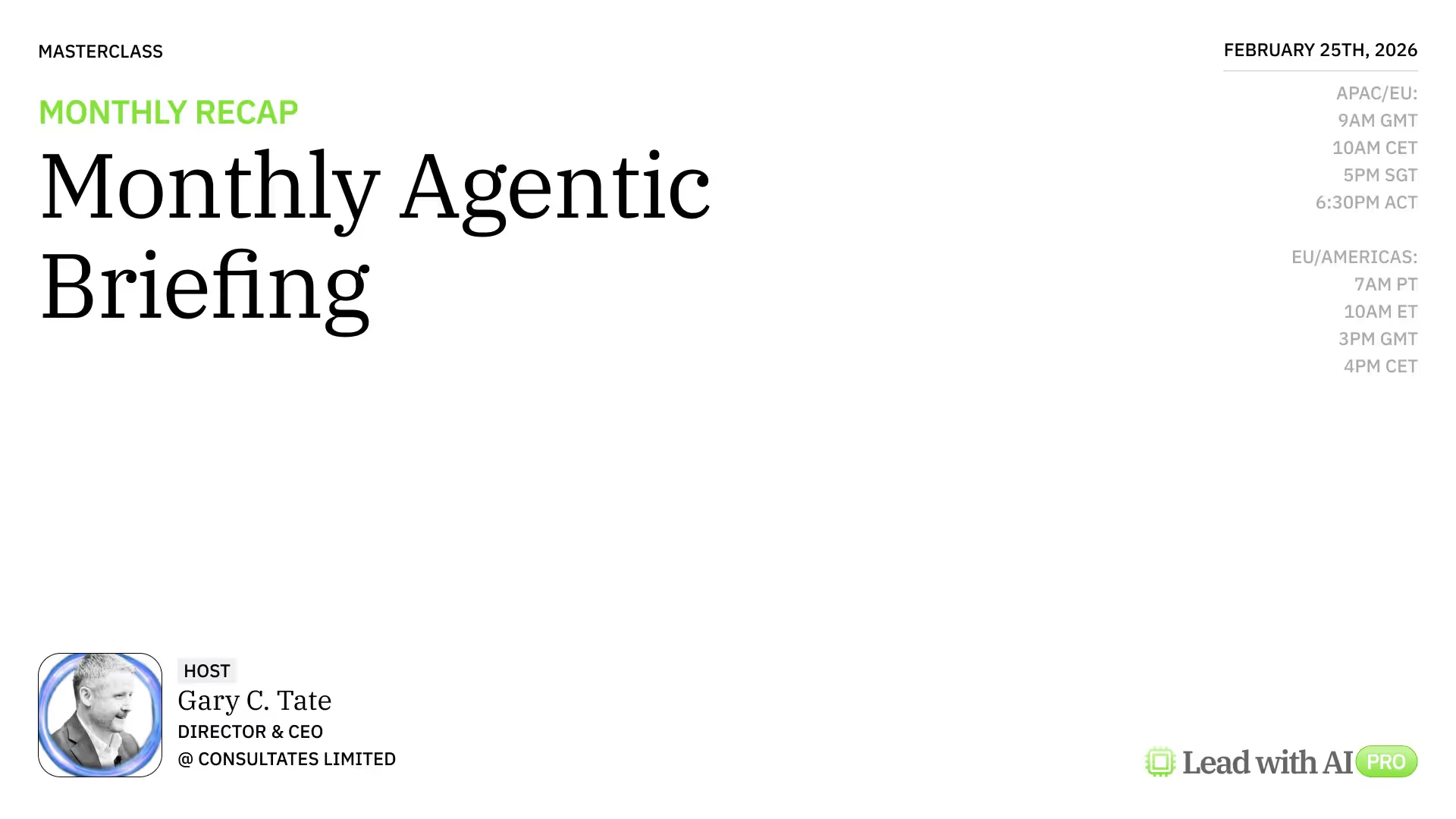
  • Exclusive for PRO Members: Monthly Agentic Briefing

    In this Monthly Agentic Briefing, Gary C. Tate will focus on sharing information on decision-making under real constraints. This session exists to help leaders make informed, confident decisions based on current information and peer sharing.

    Not a webinar. Not a trend update.

    This session is for you if you:

    • Are responsible for AI-related decisions
    • Want to stay informed as agentic approaches evolve
    • Are balancing opportunity, risk, and organizational realities
    • Especially useful for those who value discussion, shared perspectives, and practical insight

    To ensure global access, the Masterclass will run twice on 🗓️ December 11th

    • 📍 ​​APAC/EU​: 8 AM GMT/9 AM CET/4 PM SGT/5:30 PM ACT
    • 📍 ​​EU/Americas: 7 AM PT/10 AM ET/3 PM GMT/4 PM CET

    Members, the invite is on your calendar.

    Not a member yet and want to join this exclusive Masterclass?

    Want to reach 30,000+ business leaders applying AI in their work, teams, and organizations?​
    Advertise with us​​.