
January 30, 2026

Delegation Engineering: Why Agentic AI Fails Without Managers

Agentic AI works when leaders design clear delegation, fast review, and judgment, not when they chase better tools.
Daan van Rossum
By
Daan van Rossum
Founder & CEO

Delegation Engineering: Why Agentic AI Fails Without Managers

Presented by

Ethan Mollick’s recent work makes one thing explicit: Once AI becomes agentic, the limiting factor is no longer the model.It is how humans delegate, supervise, and evaluate work.

In other words, AI success has quietly become a management problem.

In a recent experiment at the University of Pennsylvania, Mollick asked executive MBA students to build startups from scratch in four days. They used Claude Code and general AI models for research, positioning, pitching, and financial modeling. Most had never written code.

The results were striking. Teams shipped working prototypes, solid market analysis, and believable business stories. Mollick estimates they got an order of magnitude further than similar students working over a full semester.

The bottleneck was not AI capability. It was coordination, judgment, and review.

That lesson matters for leaders rolling out agents today. The value of AI no longer depends on how good the model is. It depends on how well work is delegated. The real competitive advantage is delegation engineering.

Delegation Engineering is the practice of leaders making human judgment legible to machines so work can be delegated safely, reviewed quickly, and improved continuously.

Agentic Gains Come From Management, Not Speed

AI is already fast. That is no longer the advantage.

What limits results now is whether someone clearly defines what needs to be done, what “good” looks like, and when work is finished.

In Ethan’s experiment, teams ran multiple agents in parallel. Research agents. Coding agents. Writing agents. What made this work was not the tools. It was that someone decided priorities, resolved conflicts, and moved things forward without constant debate.

This is the shift leaders often miss. Agentic AI does not reduce the need for management. It raises the bar for it.

AI can generate endlessly. It cannot decide what matters. That decision still belongs to people.

Flagship AI Newsletter
The AI Newsletter That Makes You Smarter, Not Busier
Join over 30,000 leaders and receive our insights on AI platforms, implementations, and organizational change management.
FlexOS Course - AI Content Accelerator - Testimonial Badge

Delegation Is Now an Economic Decision

Ethan puts hard numbers behind this with what he calls the Equation of Agentic Work.

Three variables matter.

  • Human Baseline Time: how long the task takes a person to do themselves.
  • Probability of Success: how likely the AI is to meet the bar on a given attempt.
  • AI Process Time: how long it takes to request, wait for, and evaluate output.
Source: One Useful Thing (Ethan Mollick)

If review takes longer than doing the work yourself, delegation fails.

The GDPval study makes this real. Human experts took about seven hours to complete complex tasks. AI produced drafts in minutes. But reviewing the output still took about one hour. With GPT-5.2 winning or tying humans around 72 percent of the time, delegation only worked when review was fast and decisions were clear.

This is where many AI programs break. Teams assume iteration is free. It is not. Review time is real. Accountability is real. Someone still signs off.

Good delegation reduces review time. Bad delegation multiplies it.

Management Documents Become the Control System

Here is the practical takeaway most leaders miss.

The tools you already use to manage people are the best way to manage AI.

PRDs.Design briefs.Shot lists.Scopes of work.Five-Paragraph Orders.

These are not bureaucracy. They are translation tools. They turn intent into action.

Used as AI prompts, they dramatically improve first-pass quality and reduce back-and-forth. They also do something more important. They prevent agents from succeeding in the wrong way.

Without clear constraints, AI will happily deliver outputs that look good and create risk. Clear documentation creates lanes. It tells the agent what it can do, what it cannot do, and how success is judged.

As AI gets more powerful, this does not become optional. It becomes mandatory.

AI Can Help With Delegation, But It Cannot Own It

One important clarification.

Delegation engineering does not mean leaders must manually write every document or review every draft. AI can help draft specs. AI can ask clarifying questions. AI can critique its own work.

But AI cannot own intent.AI cannot accept risk.AI cannot decide when “good enough” is good enough.

Those decisions still sit with leaders.

Source: One Useful Thing (Ethan Mollick)

The Bottom Line

If you’re leading AI adoption:

  • CEO: This is a scaling behavior problem, not a tooling one. Results depend on how clearly work is delegated, reviewed, and decided, not which model you buy.
  • CHRO: This is organizational design, not training. The critical capability is how work is structured, ownership is defined, and judgment is exercised across the company.
  • CIO: This reduces risk by decentralizing learning. Clear delegation frameworks let teams experiment safely without turning AI adoption into an enterprise-wide failure mode.

🚨 LAST TICKET: BUILD 5 AI ASSISTANTS IN TWO WEEKS FOR NON-TECHNICAL LEADERS

Never before have we sold out so quickly as for the February 6 cohort of the new flagship ​AI Leader Advanced​ program.

If you want to:

  • Deploy 5+ AI assistants in 2 weeks (built for your real workflows)
  • Get a personalized plan that adapts to your role, goals, and industry
  • Study alongside a curated group of global senior leaders from companies including PepsiCo, Harvard, Google, and more

Then now is the time.

In just 2 weeks, you’ll design, build, and deploy at least five AI assistants tailored to your role, workflows, and industry.

No code. No theory overload.

Want to reach 30,000+ business leaders applying AI in their work, teams, and organizations?​
Advertise with us​​.

AI Leaders, Pay Attention to This 📍

  • Rakuten’s AI-nization Makes Agents Operational: Rakuten’s “AI-nization” positions agentic AI as an innovation-to-operations bridge, where scale comes from treating agents as reliable teammates, not experiments. Citing an MIT finding that 95% of GenAI pilots fail to deliver measurable impact, Rakuten links failure to FOMO-led strategy and vague targets. Its “Triple 20” model forces clarity, tying AI to 20% efficiency gains across marketing, operations, and merchant outcomes. The underlying shift is organizational, pairing central AI teams with embedded engineers and governance that makes agents safe and usable in production.
  • The Trust Muscle Transformation: Procter & Gamble shows that in high-uncertainty change, leaders win by building a trust-and-feedback operating system. Momentum came from reframing the decision from proving change to justifying inaction, recognizing an adaptive challenge where learning beats benchmarking. Rather than a fixed roadmap, P&G visualized the destination, normalized “expect chaos,” and anchored execution in shared guardrails and decision criteria, the same pattern needed to scale AI beyond pilots. Self-organizing circles and the Network Empowering Team preserved accountability without reclaiming ownership, even as AI compressed months-long budgeting into continuous forecasting.
  • Cisco Found the AI Flywheel: Cisco’s data shows AI adoption compounds when companies reward learning by doing and deliberately use managers as the distribution channel. Cisco treats AI as a managed performance capability, coaching use through meetings, 1:1s, and “show your work” reviews rather than pushing tools. One signal matters most: employees recommended for promotion use AI 50% more often, making AI competence legible and valuable. When leaders model use and talent systems reflect it, AI stops being optional and starts shaping careers.
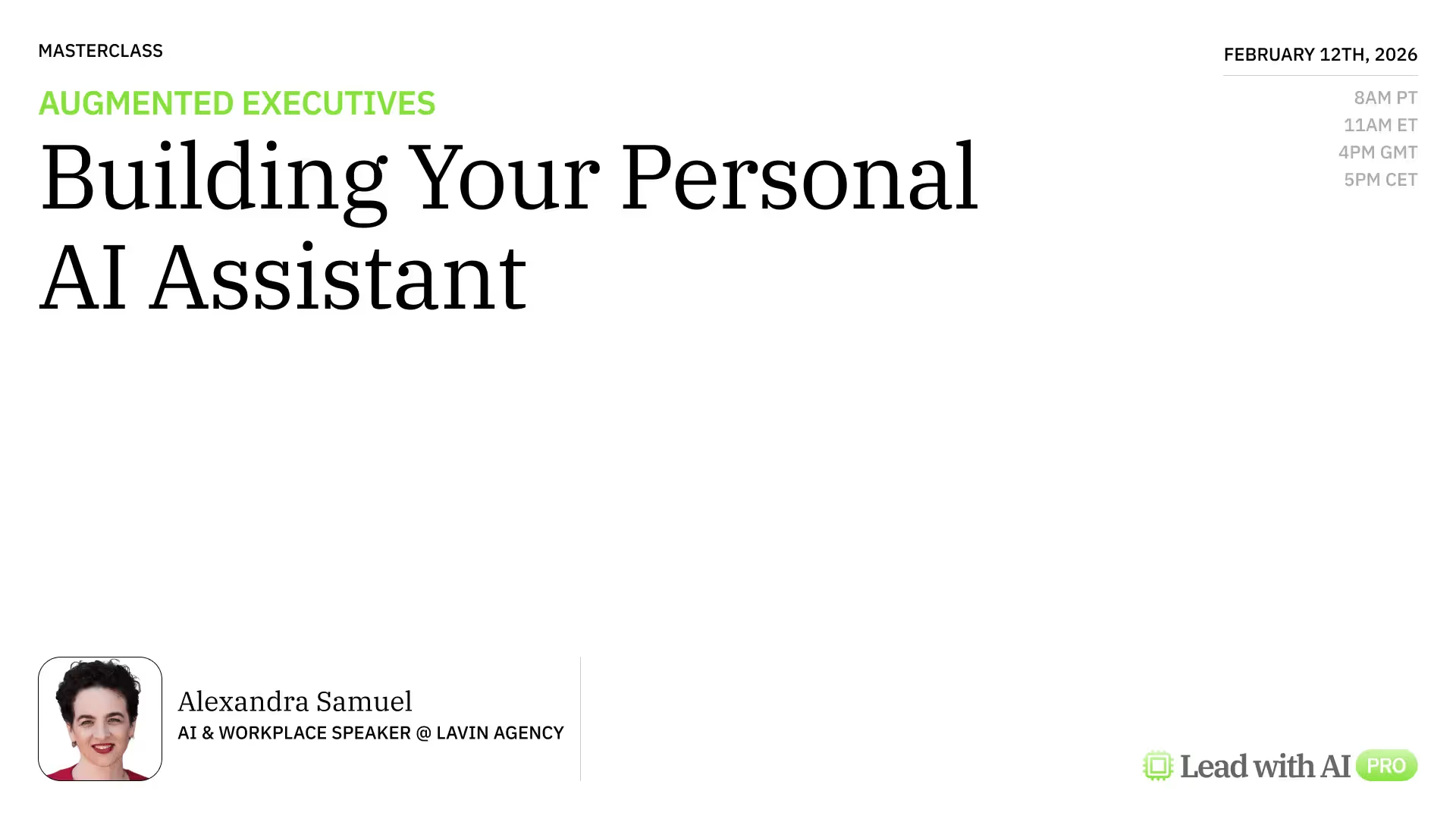
  • Exclusive for PRO Members: Building Your Personal AI Assistant

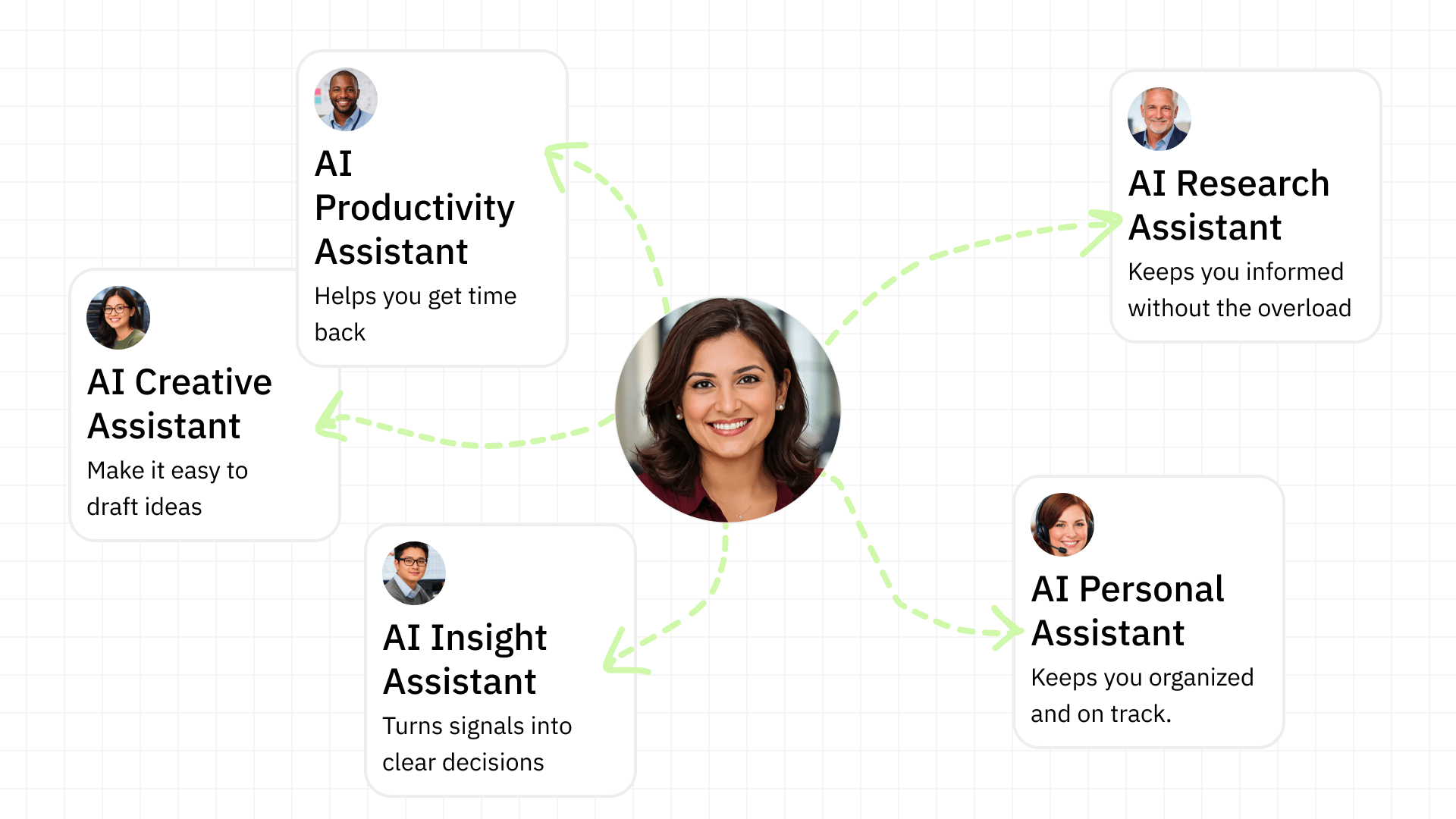
    Drawing from her latest Harvard Business Review article on Building Your AI Assistants and her signature “Team of Rivals” framework, Alexandra Samuel shares how to build not just one assistant, but a personal team of AI collaborators that balance creativity, logic, and empathy while keeping you in control.

    Together with Alexandra, we will:

    • Explore how to design AI assistants that support real work, not just better prompts
    • Understand the Team of Rivals framework and why multiple assistants matter
    • Engage in a live Q&A to apply the ideas to your own context

    You’ll walk away with:

    • A clear mental model for working with AI assistants beyond prompts
    • Practical guidance for designing assistants that reflect how you work
    • A concrete understanding of the Team of Rivals approach and when to use it
    • Language and frameworks you can apply immediately, even if your tools change

    The session takes place on 📍February 12th at 8 AM PT/11 AM ET/4 PM GMT/5 PM CET.

    Members, the invite is on your calendar.

    Not a member yet and want to join this exclusive Masterclass?

    Want to reach 30,000+ business leaders applying AI in their work, teams, and organizations?​
    Advertise with us​​.