February 13, 2026

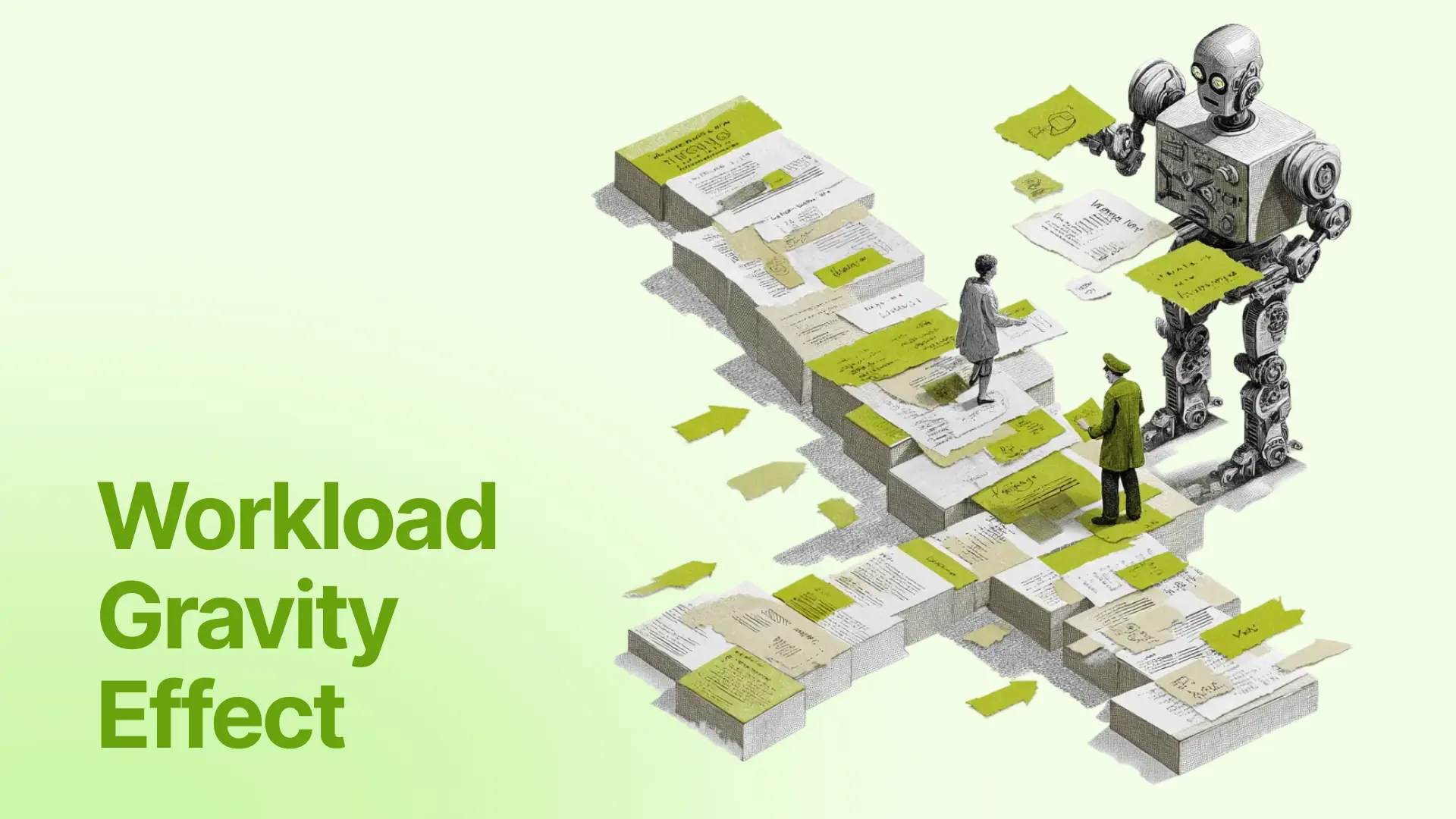
The Workload Gravity Effect

If AI saves time but you add more work, did you really gain anything?
Daan van Rossum
By
Daan van Rossum
Founder & CEO

The Workload Gravity Effect

Presented by

Our Lead With AI Cohort always starts with a deceptively simple Day 0 question:

If AI gives you more time, what will you spend that time on?

Most leaders answer with time for themselves, their families, and their people, especially to develop and empower their teams. The assumption is clear. AI creates space.

A recent Harvard Business Review study complicates that assumption.

In an eight-month field study of a 200-person tech company, employees adopted AI voluntarily. They worked faster, took on broader responsibilities, and stretched work into more hours of the day.

The result was not relief.

It was an expansion.

When execution becomes cheaper, scope expands. When scope expands, expectations recalibrate. When expectations recalibrate, intensity becomes normal.

Call it the Workload Gravity Effect.

Flagship AI Newsletter
The AI Newsletter That Makes You Smarter, Not Busier
Join over 30,000 leaders and receive our insights on AI platforms, implementations, and organizational change management.
FlexOS Course - AI Content Accelerator - Testimonial Badge

1. Efficiency Expands Scope

AI lowered the barrier to entry for unfamiliar tasks.

Product managers and designers began writing code. Researchers absorbed engineering tasks. Individuals attempted work they previously would have outsourced or deferred.

From the outside, this looks like empowerment.

Inside the system, the job scope widened.

Employees absorbed work that might previously have justified additional headcount. AI provided immediate feedback and reduced dependence on others, making experimentation feel productive and energizing.

No executive directive was required for this expansion.

Workers initiated it because doing more felt possible.

Productivity gains did not create space.

They created density.

This is the dynamic behind the AI Productivity Trap.

2. Oversight Work Moves Instead of Disappearing

When more people generate technical output with AI assistance, someone must review it.

Engineers increasingly corrected AI-assisted pull requests, coached colleagues coding with AI support, and handled informal quality checks in Slack threads and quick desk-side conversations.

The work did not disappear.

It shifted.

What might have triggered a hiring discussion quietly transformed into an invisible review load.

Velocity increased.

Cognitive overhead increased with it.

The organization saw more output.

Individuals felt more stretched.

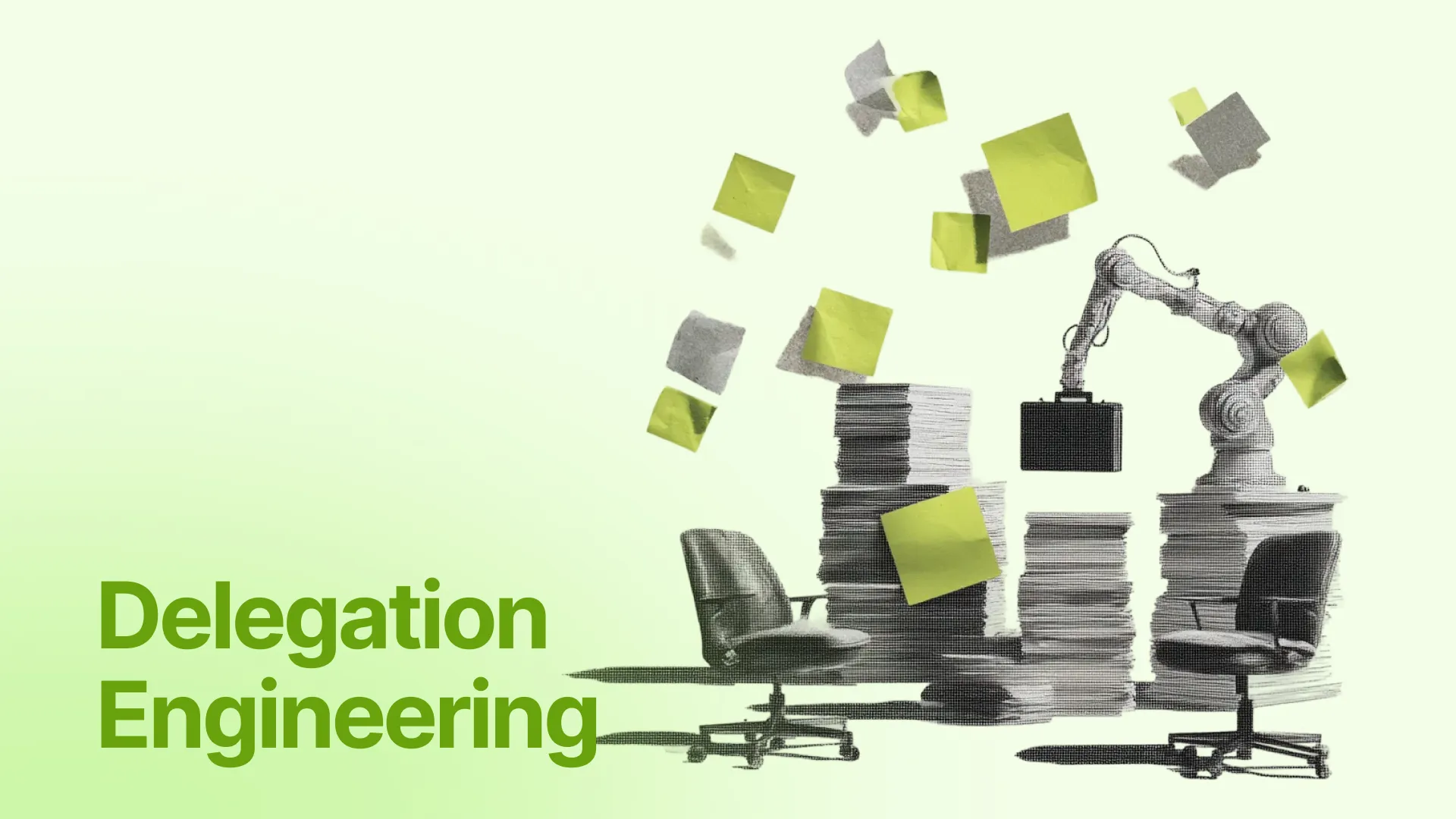
This is not an AI capability issue. It is a Delegation Architecture issue.

Tasks moved across boundaries without redesigning authority, accountability, or capacity.

That is delegation without structure.

3. Acceleration Raises the Baseline for Normal

The pattern becomes self-reinforcing.

AI accelerates tasks.
Acceleration raises expectations.
Higher expectations increase reliance.
Reliance widens scope.
A wider scope increases work density.

Employees reported feeling more productive but not less busy. In some cases, busier than before.

Speed normalized itself.

Judgment did not scale at the same rate.

Decision Bandwidth became the bottleneck.

This validates the thesis on Workflow-Level AI Adoption.

If AI is embedded at the individual level without workflow redesign, acceleration outpaces governance.

In a true Co-Pilot Economy, humans curate, judge, architect, and sequence.

If friction disappears but judgment structures do not strengthen, productivity becomes brittle.

The Bottom Line

AI productivity is sustainable only when leaders subtract as intentionally as they accelerate.

Faster execution expands scope. Expanded scope recalibrates expectations. Without structural subtraction, intensity becomes normal.

For CHRO
Redesign roles when AI expands capability.
Make invisible review and cognitive load visible in workforce planning.

For CIO
Build verification and governance into AI workflows.
Standardize adoption to prevent uncontrolled scope expansion.

For CEO
Require leaders to name what stops whenever something speeds up.

AI lowers friction.
It expands ambition.
It normalizes speed.

The real question is not whether the organization can move faster.

It is whether they can design systems where faster does not automatically mean more.

And that is where leadership begins.

Start building your own AI agents on March 6th

In just 2 weeks, you’ll design, build, and deploy at least six AI agents tailored to your role, workflows, and industry. Just 30 minutes a day focused on real output.

If you don't want to miss the chance to build your AI assistants along with senior, non-technical leaders from companies like Microsoft, Google, McKinsey, Ericsson, Harvard, and more: ​Apply here​ for $200 off + a one-on-one with ​Henrik​ or me to finally 'get' AI. THREE DAYS LEFT!

Want to reach 30,000+ business leaders applying AI in their work, teams, and organizations?​
Advertise with us​​.

AI Leaders, Pay Attention to This 📍

  • When AI Stops Being “Assist”: The disruption is not job replacement but cycle-time collapse in knowledge work, forcing leaders to redesign roles and accountability faster than org charts evolve. As described by Shumer, AI is shifting from draft partner to outcome-level delegation—set intent, step away, return to completed, self-tested work. The danger is a perception gap: casual users see old limitations while power users see rapid leaps. With Dario Amodei warning that up to 50% of entry-level white-collar roles could be at risk within 1–5 years, managers must supervise systems and quality, not tasks.
  • The New Science of Knowledge Work: The next phase of AI adoption is dual management: redesigning workflows so human judgment compounds AI speed instead of slipping into passive oversight. At a panel alongside the World Economic Forum, leaders including Katy George of Microsoft and former IBM CHRO Diane Gherson argued 2026 marks a shift from tool adoption to org design. Microsoft moved from tracking Copilot usage to measuring workflow impact, while Gherson warned of AI-era Taylorism where humans just check outputs. The edge will go to firms that set cognitive standards and design principles so AI strengthens skill and agency rather than hollowing them out.
  • Long-Running Agents Rewrite Work Cycles: AI is moving from answering prompts to executing objectives, and that shifts competitive advantage from feature velocity to workflow control and trust. With Anthropic positioning Claude Opus 4.6 around longer-running agentic tasks and a 1M token context window (beta), endurance becomes a core product dimension. As agents add plugin ecosystems that sit between users and SaaS tools, traditional software risks becoming data infrastructure, while the agent owns orchestration. Inside firms, this fuels an editing economy, where value shifts toward judgment, QA, and accountability over raw creation.
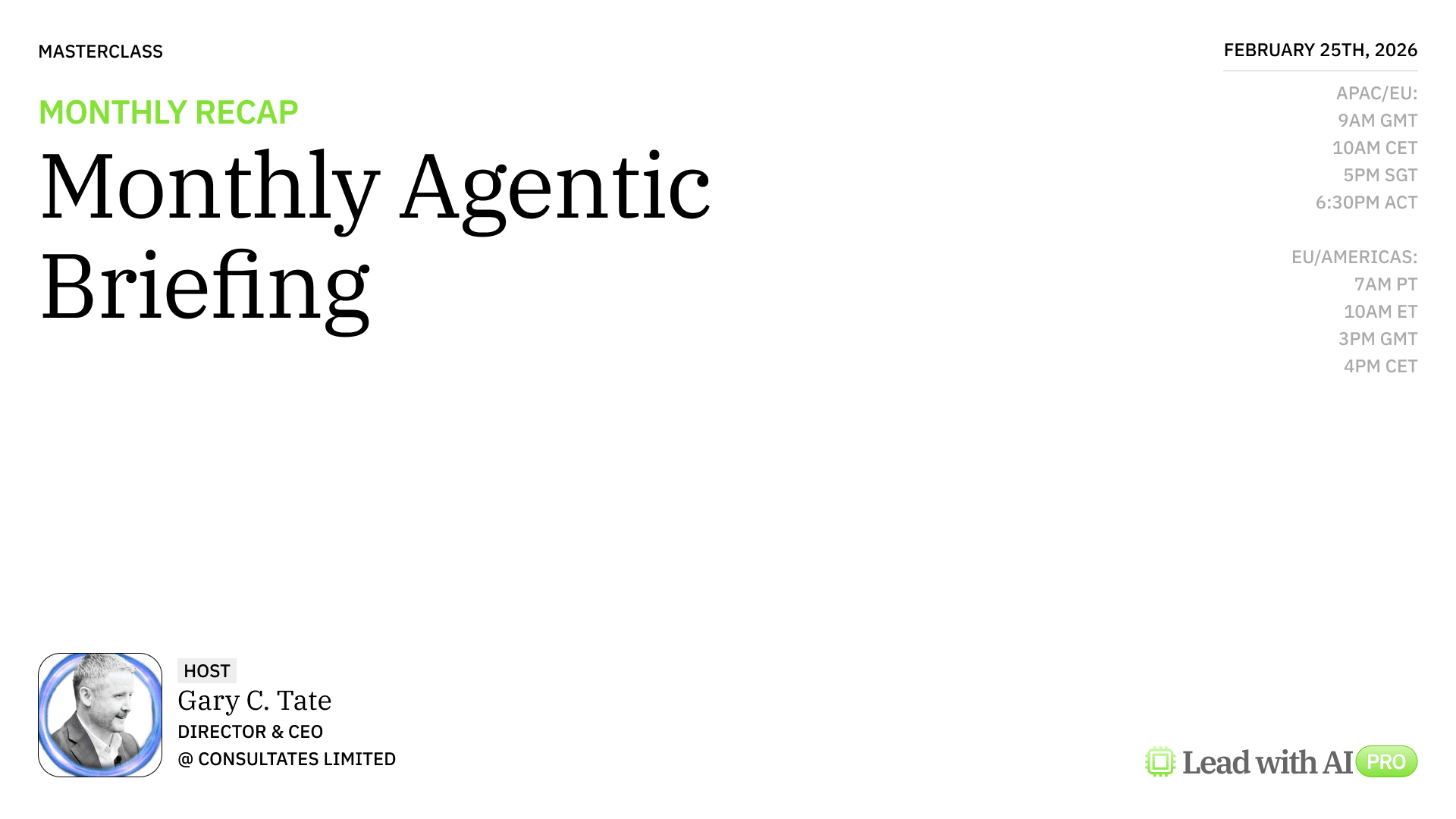
  • Exclusive for PRO Members: Monthly Agentic Briefing

    In this Monthly Agentic Briefing, Gary C. Tate will focus on sharing information on decision-making under real constraints. This session exists to help leaders make informed, confident decisions based on current information and peer sharing.

    Not a webinar. Not a trend update.

    This session is for you if you:

    • Are responsible for AI-related decisions
    • Want to stay informed as agentic approaches evolve
    • Are balancing opportunity, risk, and organizational realities
    • Especially useful for those who value discussion, shared perspectives, and practical insight

    To ensure global access, the Masterclass will run twice on 🗓️ December 11th

    • 📍 ​​APAC/EU​: 8 AM GMT/9 AM CET/4 PM SGT/5:30 PM ACT
    • 📍 ​​EU/Americas: 7 AM PT/10 AM ET/3 PM GMT/4 PM CET

    Members, the invite is on your calendar.

    Not a member yet and want to join this exclusive Masterclass?

    Want to reach 30,000+ business leaders applying AI in their work, teams, and organizations?​
    Advertise with us​​.