This step-by-step guide is exclusively available for Lead with AI PRO membership. 🚀 With Lead with AI PRO, you’ll get: ✅ Access to expert-crafted step-by-step guides ✅ AI-powered workflows to boost productivity ✅ Exclusive tools and resources for smarter work Upgrade to Lead with AI PRO and access all premium content instantly.
Am I Behind? The Updated Lead with AI Fluency Matrix
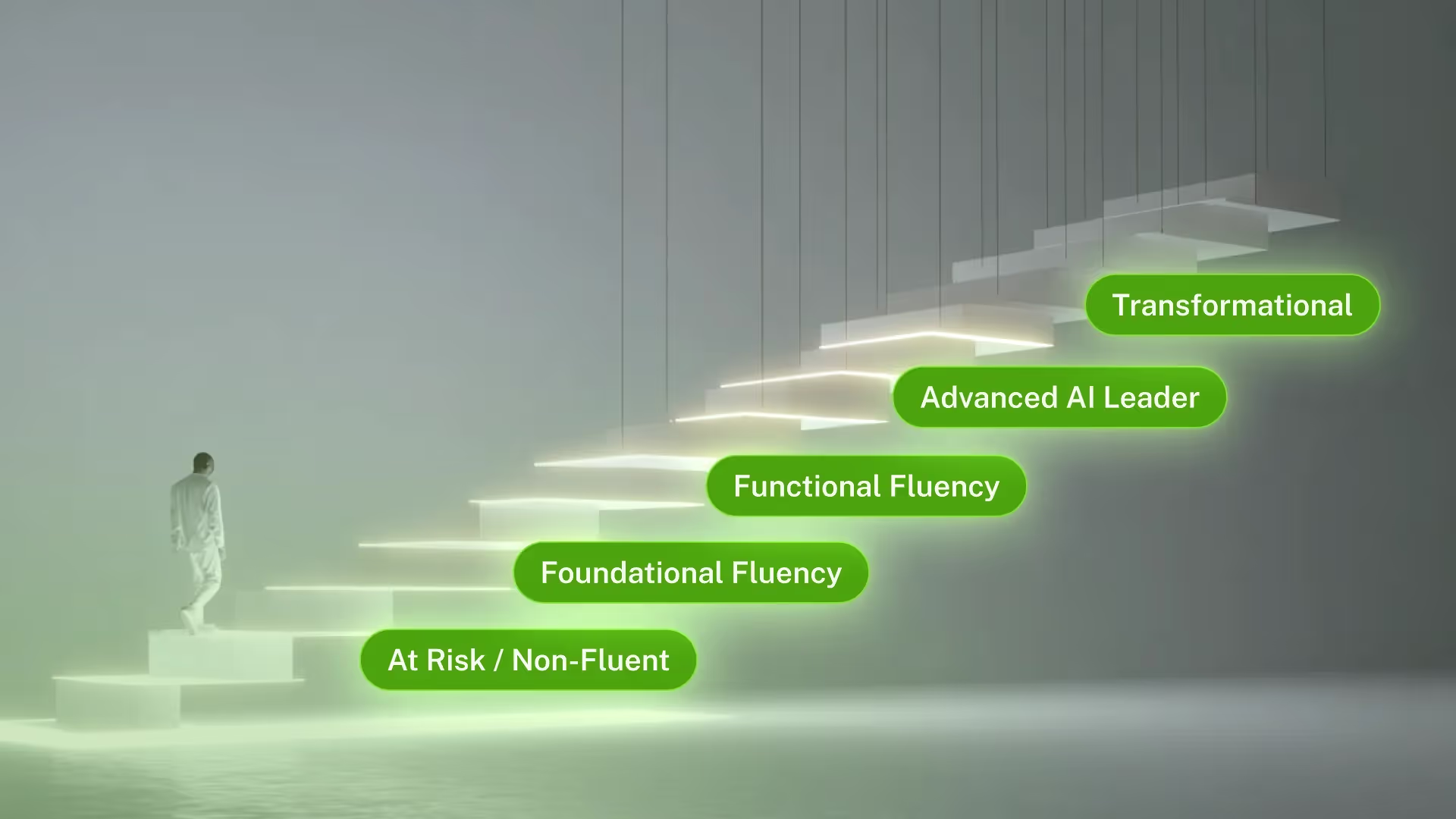
The 5 Levels of AI Fluency
By
Daan van Rossum
Founder & CEO, Lead with AI
Presented by
As I’m speaking to leaders ahead of our first cohort of AI Leader Advanced, most say some version of the same thing: “I’m using AI, but I’m not sure if I’m using it well.”
The real problem AI presents today is not the technology itself, but the often invisible variancein how people use it: safely or recklessly, thoughtfully or blindly, productively or wastefully.
After coaching over 1,000 leaders, it was time to update our AI Fluency Matrix to make those behaviors and differences visible.
And, to finally answer that nagging question: Am I behind?
Let's dive in:
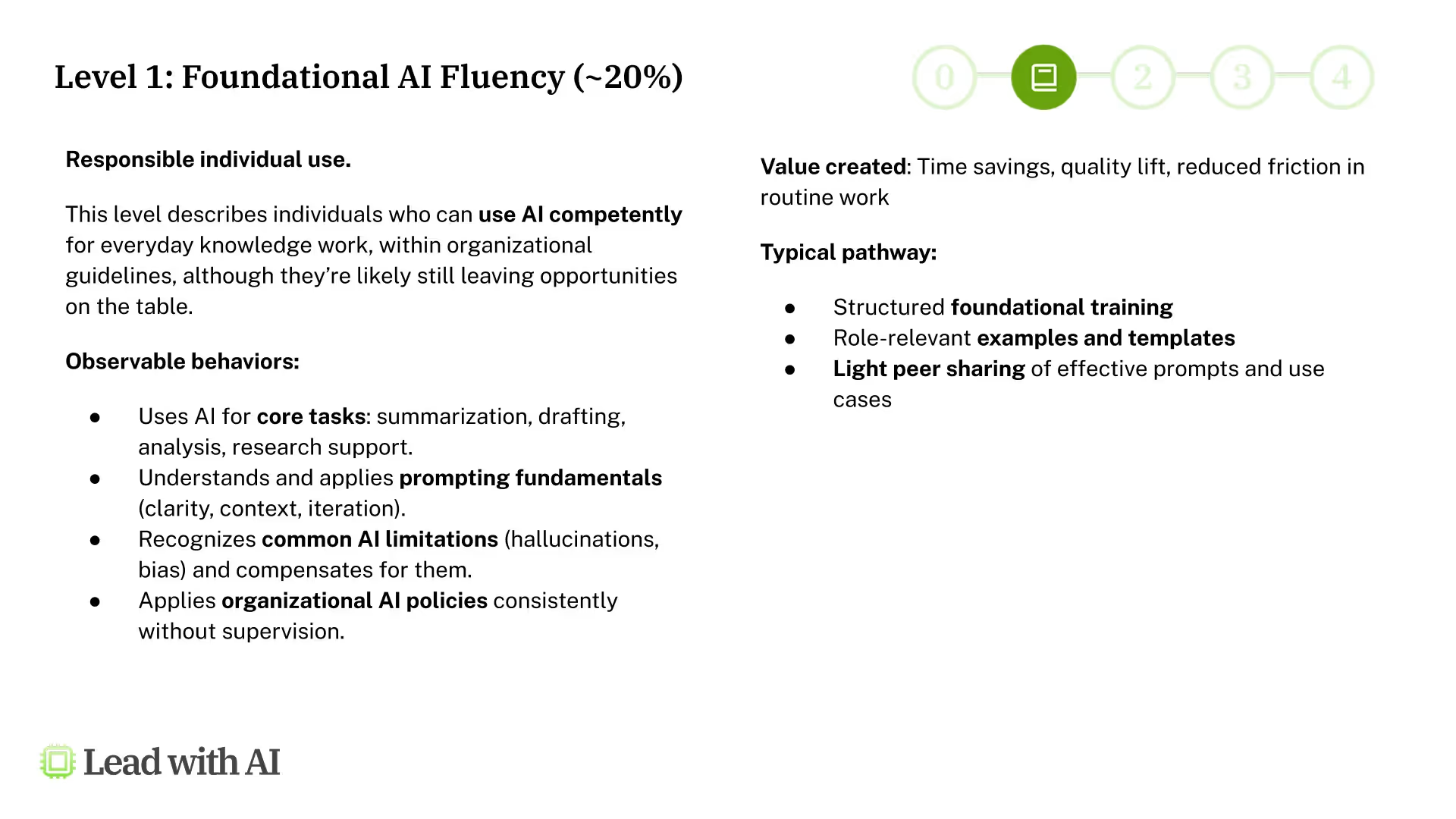
Level 1: Foundational AI Fluency: Becoming a Safe Pair of Hands
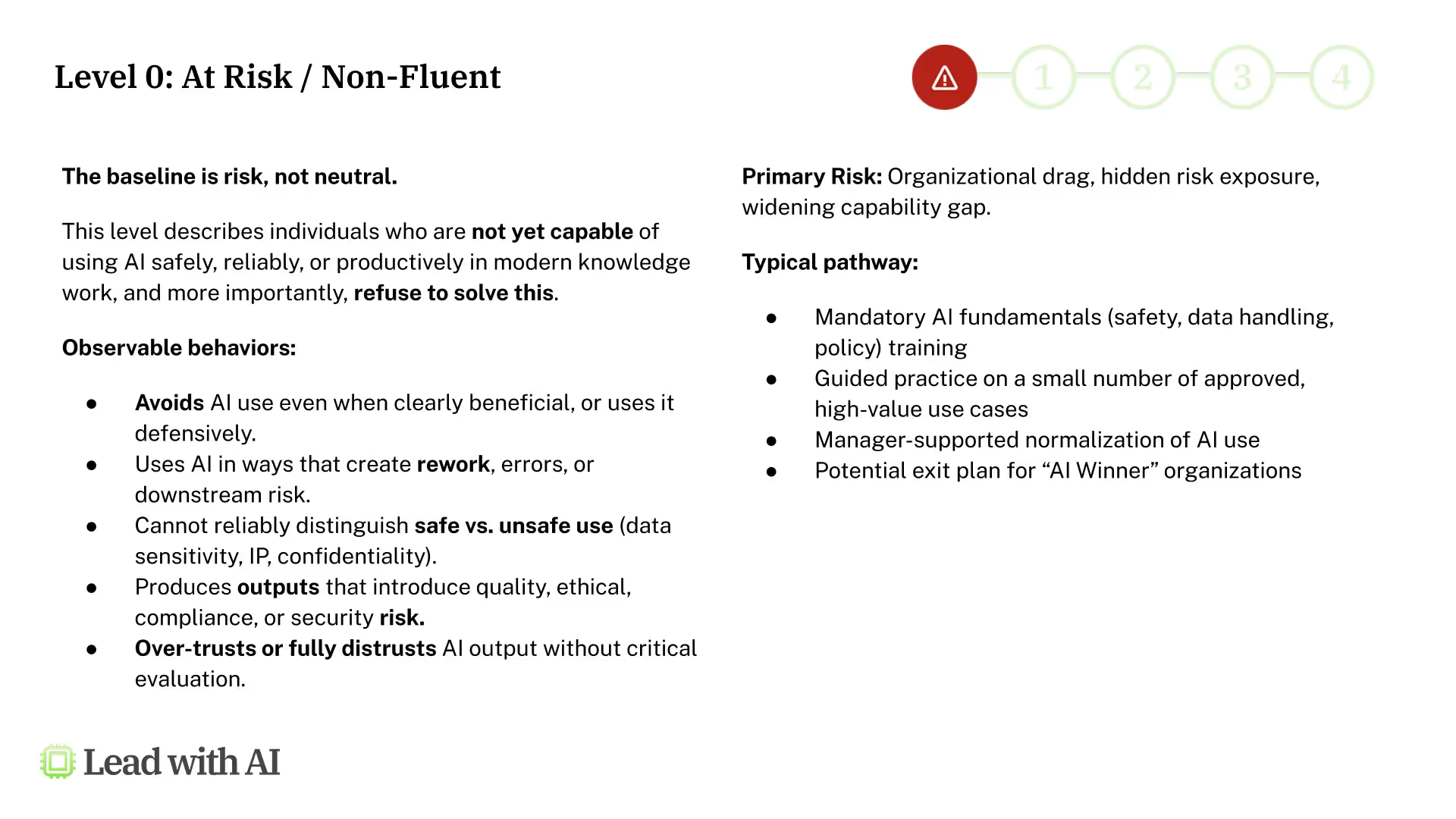
Level 1 is where value begins, and where most leaders we speak with have completed.
A Level 1 leader uses AI as a responsible individual contributor. They apply it to obvious, repeatable tasks: summarizing documents, drafting emails, and preparing first cuts of analysis.
They understand that AI can hallucinate, misinterpret, or oversimplify, and they compensate accordingly.
Crucially, they follow the rules that help them capture meaningful ROI:
They respect data boundaries (and know why)
They understand what tools are approved (and why)
They know when not to use AI
It’s how they get to immediate time savings. Output quality improves modestly but consistently. And, most importantly, risk decreases.
These leaders are, in operational terms, safe pairs of hands.
For yourself, you could ask: Am I there?
If you lead a team, ask yourself:
Would I trust everyone here to use AI unsupervised on a real business problem?
If the answer is no to either question, Level 1 is not done.
(Article continue after this break)
Flagship AI Newsletter
The AI Newsletter That Makes You Smarter, Not Busier
Join over 30,000 leaders and receive our insights on AI platforms, implementations, and organizational change management.
Level 2: Functional AI Fluency: Where Compounding Begins
The leap from Level 1 to Level 2 is subtle, but powerful.
Level 2 fluency is not about using AI occasionally but about embedding it into recurring workflows.
These leaders don’t “decide” to use AI each time, because it’s already there:
In weekly reporting
In customer analysis
In research, synthesis, and preparation
In at least five everyday workflows
Some build simple tools for themselves, from custom GPTs to lightweight automations. It’s not complicated, fancy, or business-critical, but it does become a reliable system that reduces cognitive load.
It’s also where compound productivity emerges, as a steady accumulation of time, clarity, and focus.
For leaders, Level 2 is personal leverage.You show up better prepared, you think more clearly, and you waste less energy on low-value work. This is not about productivity, but about increasing your Impact per Hour.
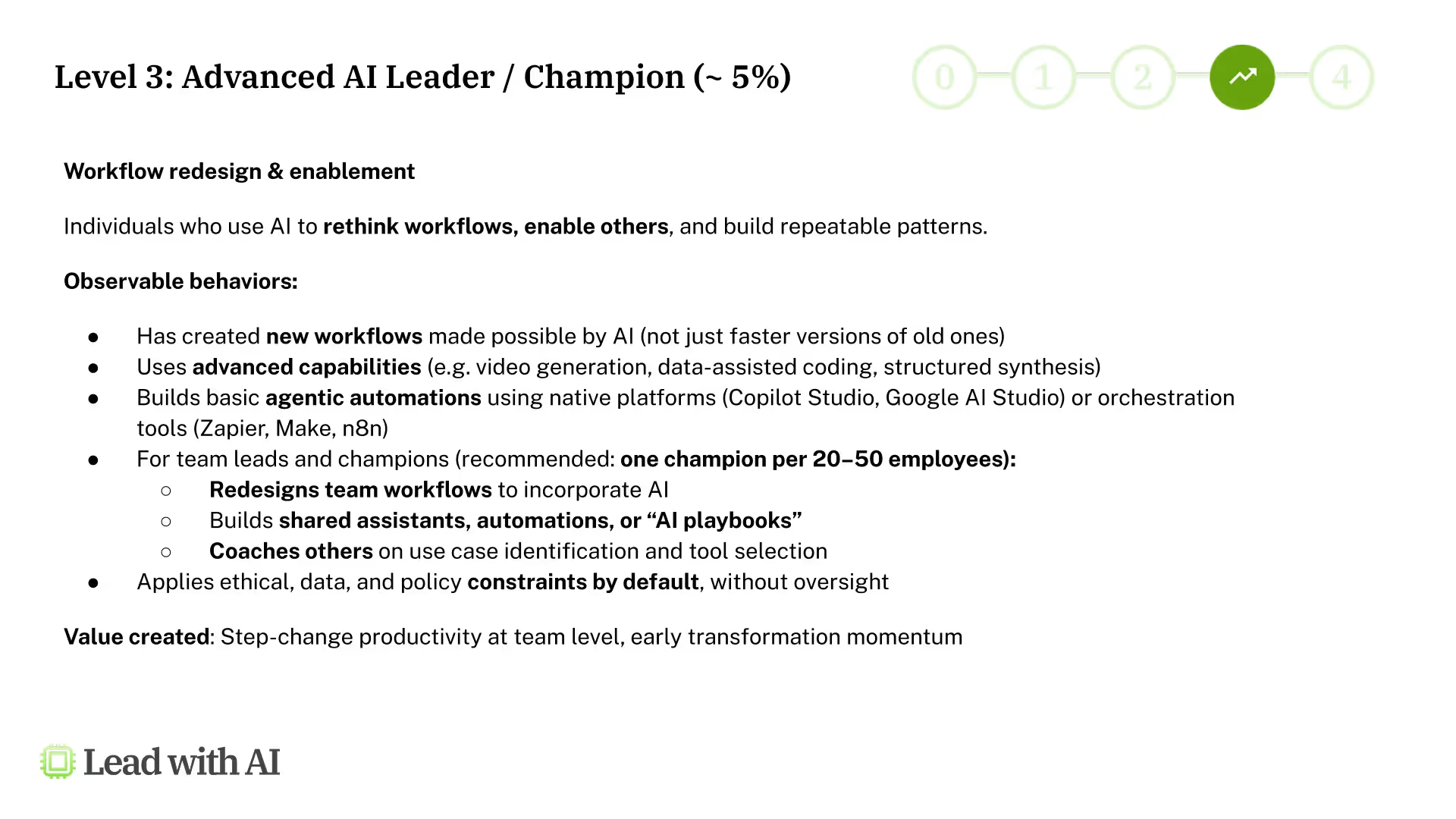
Level 3: Advanced AI Fluency: From Personal Leverage to Team Multipliers
Level 3 is where leaders shift from thinking about how AI can help them to asking, “How should work be done now that we are in the AI era?”
Level 3 leaders redesign workflows, connect tools, and create smart (agentic) automations that shift effort away from humans so they can focus on what matters. More importantly, they teach.
They coach colleagues, share patterns they observe, and normalize experimentation while still enforcing standards and guidelines.
It’s where AI stops being a personal advantage and becomes a team capability.
And to be honest, most organizations stall here because they confuse Level 3 with Level 4.
They wait for strategy decks when what they need are credible internal champions who know how work actually happens.
Because, as we’ve concluded often, transformation rarely starts in the boardroom: it starts with someone who re-architects the way we work.
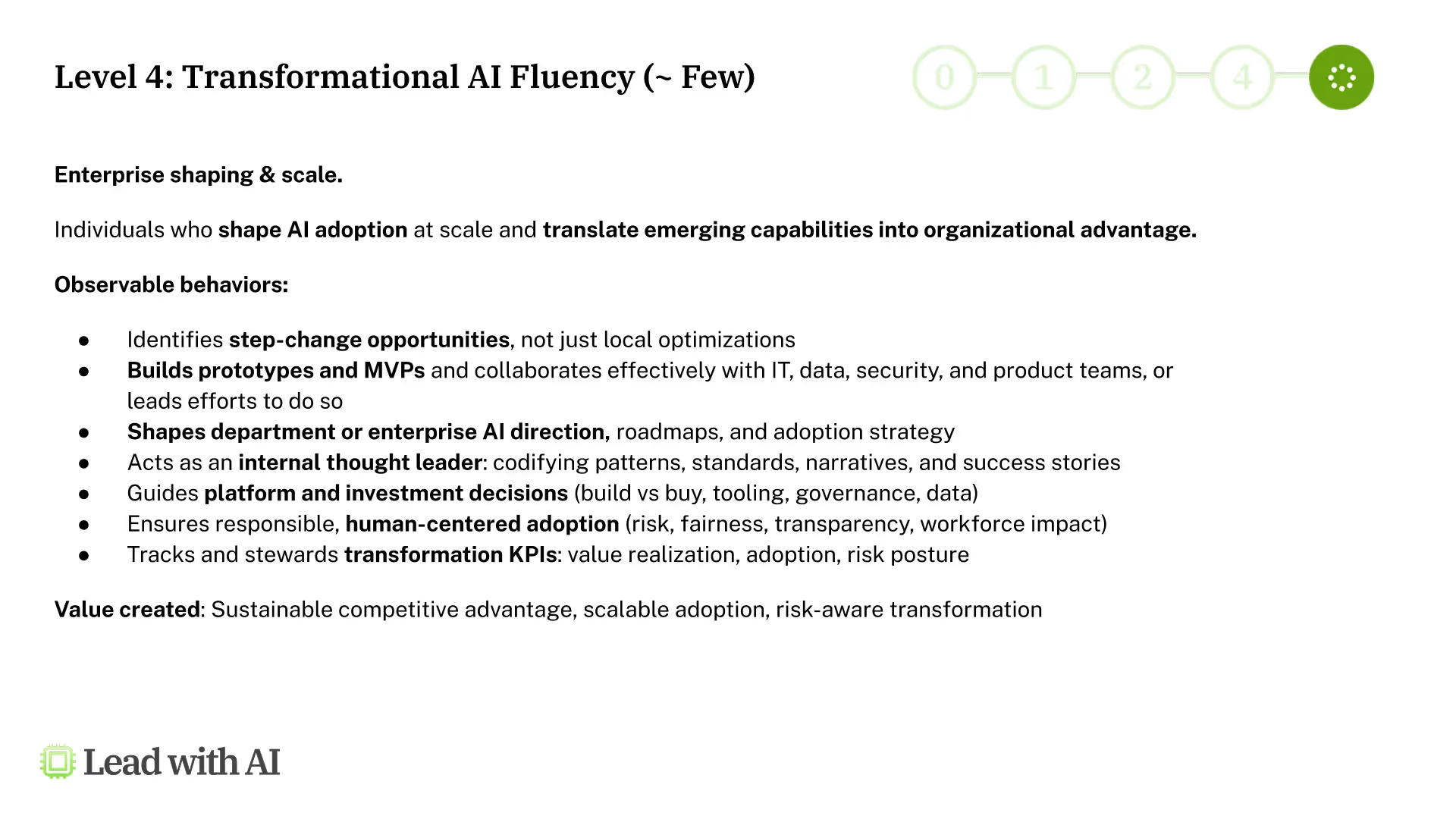
Level 4: Transformative AI Fluency: Designing the Future System
Level 4 is not for everyone, and I want to be clear that it shouldn’t be.
These are the enterprise architects: executives and senior leaders who shape the organization’s long-term AI approach to transform their business.
They scan the industry for opportunities to be Instagram, not Kodak. They make build-versus-buy calls. They define success metrics, risk thresholds, and governance models.
Their work creates sustainable advantage through scale and coherence.
It’s where few will play. But where some will be crucial.
And it comes with a critical warning: Level 4 without Levels 1–3 underneath it is just “AI theater.” You can’t compensate for an unsafe, inconsistent, or underpowered workforce with strategy and guidelines.
The Crucial Insight: AI Fluency Is a Portfolio, Not a Ladder
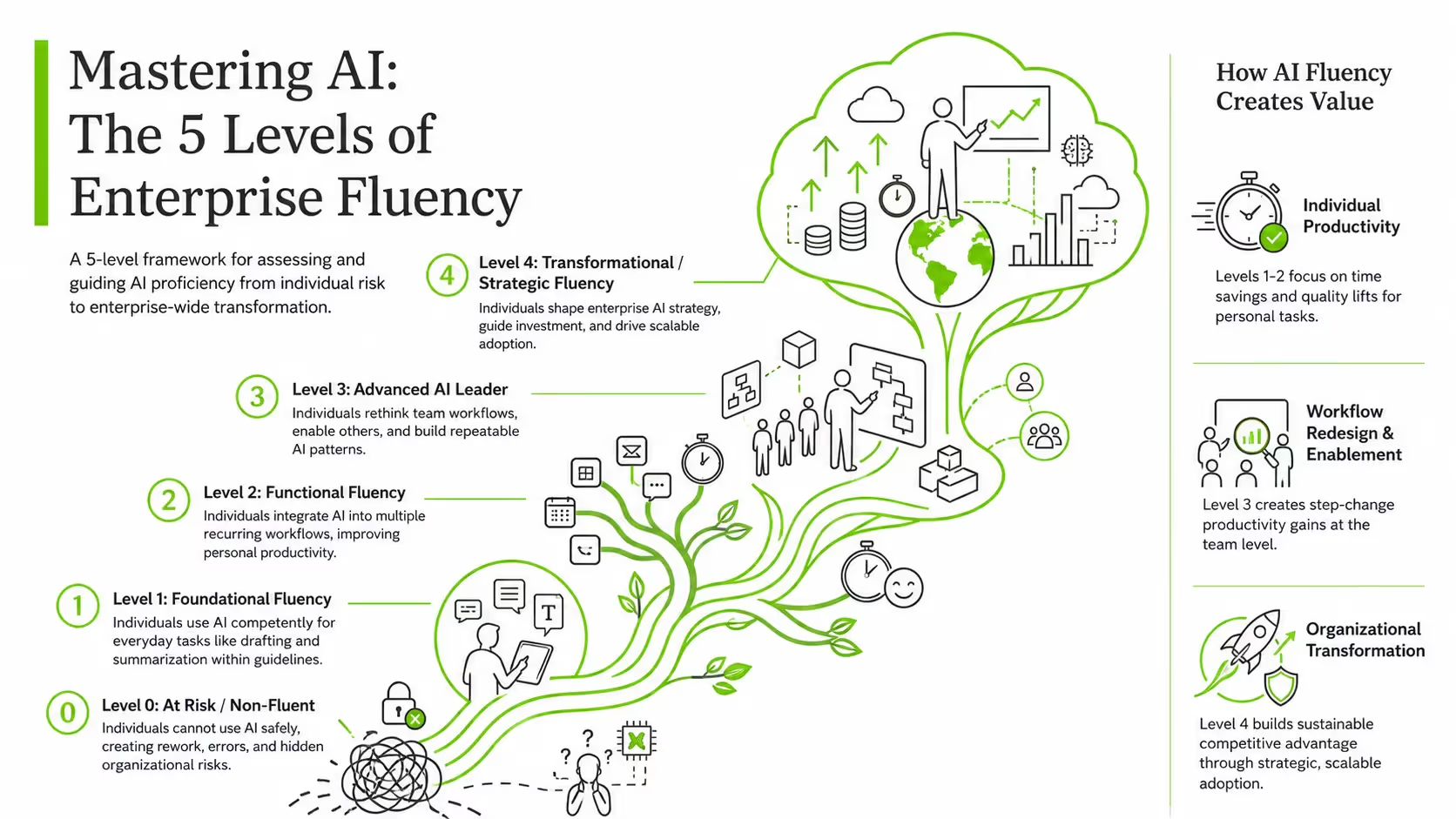
As we put together this updated edition of our AI Fluency Matrix, we realized that it’s not about pushing everyone to the top.
It separates value into three domains:
Individual productivity (Levels 1–2)
Workflow redesign (Level 3)
Organizational transformation (Level 4)
Winning organizations deliberately design the mix.
Most employees need to be solidly Level 1.
Many leaders should operate at Level 2.
A smaller group must reach Level 3.
And only a few should ever sit at Level 4.
The mistake is not aiming too low, but about not knowing where you actually are, and where it’s productive and desirable to be. (You don’t have to be a level 4!)
We also realized again that there is a ‘level 0’where employees intentionally do not adopt AI. This is about mindset much more than AI skills or aptitude.
And while there still may be an upskilling conversation for those on Level 0, there have been plenty of examples where this is a matter of thinking about whether those people still fit into your plans, especially if you want to be an AI winner.
A Final Metaphor on AI Fluency
Think of AI fluency like learning to drive.
- Level 1 is knowing the rules of the road and operating a car safely.
- Level 2 is driving every day without thinking about it. (This is where most are or should be, and what our AI Leader Advanced program is built for.)
- Level 3 manages a fleet, optimizes routes, and trains others, maintaining a birds-eye view.
- Level 4 is redesigning the city for autonomous transport. (Again, you likely won’t have to be here.)
So the real question is not, “How advanced is our AI strategy?”, but what blend of AI fluency do we actually need to win, and where and how can I lead by example first?
If this was helpful, reply and let me know where you see yourself on the matrix, and where you’d like to be.
Until next week,
Flagship AI Newsletter
The AI Newsletter That Makes You Smarter, Not Busier
Join over 30,000 leaders and receive our insights on AI platforms, implementations, and organizational change management.