

It’s the first week of the year. You told yourself, "This is the year I finally get good at AI."
And then reality arrives.
Just four days in, your inbox is overflowing. Meetings stack up. Teams or Slack are relentless. Your to-do list is starting to turn into a landfill (yes, I’ve been there!).
All to say, your work doesn’t politely pause so you can “re-skill.”
If you’re stuck at Level 1 with AI on our AI Fluency Matrix, dabbling, getting occasional wins, but not seeing the step-change, you’re not alone.
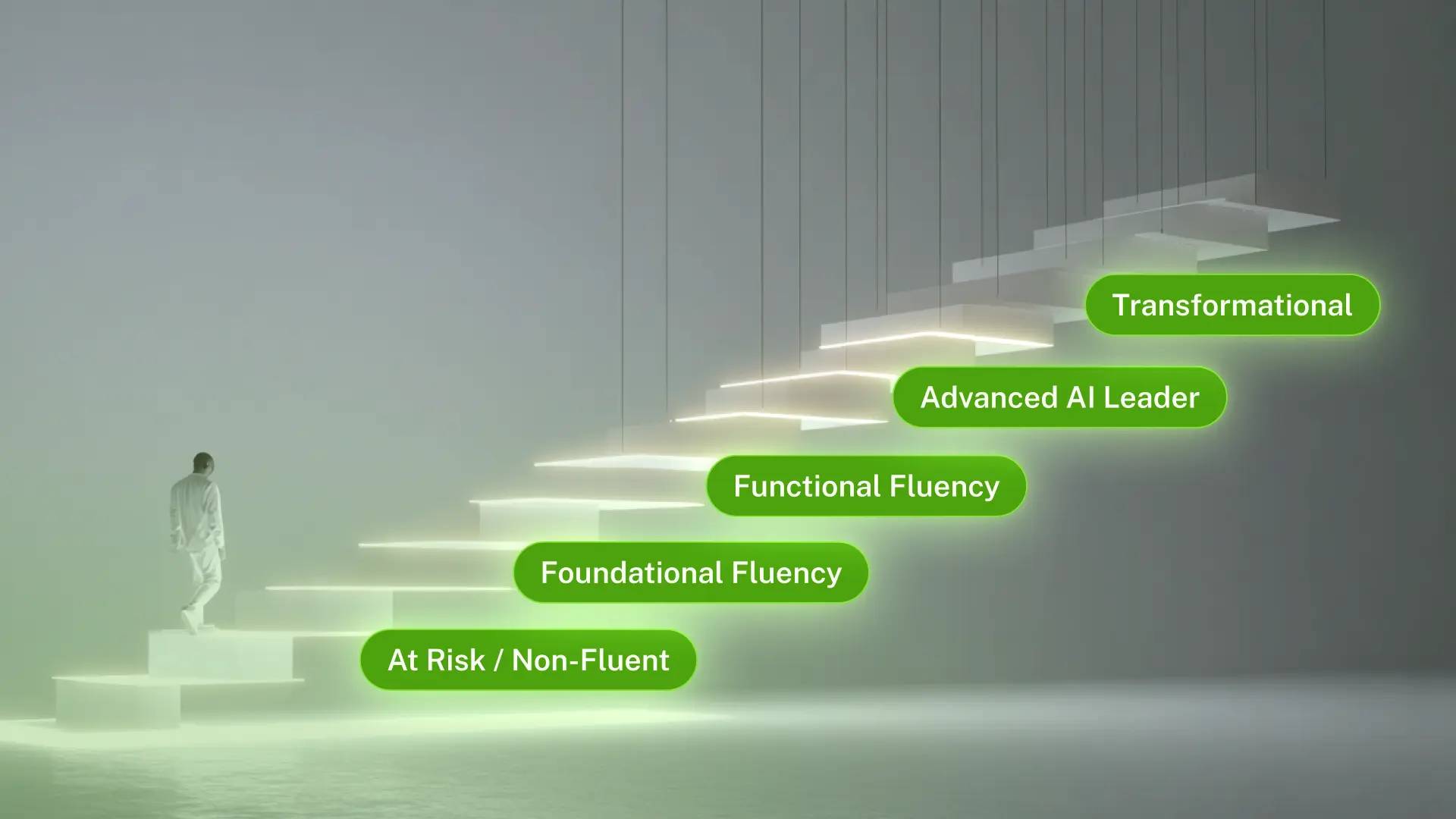
The core issue usually isn’t interest or intelligence but capacity, as you operate in an environment designed to consume it.
Here’s what should reassure you: most of the leaders we worked with weren’t behind because they weren’t trying. They were behind because their company was. 
You feel behind because your company is behind
If your organization hasn’t done the hard work to make AI a success, like creating clear policies, safe tools, role-based playbooks, and coordinated enablement, then the “AI learning” burden gets offloaded onto individuals like yourself.
That creates a predictable pattern:
- AI usage goes up, but mostly as isolated use cases.
- People don’t feel safe sharing wins (or failures).
- Training is shallow or one-off (BCG: Only 36% of employees feel adequately trained).
- Nobody redesigns workflows because nobody has the space.
As a recent BCG study shows, this lack of time (and permission) is one of the major reasons AI adoption gets stuck, and we hear time and time again.
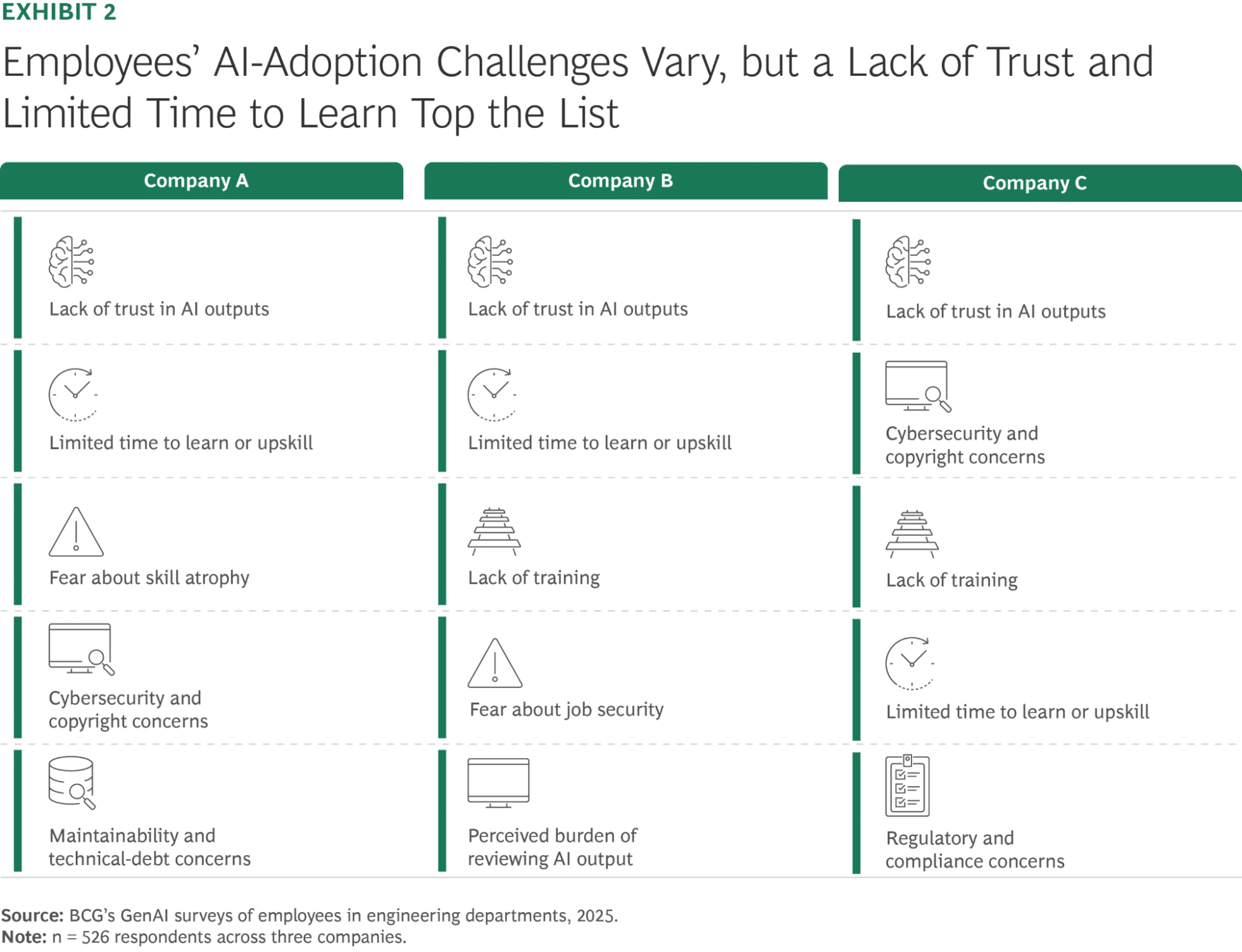
This is organizational lag, and it’s exactly why capable leaders still feel stuck.
But there’s a second force that quietly keeps people anchored at Level 1: incentives.
Charlie Munger captured it best: “Show me the incentive, and I’ll show you the outcome.” In other words, behavior follows incentives more reliably than “AI strategy” decks, hollow statements, or good intentions.
In many companies, the incentives for serious AI mastery are upside down:
- The organization gets the productivity gains.
- The individual pays the learning cost (time, cost, cognitive load, and even reputation risk).
- And the day-to-day system punishes anyone who tries to slow down and redesign work.
It’s the same reason people don’t practice time management when they’re overloaded: the actions that create space require space.
So Level 1 becomes a stable equilibrium: you use AI when convenient, you get small wins, and you never cross the threshold into repeatable systems.
(Aritcle continue after this break)