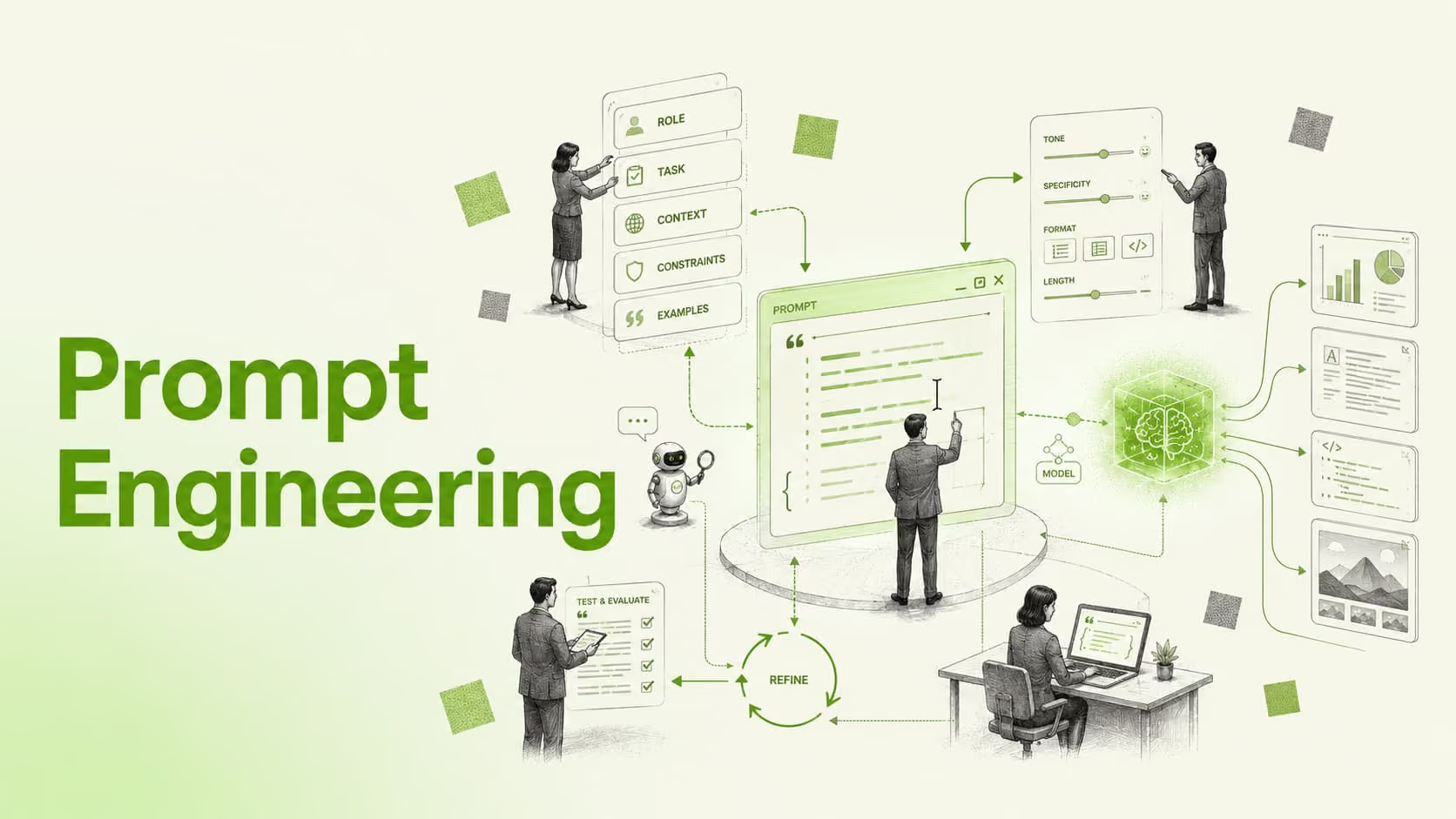


Prompt engineering is the skill of giving AI tools clear instructions so they produce better, more useful results.
At its simplest, a prompt is what you ask an AI system to do. Prompt engineering is the practice of making that request more specific, structured, and useful.
This matters because AI tools like ChatGPT, Claude, Gemini, and Copilot are now used across writing, research, analysis, planning, coding, learning, and decision-making. But AI does not automatically know your goal, audience, context, or standards. The better you brief it, the better the output tends to be. And the tools keep advancing fast: the latest models, like GPT-5.6, now ship directly inside familiar apps such as Microsoft Copilot.
As our guide to AI in the workplace explains, prompting is best understood as a form of delegation. You are not just asking a question. You are assigning a task, setting context, and guiding the AI toward the kind of result you need.
What Is Prompt Engineering?
Prompt engineering is the process of designing better instructions for AI systems.
And it matters deeply.
A strong prompt usually tells the AI:
- What role it should take
- What task it should complete
- What context matters
- Who the output is for
- What format the answer should follow
- What it should include or avoid
This is why prompt engineering is less about “magic words” and more about clear communication. The skill is similar to briefing a colleague: the more precise the brief, the more useful the result.
The ChatGPT guide makes this practical, showing how better prompts help users get clearer, more relevant responses from ChatGPT.
Why Prompt Engineering Matters
Prompt engineering matters because AI is powerful but open-ended. Without clear instructions, it often produces generic, incomplete, or inaccurate answers.
Good prompt engineering helps you:
- Get more specific outputs
- Save time on revisions
- Reduce vague or generic answers
- Improve the quality of AI-assisted work
- Make AI more useful for real business tasks
This is especially important in the workplace. As AI becomes part of everyday work, prompting becomes a practical skill for managers, marketers, analysts, educators, operators, and executives.
Our take on the future of prompt engineering makes the key point: it may fade as a trendy job title, but it is becoming a core skill for anyone working with AI.
Prompt Engineering Is Becoming a Core Workplace Skill
In the early AI boom, “prompt engineer” became a high-profile job title. But the more durable trend is broader: prompt engineering is becoming part of modern knowledge work.
Most professionals will not become full-time prompt engineers. But they will need to know how to work well with AI.
That means learning how to:
- Ask better questions
- Provide better context
- Set clearer expectations
- Evaluate AI-generated answers
- Refine outputs through iteration
This is similar to how search, spreadsheets, email, and presentation tools became baseline workplace skills. Prompting is becoming one of the basic literacies of AI-enabled work, part of the broader AI fluency every professional now needs.
CODO
A useful way to think about prompt engineering is the CODO framework, used by FlexOS and Lead with AI:
- Character: Who should the AI act as?
- Objective: What do you want it to do?
- Do’s and Don’ts: What should it include or avoid?
- Output: What should the final answer look like?
The ChatGPT Prompt Generator is built around this structure. It helps users create stronger prompts by clarifying the AI’s role, task, boundaries, and expected output.
The value of this framework is that it keeps prompting simple. You do not need complicated formulas. You need a clear brief. For a fuller walkthrough with examples, see the guide to the CODO prompting framework.
The Role of Context in Prompt Engineering
Context is one of the most important parts of prompt engineering.
AI tools do not automatically understand your company, audience, goals, constraints, or preferences. If you leave that information out, the model has to guess.
That is why stronger prompts usually include context such as:
- The audience
- The goal
- The business situation
- The desired tone
- The intended use of the output
- Any constraints or assumptions
This also connects to the idea of the context window, which is the amount of information an AI model can consider at one time. Good prompt engineering is not just about adding more context. It is about adding the right context.
Prompt Engineering and AI Hallucinations
Prompt engineering can also help reduce AI hallucinations.
AI hallucinations happen when an AI system produces information that sounds confident but is false, unsupported, or fabricated. Prompting cannot eliminate this risk, but it can reduce it.
A companion guide to preventing AI hallucinations explains that clearer prompts, better context, source-based instructions, and verification steps can improve reliability.
For important work, prompts should make clear when the AI should rely only on provided sources, when it should cite evidence, and when it should admit uncertainty.
Chain-of-Thought Prompting
For complex tasks, it can help to ask AI to reason step by step before reaching a conclusion.
This technique is often called chain-of-thought prompting. It is useful when a task requires analysis, comparison, planning, or problem-solving.
In practical workplace use, this can help with:
- Strategy decisions
- Business analysis
- Risk assessment
- Planning
- Prioritization
- Complex writing tasks
The point is not to make prompts longer for the sake of it. The point is to help the AI break down complex work into clearer steps.
Is Prompt Engineering Still Relevant?
Yes. Prompt engineering is still relevant, but its role is changing.
The future of prompt engineering is not just specialist prompt engineers writing prompts for everyone else. It is professionals across functions learning how to work better with AI.
As AI tools improve, simple prompts may work better than they used to. But high-quality work still requires clear direction, good judgment, strong context, and careful review. The newest systems also reward slightly different habits, which is why it helps to keep a dedicated guide to prompting frontier models like GPT-5.5, Claude Opus 4.8, and Claude Fable 5.
That is why prompt engineering remains valuable: it helps people turn AI from a generic chatbot into a practical work partner.
Final Takeaway
Prompt engineering is the skill of communicating clearly with AI.
The better you define the task, context, audience, constraints, and output, the more useful the result becomes.
As AI becomes part of everyday work, prompt engineering will matter less as a trendy job title and more as a core skill for working effectively with intelligent tools.
Frequently Asked Questions about Prompt Engineering
What is prompt engineering?
Prompt engineering is the practice of writing better instructions for AI tools. It helps AI systems produce more accurate, relevant, and useful outputs.
Why is prompt engineering important?
Prompt engineering is important because AI tools need clear direction. Better prompts lead to better answers, less rework, and more useful results.
Is prompt engineering only for technical people?
No. Prompt engineering is useful for anyone who works with AI, including managers, marketers, writers, analysts, educators, and executives.
What makes a good prompt?
A good prompt usually includes a clear task, relevant context, a defined audience, constraints, and the desired output format.
Can prompt engineering prevent hallucinations?
Prompt engineering can reduce hallucinations, but it cannot fully prevent them. For factual work, AI outputs should still be checked against reliable sources.
Is prompt engineering a career?
It can be, but the bigger trend is that prompt engineering is becoming a core workplace skill rather than only a standalone career path.