

Caterpillar AI Strategy: $100 Million to Train Its Workforce for AI
How Caterpillar uses AI on its own work: AI agents for software, an NVIDIA AI factory and $100 million to train workers in AI and autonomy. Updated November 2026.
Construction and mining equipment, off-highway engines, power generation, gas turbines and locomotives, plus financial products
Caterpillar has no standalone AI strategy for its own work. Its approach comes from its January 2026 CES announcements, its 2025 skills pledge and executive interviews.
Read the company sourceWhere Caterpillar Is Going with AI
Caterpillar now calls itself a technology company and plans to spend far more on digital and technology. CEO Joe Creed said at CES in January 2026 that Caterpillar will “lean into technology in a heavy way moving forward,” according to Constellation Research. Caterpillar plans to raise its digital and technology investment 2.5 times through 2030.
Most of the plan serves customers, and AI also reaches Caterpillar’s own work. Caterpillar has no standalone AI strategy for its own work, so this profile draws on its announcements, executive interviews and reporting.
The focus has four parts.
- Software engineering: AI agents that modernize legacy code, generate and test new software and find defects earlier
- Factories and supply chain: an NVIDIA AI factory and digital twins of Caterpillar plants to improve processes, forecasting and scheduling
- Sales and service: AI that turns machine data into service leads for dealers
- Field technicians: the Cat AI Assistant, which lets technicians use their voice to pull up repair steps, troubleshoot and find parts
What It Takes: $100 Million for Skills, One Data Platform and NVIDIA
Caterpillar will spend $100 million over five years on skills. It made the pledge in April 2025 to train its workforce in robotics, automation and AI, according to Manufacturing Dive. In August 2026, TechCrunch reported that the program covers its 118,000 employees.
Engineers already work with AI agents. Chief Technology Officer Jaime Mineart said: “We use AI agents to modernize legacy code, generate and test new software, and identify defects earlier.”
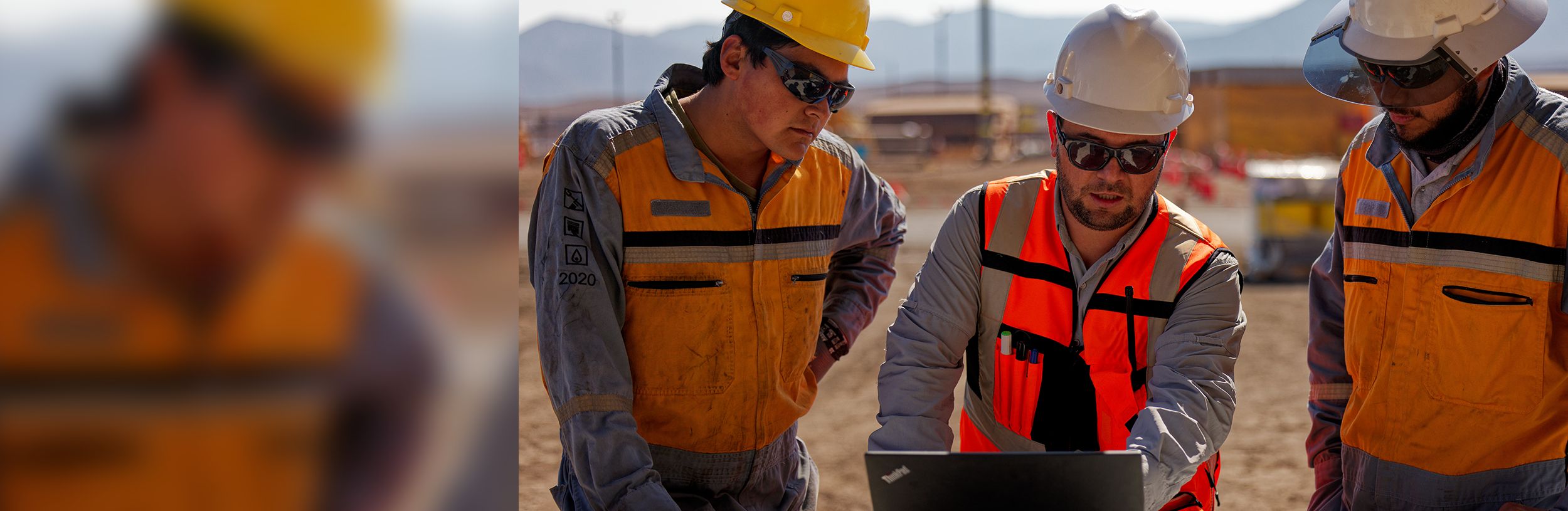
One data platform feeds the AI. Helios holds more than 16 petabytes of data from about 1.5 million connected assets, according to Constellation Research. Caterpillar organizes the data with Snowflake and works with Microsoft for cloud and productivity.
NVIDIA is the main partner for AI in factories. Caterpillar uses an NVIDIA AI factory to automate manufacturing and supply chain work, and it is building digital twins of its plants with NVIDIA Omniverse.
Headcount is rising. Caterpillar had about 118,000 employees at the end of 2025, up about 5,000 in a year. The sources reviewed do not link its headcount to AI.
AI fluency, coded against the Lead with AI Fluency Matrix (September 2026 edition):
- Fluency floor: Not published. Caterpillar is training its workforce in AI, autonomy and robotics over five years, but it has set no AI requirement for all staff.
- Highest level evidenced: Level 3 (Integrating), company-claimed. AI agents work inside software development, and AI turns machine data into service leads for dealers. Caterpillar has published few figures for this work.
- Portfolio design: Caterpillar builds AI on one data platform that serves customers and its own operations alike.
How Caterpillar Measures Results
Caterpillar reports one clear result. Prioritized service events, leads that Caterpillar generates from machine data and sends to dealers, brought in $1.1 billion in sales in 2024, up from none in 2021, according to Constellation Research. The figure is company-claimed.
Gaps remain. Caterpillar has published no results for its coding agents, factory AI or training program. Reporting them is the step from AI adoption to AI value.
Caterpillar has set digital targets for 2030. They include two million connected assets and 50% growth in ecommerce revenue.
Next markers: results from AI agents in software, factory digital twins at scale, progress on the $100 million skills program and headcount for 2026.
Change log
- April 2025: Caterpillar pledges $100 million over five years to train its workforce in robotics, automation and AI.
- January 2026: At CES, Caterpillar launches the Cat AI Assistant and expands its work with NVIDIA.
- August 2026: Mineart says Caterpillar uses AI agents to modernize legacy code and test software.
The Bottom Line
- Disclosure: 4 of 4. Caterpillar answers all four questions, the last only in part, with one service figure.
- Technology is now the strategy, with digital spending set to rise 2.5 times through 2030.
- $100 million over five years pays for AI, autonomy and robotics training.
- Level 3 is evidenced in software development and service leads, on company-claimed results.
- The say-do gap is measurement. Caterpillar spends heavily on AI skills and tools but reports few results for its own work.
- Watch the skills program. The test is whether the $100 million shows up in productivity.
Revenue, Headcount and Revenue per Employee
What the numbers show: Revenue rose 14% from 2022 to 2025 while headcount rose 8%, so revenue per employee rose 5%, to about $573k. Headcount grew by about 5,000 in 2025 as demand for power generation equipment rose. These figures do not show that AI caused any change.
Revenue, headcount and revenue per employee, FY2022 to FY2025
- FY2022: $59.43bn revenue, 109,100 employees, $545k per employee
- FY2023: $67.06bn revenue, 113,200 employees, $592k per employee
- FY2024: $64.81bn revenue, 112,900 employees, $574k per employee
- FY2025: $67.59bn revenue, 118,000 employees, $573k per employee
Change, FY2022 to FY2025: revenue up 14%, headcount up 8%, revenue per employee up 5%.
Notes: Revenue is total sales and revenues, as reported. Headcount is approximate, at year-end. Power generation sales have grown with demand from data centers.
These figures give context on scale and productivity. They do not show that AI caused any change. Sources: Caterpillar 10-K filings.
How Caterpillar Compares with US Industrial and Automotive Peers
We looked at how Caterpillar compares with other US industrial and automotive companies in the index. Here is how they stack up.
| Company | Disclosure | AI owner | Fluency floor | Governance | AI value reported | Revenue per employee |
|---|---|---|---|---|---|---|
| 3M | 4 of 4 | CEO; no dedicated AI leader named | Not published | Not published | Sales results that include AI tools, no AI share | $412k |
| Caterpillar | 4 of 4 | CTO leads technology and autonomy; CEO sets direction | Not published; $100M to train its workforce in AI | Not published | One service figure ($1.1B in 2024), no total | $573k |
| Deere | 3 of 4 | CTO leads technology; no AI leader named for internal work | Not published | Not published | None published | $625k |
| Emerson | 2 of 4 | Chief Technology and AI Officer (from August 2026) | Not published | Not published | None published | $271k |
| GE Vernova | 4 of 4 | CEO; AI runs through lean | Not published | Not published | Expected savings and targets, no results yet | $488k |
| General Motors | 3 of 4 | Chief Product Officer; Chief AI Officer role dropped | Not published | Seven principles in the code of conduct | No: engineering milestones | $1.19M |
| Linde | 4 of 4 | CEO; a central AI team with stretch goals | Not published | Every AI project reviewed like a productivity project | Share of productivity (about a third), no dollar figure | $521k |
| Tesla | 2 of 4 | CEO; no leader named for internal AI | Not published; spending capped at $200 a week | Approved tools only; confidential data stays inside | None published | $704k |
Disclosure counts how many of the four strategy questions (where it is going, where it will focus, what it will take and how it will know it is working) a company answers in public. Fluency floor is the lowest level of AI fluency a company expects of all its people, on the five levels of the Lead with AI Fluency Matrix: Avoiding (0), Chatting (1), Collaborating (2), Integrating (3) and Transforming (4). The other columns summarize each company’s profile. Revenue per employee is for each company’s latest fiscal year, in US dollars. See all companies in the AI Strategy Index.
Frequently Asked Questions
What is Caterpillar’s AI strategy for its own work?
Caterpillar is building AI into software development, factories and service, on one data platform called Helios. It plans to raise its digital and technology investment 2.5 times through 2030.
Who leads AI at Caterpillar?
CEO Joe Creed sets the direction, and Chief Technology Officer Jaime Mineart leads technology and autonomy.
How is Caterpillar training employees for AI?
Caterpillar will spend $100 million over five years training its workforce in AI, autonomy and robotics. It announced the pledge in 2025, its 100th year.
Is Caterpillar cutting jobs because of AI?
The sources reviewed show no AI-linked job cuts at Caterpillar. Headcount rose to about 118,000 at the end of 2025.
How is this profile put together?
Lead with AI profiles use public sources only, such as annual reports, earnings materials, filings and on-record interviews, dated at the time of writing. AI fluency is coded against the Lead with AI Fluency Matrix, and company figures are marked as company-claimed unless they have been independently verified.
About the AI Strategy Index
The Lead with AI AI Strategy Index profiles how the largest companies in the US and Europe approach AI, starting with the S&P 100 and the STOXX Europe 50. Each profile answers four questions: where the company is going with AI, where it will focus, what it will take and how it will know it is working. AI Pacesetters and notable companies outside the two indexes are profiled for contrast and are not counted. Profiles use public sources only, and AI fluency is coded against the Lead with AI Fluency Matrix.
See all company profiles