Entry-level jobs were always about learning, not just output

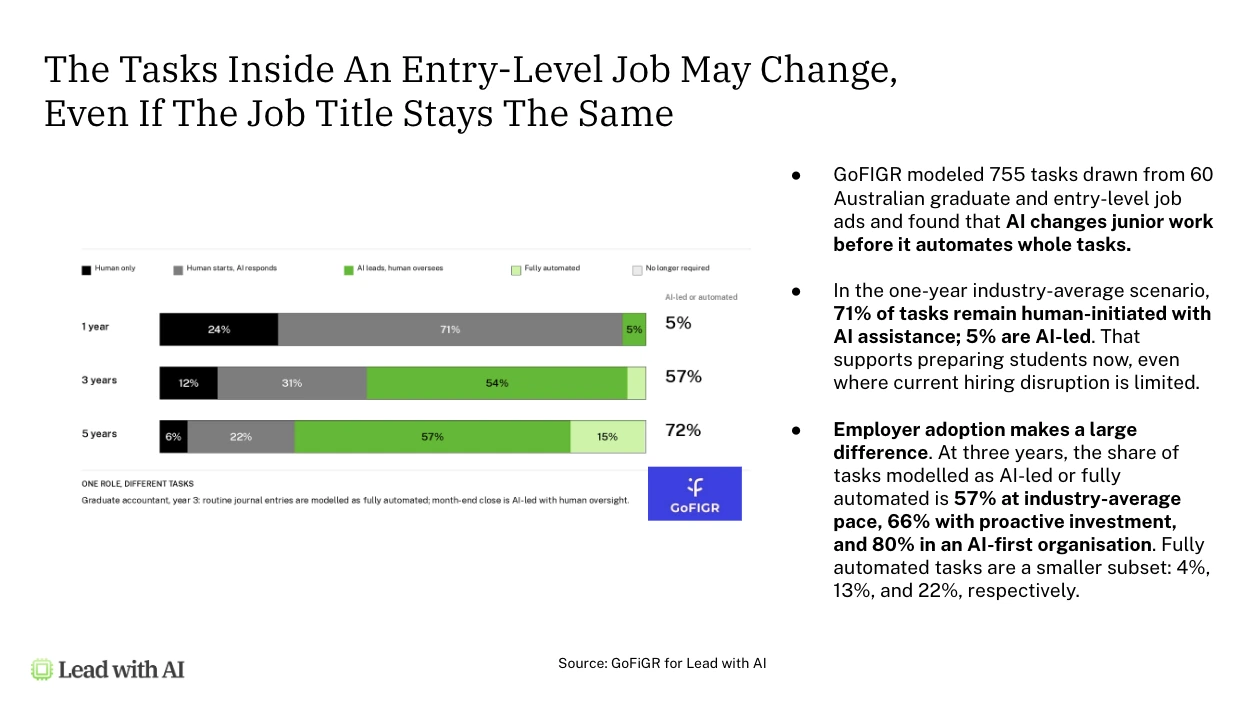
AI is not wiping out entry-level jobs. It is taking over the tasks that beginners used to learn on. Young workers in AI-exposed roles are falling behind mainly because companies hire fewer of them, and the entry-level jobs that remain increasingly ask for "senior" skills like leadership and judgment.
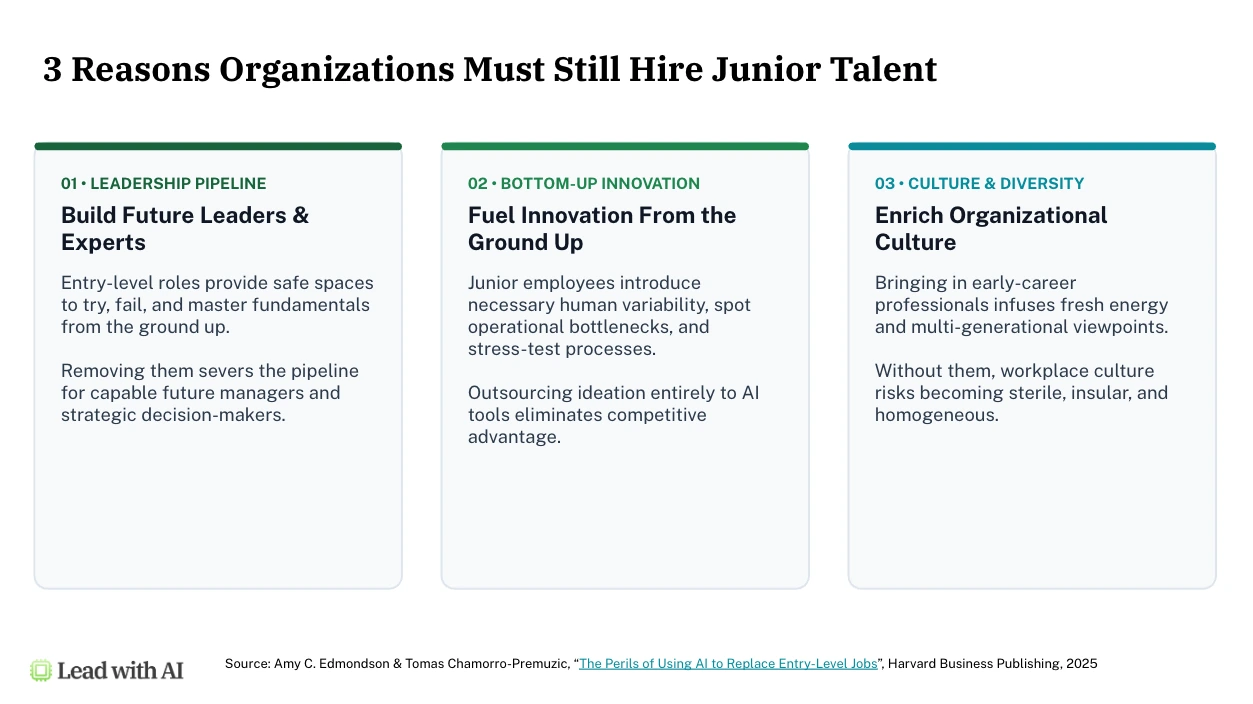
That is a bigger problem than job losses. The jobs are mostly still there, but the learning route into them is wearing away, and every leader who hires junior talent now owns that problem.
Most of us started our careers on the same ladder. You join as an intern or a junior hire, you do fairly basic work, and over a few years you learn how the profession actually operates.
When you come into a job, you are typically not delivering incredible value to your boss yet. You are still learning. The value of an entry-level job was never only its output. It was also how organizations grew their experienced people.
LinkedIn's Chief Economic Opportunity Officer Aneesh Raman warned that the bottom rung of the career ladder is breaking. AI now handles many of the routine tasks that used to train young workers, from basic coding and document review to customer service.
So why hire someone to do them? That is exactly the question employers are starting to ask. And without the first rung, the second and third get much harder to reach.
AI is slowing entry-level hiring more than erasing entry-level jobs
The best data we have comes from Erik Brynjolfsson and his colleagues at Stanford. Their Canaries in the Coal Mine research tracks ADP payroll records, and the August 2026 update found that employment for workers aged 22 to 25 in the most AI-exposed occupations fell about 11% between November 2022 and June 2026. In less-exposed occupations, the same age group grew about 10%.
That leaves young workers in exposed jobs about 19% behind where they would have been (a gap that was 15% a year earlier). Older, experienced workers show no comparable gap.

How is this happening? Mostly through less hiring, not more layoffs. Nobody is being walked out of the building. Companies are simply opening fewer doors.
The declines also cluster in jobs where AI is used to automate work. Where AI complements people, employment is flat or rising.
None of this adds up to a graduate unemployment crisis, though. Robert Fairlie and Jane Wu found that unemployment for US bachelor's graduates aged 22 to 25 was 7.3% in summer 2026, well within the 6.3% to 7.8% range of the previous four summers. (The Stanford team is also careful to call its findings descriptive, not causal.) The pressure sits in particular first jobs. For more of the research behind this debate, see our running collection of AI statistics.