

Most AI transformation plans stay stuck at the level of a job title.
"We're rolling out AI for the commercial team" sounds like a plan, but it's too vague to act on. Nobody can redesign a job title. You can only redesign the actual pieces of work inside it.
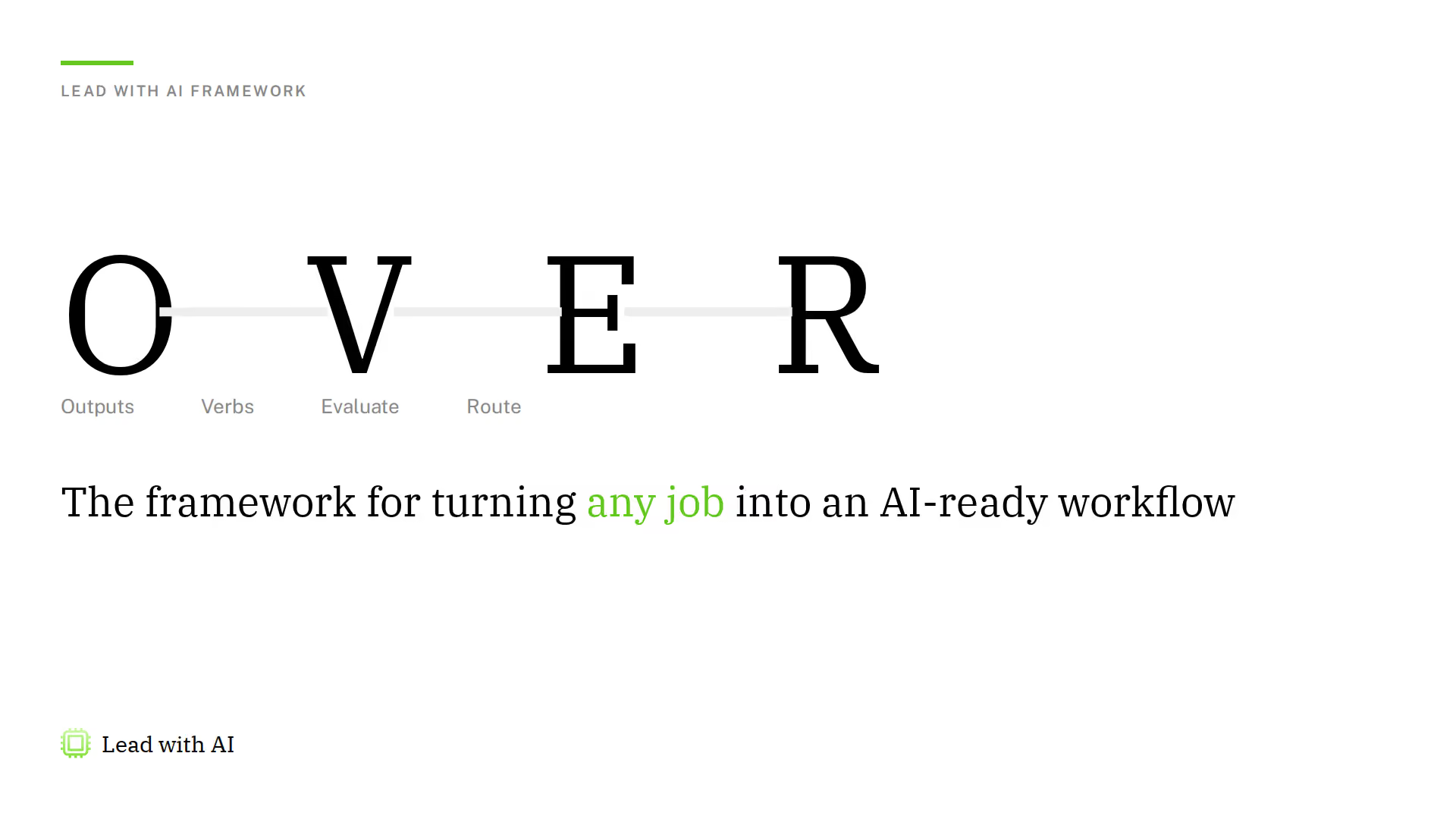
OVER is the framework we use to get executives from a vague AI initiative down to something concrete enough to actually build.
Lead with AI has coached thousands of senior leaders, at companies including Microsoft, Apple, McKinsey, BCG, Atlassian, and Supercell, on how to move past AI theory and into real workflow redesign.
What Does OVER Stand For?
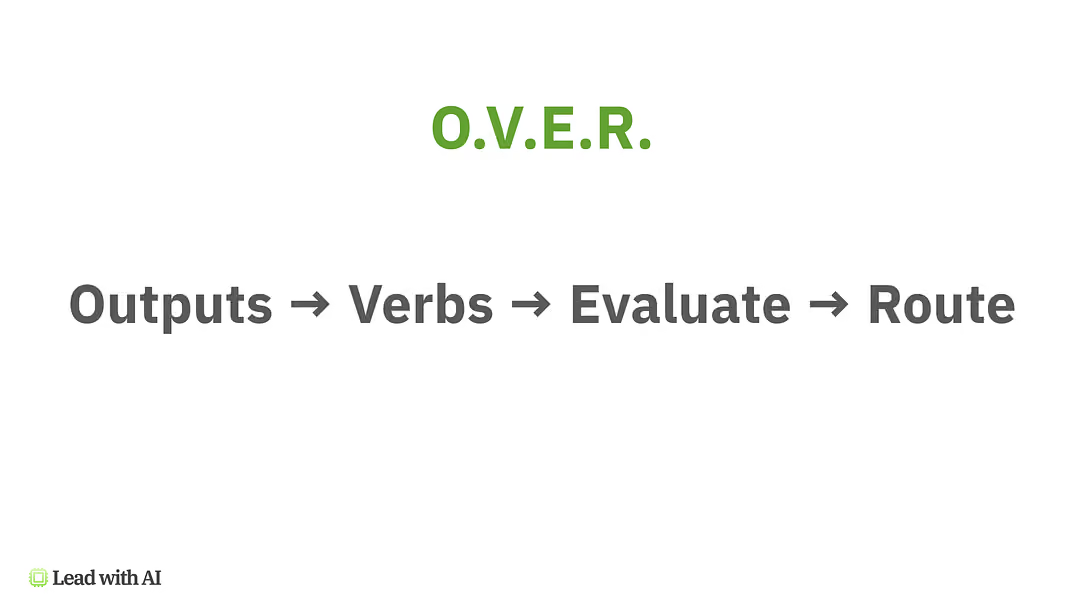
OVER stands for Outputs, Verbs, Evaluate, and Route.
Each step breaks a job down one level further, until what's left is small enough to hand to AI, to a person, or to both:
O: Outputs
Inventory what you actually produce.
V: Verbs
Break each output into the atomic actions behind it.
E: Evaluate
Decide whether each action is AI-first, human-first, or hybrid.
R: Route
Match each action to the right kind of AI tool.
Outputs: Start With What You Actually Produce
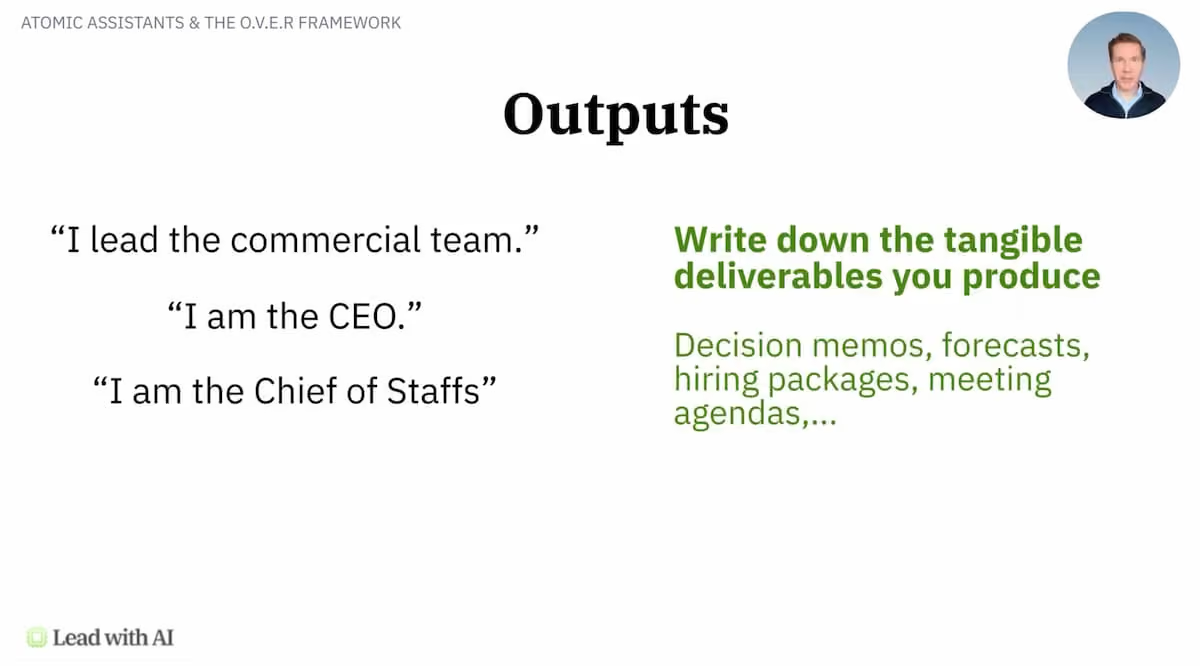
A job title tells you almost nothing useful for AI redesign. A list of outputs tells you everything.
Instead of saying "I lead the commercial team," list the tangible things you actually produce in a typical month:
- Decision memos
- Forecasts
- Customer updates
- Hiring packets
- Board slides
- Meeting agendas
- Performance notes
- Vendor comparisons
Outputs are far easier to redesign with AI than job descriptions, because each one is something you can point to, hand off, and check.
Verbs: Break Each Output Into Atomic Moves
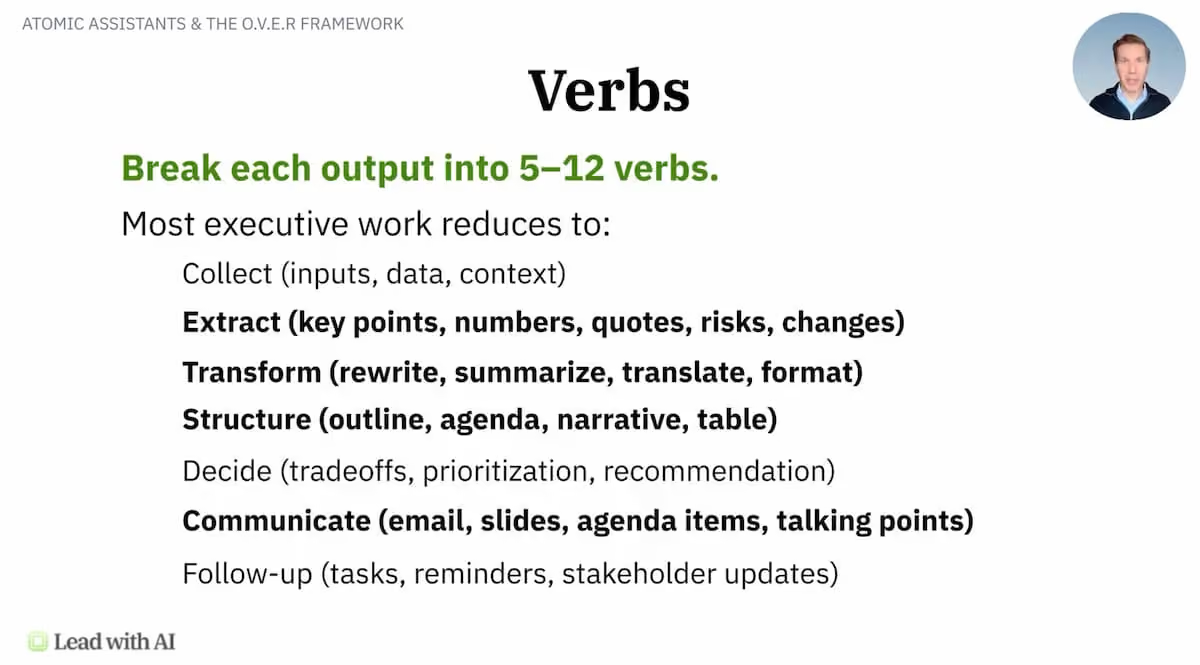
Once you have your outputs, take each one and break it into 5 to 12 verbs.
This is the step that turns something abstract into something an AI tool can actually act on.
Most executive work reduces to a predictable set of actions:
- Collect: gather inputs, data, or context.
- Extract: pull out key points, numbers, quotes, or changes.
- Transform: rewrite, summarize, translate, or reformat.
- Structure: build an outline, agenda, narrative, or table.
- Decide: weigh tradeoffs and make a recommendation.
- Communicate: turn the work into an email, a slide, or talking points.
- Follow up: send reminders or update stakeholders.
AI is strongest at extract, transform, structure, and communicate.
Humans stay primary on deciding, and AI usually acts as a co-pilot on collecting and following up rather than owning those steps outright.
Evaluate: Define the Human and AI Split
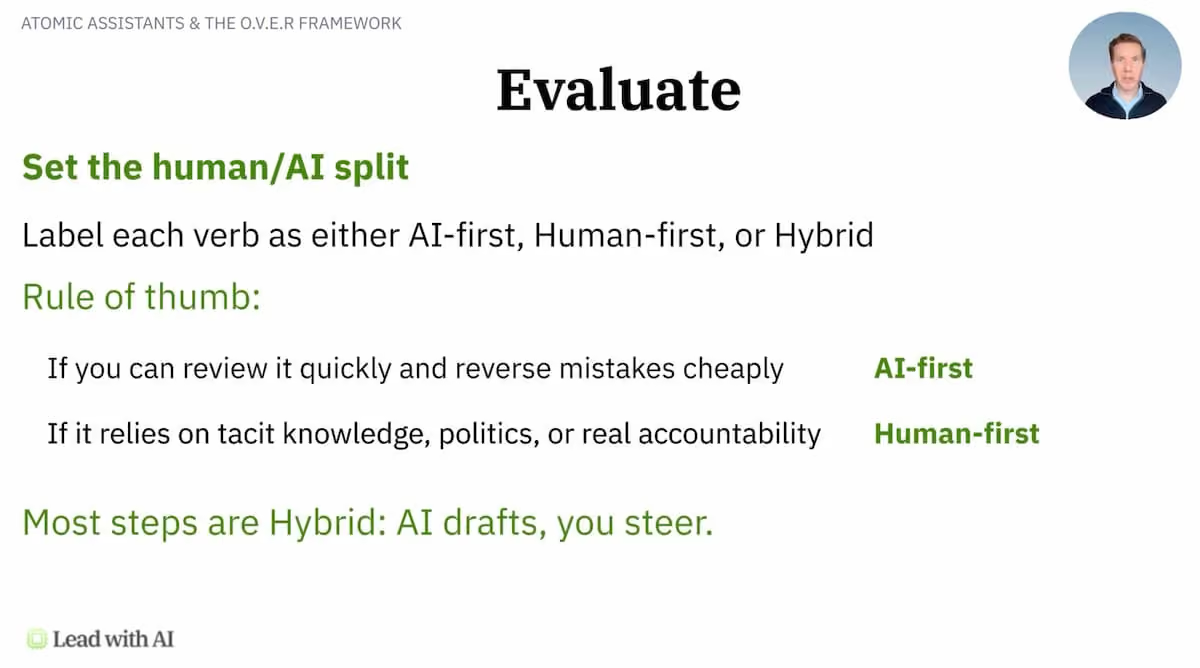
Once you've broken an output into verbs, label each one:
- AI-first
- Human-first
- Hybrid
Three rules of thumb make this call easier:
- If you can review the output quickly and reverse mistakes cheaply, it can be AI-first.
- If it relies on tacit knowledge, political judgment, or real accountability, it's human-first.
- Most steps are hybrid: AI drafts, and you steer.
This step is what separates OVER from a simple "safe for AI" checklist like GED-RT.
GED-RT decides whether a single task is worth handing to AI at all. OVER assumes some tasks clearly are, and focuses on exactly where the human hands off and where they pick back up.
Route: Match Each Verb to the Right AI Tool
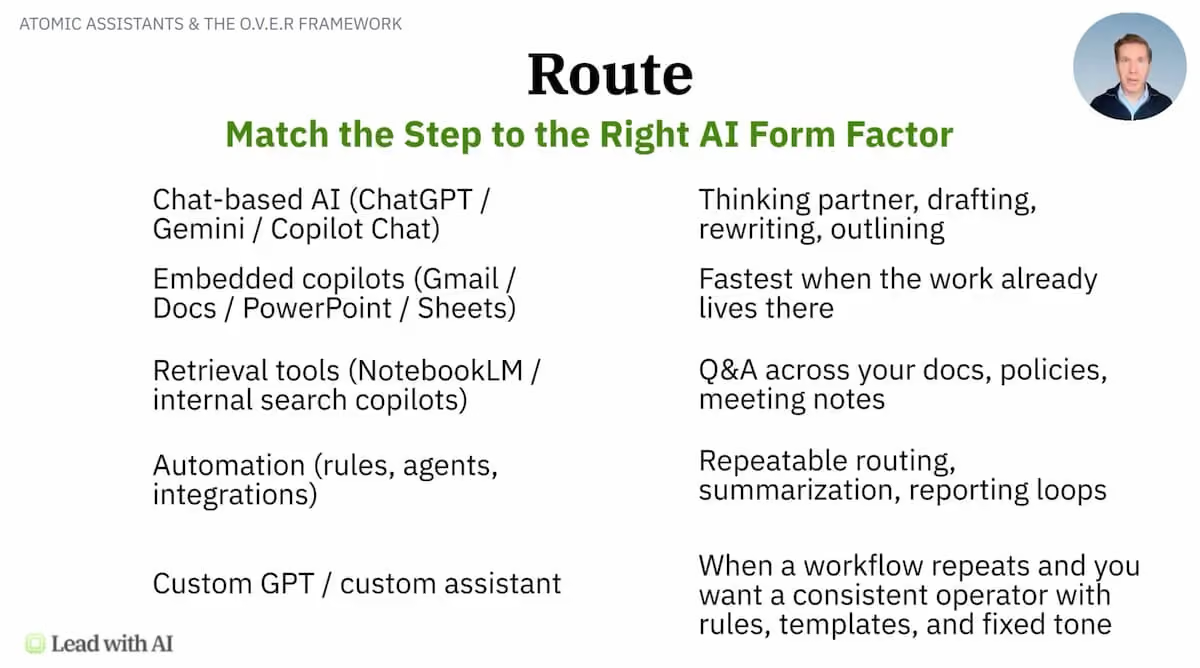
Once you know the atomic action, routing gets simple:
- Chat-based AI (ChatGPT, Gemini, Copilot Chat): a thinking partner for drafting, rewriting, and outlining.
- Embedded copilots (Gmail, Docs, PowerPoint, Sheets): fastest when the work already lives inside that app.
- Retrieval tools (NotebookLM, internal search copilots): question-and-answer across documents, policies, and meeting notes.
- Automation tools (rules, agents, integrations): repeatable routing, summarizing, and reporting loops.
- Custom GPTs or custom assistants: a consistent operator with fixed rules, templates, and tone for a workflow you run often.
You don't need to know every tool in this list to use OVER. The point of the Route step is simply matching the shape of the action to the shape of the tool.