

GSK AI Strategy: AI in Research and a £1.9bn Savings Plan
How GSK uses AI on its own work: licensed AI models for cancer research, research agents for scientists and a savings plan that draws on AI. Updated November 2026.
UK-based biopharma company in specialty medicines and vaccines, which spun off its consumer health business as Haleon in 2022
GSK has no standalone AI strategy document. AI is part of the restructuring it launched in July 2026 and of its research work.
Read the company sourceWhere GSK Is Going with AI
GSK is putting AI into research and into a plan to cut costs. In July 2026 it launched a three-year restructuring to save about £1.9bn a year by 2029, with part of the savings coming from a shift toward AI, according to BioPharma Dive.
Finance sees AI as a way to speed up work. Chief Financial Officer Julie Brown described AI as a tool that streamlines processes and speeds up work across GSK, Fierce Pharma reported in July 2026.
GSK has no standalone AI strategy document. This profile draws on coverage of its July 2026 results, deal announcements and interviews.
The focus has three parts.
- Drug discovery: AI and machine learning models, including licensed foundation models for lung and colorectal cancer
- Scientific research: AI research agents grounded in the scientific literature
- Routine work: AI tools and agents that automate routine tasks so staff can focus on higher-value work
What It Takes: An AI Team, Licensed Models and Research Agents
A dedicated AI team leads the research work. In January 2026 GSK licensed Noetik’s virtual cell foundation models under a five-year deal with $50m in upfront capital and near-term milestones, according to the announcement.
Data quality drives the model choice. Kim Branson, SVP and Global Head of AI and Machine Learning at the time, said: “Foundation models are only as good as the underlying training data they are built upon.”
More than 1,000 GSK scientists use AI research agents in their daily work, according to a supplier. Undermind says its tool is the research-evidence layer of GSK’s AI Scientist stack, used by both AI agents and human researchers, according to its case study.
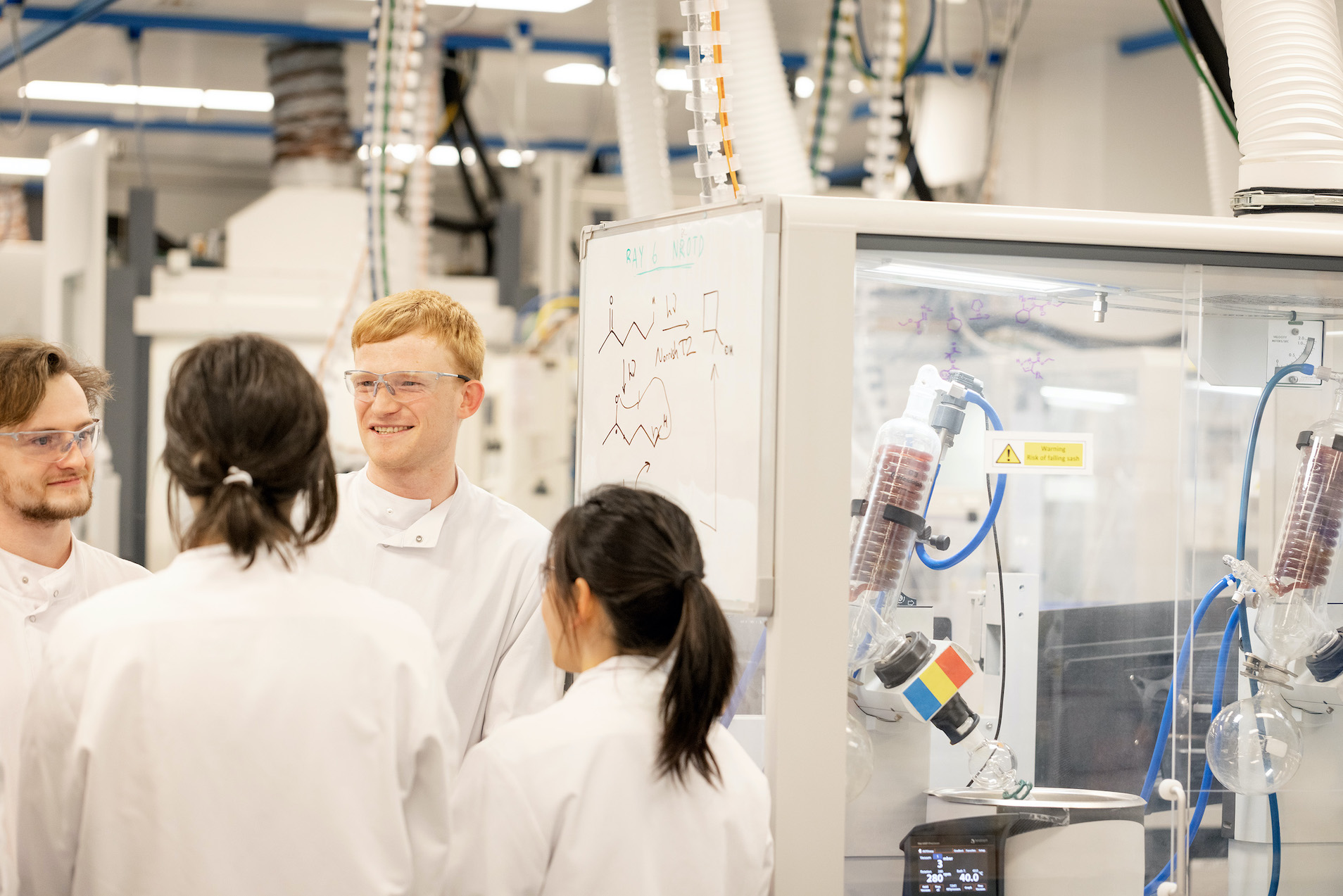
AI agents have reshaped some roles. Zaka Farhat, SVP of Talent at the time, told HR Grapevine in February 2026 that AI tools and agents have “automated routine tasks and amplified decision making with faster insights.”
Job cuts are part of the restructuring, with no number given. GSK will also create roles in priority research projects. CEO Luke Miels said: “I want my team to have the chance to discuss this with our people first.”
Average headcount fell 3% from 2023 to 2025, to 68,307.
AI fluency, coded against the Lead with AI Fluency Matrix (September 2026 edition):
- Fluency floor: Not published. GSK has set no public AI training requirement or usage standard for all staff.
- Highest level evidenced: Level 3 (Integrating), supplier-claimed. AI research agents are part of daily work for more than 1,000 scientists.
- Portfolio design: GSK concentrates AI in research and counts on it for part of a company-wide cost plan.
How GSK Measures Results
GSK publishes no AI results of its own. The figures below are company-claimed or supplier-claimed:
- Savings: about £1.9bn a year by 2029, partly from AI, with no AI share given
- Research: tasks that took days or weeks now take minutes or hours, according to GSK scientists quoted by Undermind
- Adoption: a Net Promoter Score of 63 among more than 130 GSK scientists surveyed by Undermind
Gaps remain. GSK names AI as a source of savings but gives no AI share and no number of jobs affected. Disclosing both is the step from AI adoption to AI value.
Next markers: AI’s share of the savings, the number of jobs affected, results from the Noetik models and headcount for 2026.
Change log
- January 2026: GSK licenses Noetik’s AI foundation models for cancer research.
- February 2026: Farhat describes AI agents that automate routine tasks.
- July 2026: GSK launches a £1.9bn savings plan that draws partly on AI.
The Bottom Line
- Disclosure: 3 of 4. GSK answers where it is going, where it will focus and what it will take, each in part. It does not say how it will know AI is working.
- AI is part of a £1.9bn savings plan.
- A dedicated AI team licenses models for cancer research.
- Level 3 is evidenced in research, on supplier-claimed figures.
- The say-do gap is transparency. GSK counts on AI for savings but discloses no AI figures or job numbers.
- Watch the restructuring. The test is whether GSK reports what AI contributes by 2029.
Revenue, Headcount and Revenue per Employee
What the numbers show: Turnover rose 8% from 2023 to 2025 while average headcount fell 3%, so revenue per employee rose 11%, to about £478k. The comparison starts in 2023 because the 2022 headcount includes the consumer health business for part of the year. These figures do not show that AI caused any change.
Revenue, headcount and revenue per employee, FY2022 to FY2025
- FY2022: £29.32bn revenue, 90,422 employees, £324k per employee
- FY2023: £30.33bn revenue, 70,244 employees, £432k per employee
- FY2024: £31.38bn revenue, 69,305 employees, £453k per employee
- FY2025: £32.67bn revenue, 68,307 employees, £478k per employee
Change from FY2023, the first comparable year, to FY2025: revenue up 8%, headcount down 3%, revenue per employee up 11%.
Notes: Revenue is turnover, as reported. Headcount is the average for the year. GSK spun off its consumer health business as Haleon in July 2022. Turnover for 2022 covers continuing operations, but the 2022 average headcount includes consumer health staff for part of the year. Trend figures stay in £ so exchange-rate moves do not distort them. At the 2025 average exchange rate, latest revenue per employee is about $631k.
These figures give context on scale and productivity. They do not show that AI caused any change. Sources: GSK 20-F filings.
How GSK Compares with European Pharma Peers
We looked at how GSK compares with other European pharmaceutical companies in the index. Here is how they stack up.
| Company | Disclosure | AI owner | Fluency floor | Governance | AI value reported | Revenue per employee |
|---|---|---|---|---|---|---|
| AstraZeneca | 4 of 4 | No single owner named; finance picks pilots to scale | Not published; Silver certification above a set grade | Finance reviews which pilots scale | No: certifications and pilots only | $611k |
| GSK | 3 of 4 | SVP Global Head of AI and Machine Learning | Not published | Little published | No: savings plan with no AI share | $631k |
| Novartis | 2 of 4 | CIO; no Chief AI Officer | Role-based paths, no company-wide floor | Published, a standing board topic | Linked to lower costs, no figure | $725k |
| Novo Nordisk | 4 of 4 | CEO-led OpenAI partnership | Not published; OpenAI to build AI fluency | Data governance and human oversight, stated | Results by use case, no total | $680k |
| Roche | 4 of 4 | Chief Digital and Technology Officer; research head leads research AI | Not published | Little published | AI share of research decisions, no value | $729k |
| Sanofi | 4 of 4 | Chief Digital Officer | Level 1, about 80% use | RAISE framework, five pillars | Results by use case, no total | $644k |
Disclosure counts how many of the four strategy questions (where it is going, where it will focus, what it will take and how it will know it is working) a company answers in public. Fluency floor is the lowest level of AI fluency a company expects of all its people, on the five levels of the Lead with AI Fluency Matrix: Avoiding (0), Chatting (1), Collaborating (2), Integrating (3) and Transforming (4). The other columns summarize each company’s profile. Revenue per employee is for each company’s latest fiscal year, in US dollars. See all companies in the AI Strategy Index.
Frequently Asked Questions
What is GSK’s AI strategy for its own work?
GSK applies AI mainly to research and counts on it for part of a £1.9bn annual savings plan. It has published no standalone AI strategy.
Who leads AI at GSK?
A dedicated AI and machine learning team leads the research work. Kim Branson led it as SVP and Global Head in January 2026.
How does GSK use AI in cancer research?
GSK licenses Noetik’s virtual cell foundation models for lung and colorectal cancer research. The five-year deal began in January 2026.
Is GSK cutting jobs because of AI?
GSK’s restructuring includes job cuts and draws savings partly from a shift toward AI. GSK has not said how many jobs are affected.
How is this profile put together?
Lead with AI profiles use public sources only, such as annual reports, earnings materials, filings and on-record interviews, dated at the time of writing. AI fluency is coded against the Lead with AI Fluency Matrix, and company figures are marked as company-claimed unless they have been independently verified.
About the AI Strategy Index
The Lead with AI AI Strategy Index profiles how the largest companies in the US and Europe approach AI, starting with the S&P 100 and the STOXX Europe 50. Each profile answers four questions: where the company is going with AI, where it will focus, what it will take and how it will know it is working. AI Pacesetters and notable companies outside the two indexes are profiled for contrast and are not counted. Profiles use public sources only, and AI fluency is coded against the Lead with AI Fluency Matrix.
See all company profiles