

RTX AI Strategy: One Data Platform Across Its Factories
How RTX uses AI on its own work: one data and AI platform across 30 million factory hours, AI engine inspection and a value-over-volume rule. Updated November 2026.
Aircraft engines from Pratt & Whitney, aerospace systems from Collins Aerospace, and missiles and defense systems from Raytheon
RTX has no standalone AI strategy document. Its approach comes from its earnings calls from January to October 2026 and company stories.
Read the company sourceWhere RTX Is Going with AI
RTX is connecting its factories to one data and AI platform to raise output and speed up decisions. Chairman and CEO Chris Calio said on the October 2026 earnings call: “Across RTX, we’re also deploying AI and digital tools to improve speed and decision-making in our operations.”
RTX picks AI work for value over volume. Chief Digital Officer Vince Campisi said in February 2026: “It’s better to deliver 20 AI initiatives that scale than 40 with only fractional impact.” RTX has no standalone AI strategy document, so this profile draws on earnings calls and company stories.
The focus has four parts.
- Factories: a proprietary data and AI platform that connects machines and tracks performance indicators, bottlenecks and equipment health
- Engine services: AI-powered borescope inspection software and AI-based tools that direct thousands of parts transactions
- Quality: AI tools that draft first article inspection reports for a human inspector to review
- Operations planning: simulation tools that find bottlenecks on production lines
What It Takes: One Data Platform, CORE and Cloud Partners
One platform covers most of RTX’s factory hours. Calio said on the July 2026 call that the connected factory network covers more than 30 million annual manufacturing hours, up 30% since the end of 2025. RTX prioritized about 60 factories that account for more than three-quarters of its production.
RTX built the platform with cloud providers. It links hundreds of enterprise systems, tens of thousands of shop floor machines and millions of hours of product performance data, and it is designed to meet government standards.
Data finds bottlenecks. At the Collins Aerospace seat factory in Kilkeel, Northern Ireland, a simulation tool fed with combined data found bottlenecks, and fixing them cut production time and freed 4,000 square feet of floor space.
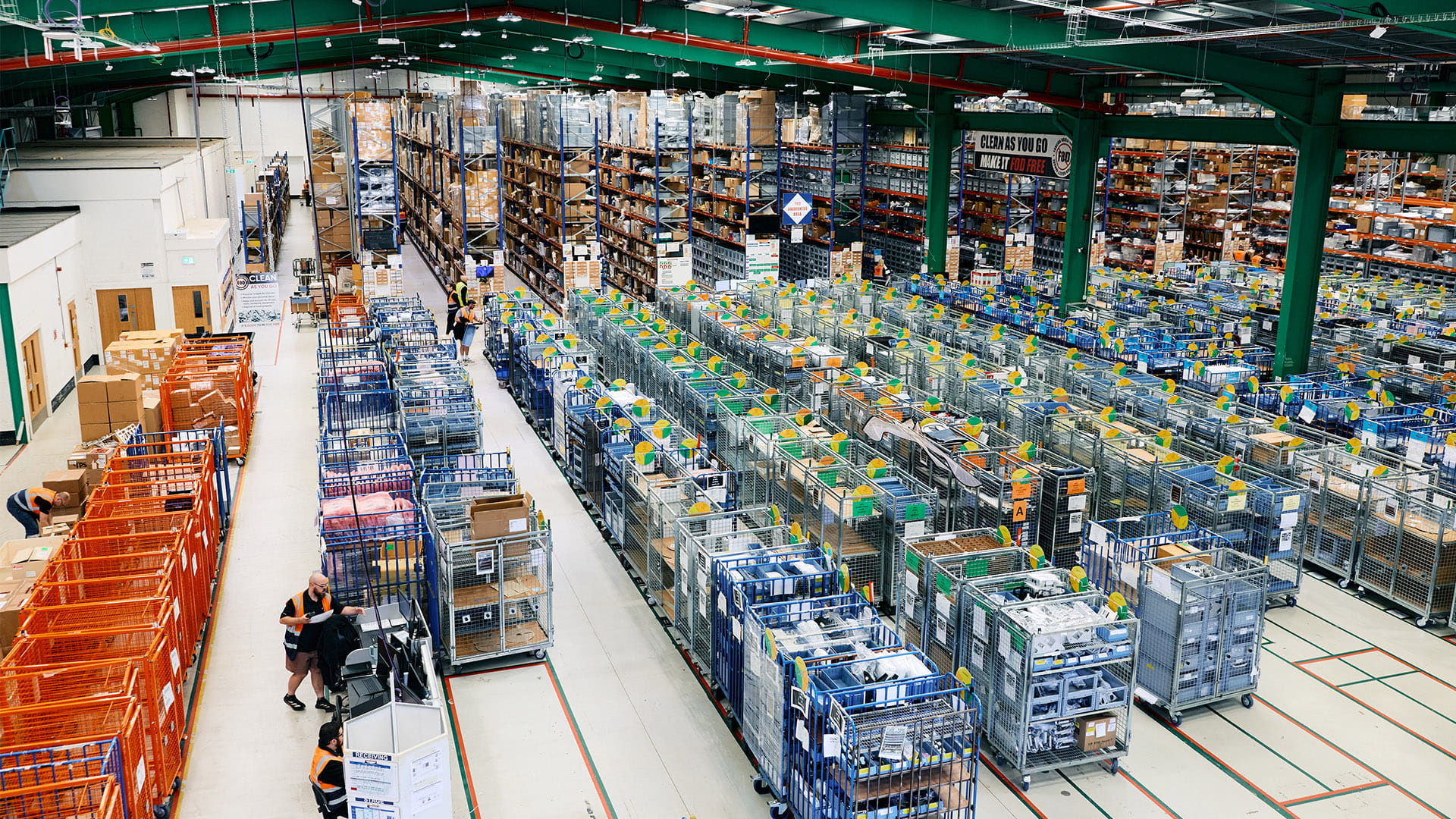
CORE, RTX’s operating system, puts the data to work. At the Pratt & Whitney fan blade plant in Holt, Michigan, output has risen 20% a year since 2024 as location tracking and the data and AI platform replaced manual parts scans, according to RTX.
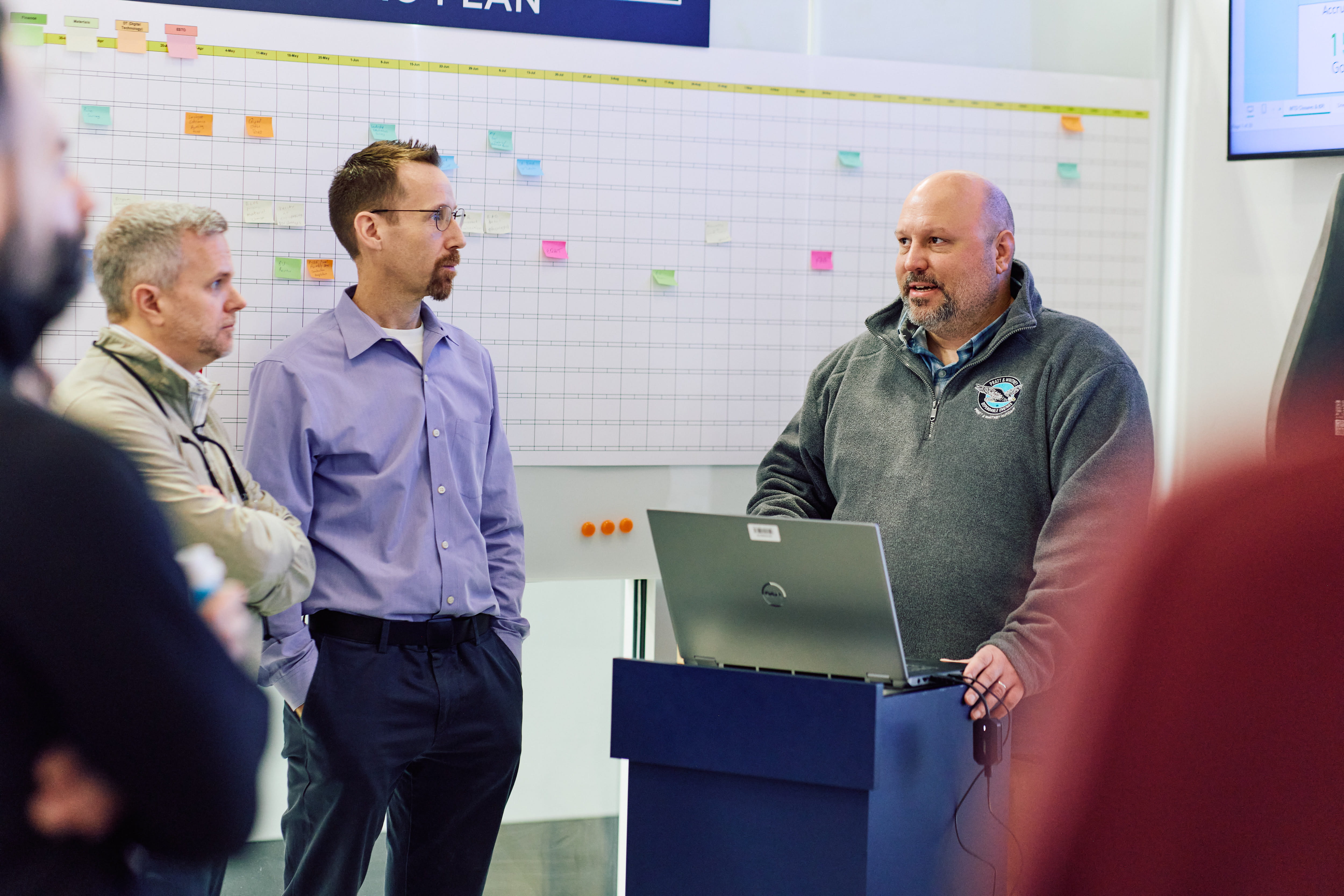
Collins is cutting indirect labor as it grows. Calio said in October 2026 that Collins Aerospace grew sales by double digits this year while reducing indirect labor headcount, through consolidation and fewer overhead layers. RTX had about 180,000 employees at the end of 2025, and the sources reviewed do not tie its headcount to AI.
AI fluency, coded against the Lead with AI Fluency Matrix (September 2026 edition):
- Fluency floor: Not published. RTX has set no AI training requirement or usage standard for all staff.
- Highest level evidenced: Level 3 (Integrating), company-claimed. AI drafts inspection reports for human review, and AI-based tools direct parts flows in engine services. The figures have not been independently verified.
- Portfolio design: RTX concentrates AI in factories and engine services and picks fewer initiatives that can scale.
How RTX Measures Results
RTX reports AI results by site and process. All figures below are company-claimed:
- Inspection: borescope inspection time down more than 30% where the AI software is deployed
- Factory coverage: more than 30 million annual manufacturing hours on the data and AI platform
- Inventory: aged inventory down about 45% at Pratt’s fan blade facility in Lansing, Michigan, according to the January 2026 call
- Floor space: 4,000 square feet freed at Kilkeel
Gaps remain. RTX gives no company-wide figure for the value of AI. Adding one is the step from AI adoption to AI value.
Next markers: AI inspection across the full repair network, coverage of all priority factories, AI in Raytheon’s munitions ramp and headcount for 2026.
Change log
- January 2026: Calio says factories with more than half of RTX’s manufacturing hours are connected to its digital platform.
- February 2026: Campisi says value beats volume in choosing AI initiatives.
- July 2026: The connected factory network passes 30 million annual manufacturing hours.
- October 2026: Calio reports a cut of more than 30% in borescope inspection time.
The Bottom Line
- Disclosure: 4 of 4. RTX answers all four questions, with results by site and no total.
- One data and AI platform connects most factory hours.
- Value over volume guides which AI initiatives go ahead.
- Level 3 is evidenced in inspection and engine services, on company-claimed results.
- The say-do gap is measurement. RTX reports sharp site results but no total value.
- Watch the repair network. The test is whether AI inspection keeps cutting time as it spreads.
Revenue, Headcount and Revenue per Employee
What the numbers show: Revenue rose 32% from 2022 to 2025 while headcount fell 1%, so revenue per employee rose 34%, to about $492k. Headcount fell by about 6,000 in 2025, and 2023 sales were cut by a charge of about $2.9 billion for an engine parts problem. These figures do not show that AI caused any change.
Revenue, headcount and revenue per employee, FY2022 to FY2025
- FY2022: $67.07bn revenue, 182,000 employees, $369k per employee
- FY2023: $68.92bn revenue, 185,000 employees, $373k per employee
- FY2024: $80.74bn revenue, 186,000 employees, $434k per employee
- FY2025: $88.60bn revenue, 180,000 employees, $492k per employee
Change, FY2022 to FY2025: revenue up 32%, headcount down 1%, revenue per employee up 34%.
Notes: Revenue is net sales, as reported. Headcount is approximate, at year-end. 2023 sales were reduced by a charge of about $2.9 billion for a powder metal problem in Pratt & Whitney engines.
These figures give context on scale and productivity. They do not show that AI caused any change. Sources: RTX 10-K filings.
How RTX Compares with US Aerospace and Defense Peers
We looked at how RTX compares with other US aerospace and defense companies in the index. Here is how they stack up.
| Company | Disclosure | AI owner | Fluency floor | Governance | AI value reported | Revenue per employee |
|---|---|---|---|---|---|---|
| Boeing | 4 of 4 | Chief AI and autonomy officer for engineering; central AI organization | Not published; 8,000 trained in a GenAI Academy | Ethics framework; data stays on Boeing’s network | Results by use case, no total | $492k |
| GE Aerospace | 4 of 4 | CEO ties AI to lean; CIO leads technology | Not published; AI Wingmate open to all employees | AI Wingmate runs inside the company network | Results by process, no total | $804k |
| General Dynamics | 3 of 4 | No group AI leader; GDIT runs its own AI program | Not published; 5,000+ GDIT staff upskilled in AI | Not published | None published | $449k |
| Lockheed Martin | 4 of 4 | Chief Digital and AI Officer; CIO leads internal adoption | Not published; 80,000+ use Navigator | AI built in-house; people keep mission-critical decisions | Adoption figures, no value | $610k |
| RTX | 4 of 4 | Chief Digital Officer and a chief data and AI officer | Not published | Value over volume in choosing AI initiatives | Results by site, no total | $492k |
Disclosure counts how many of the four strategy questions (where it is going, where it will focus, what it will take and how it will know it is working) a company answers in public. Fluency floor is the lowest level of AI fluency a company expects of all its people, on the five levels of the Lead with AI Fluency Matrix: Avoiding (0), Chatting (1), Collaborating (2), Integrating (3) and Transforming (4). The other columns summarize each company’s profile. Revenue per employee is for each company’s latest fiscal year, in US dollars. See all companies in the AI Strategy Index.
Frequently Asked Questions
What is RTX’s AI strategy for its own work?
RTX connects its factories to one data and AI platform and uses AI to speed up decisions in operations. It favors fewer AI initiatives that can scale.
Who leads AI at RTX?
Chief Digital Officer Vince Campisi leads digital work alongside a chief data and AI officer. Chairman and CEO Chris Calio reports progress on earnings calls.
What is CORE at RTX?
CORE is RTX’s operating system for continuous improvement. Teams use it with the data and AI platform to find bottlenecks and raise output.
Is RTX cutting jobs because of AI?
The sources reviewed do not tie RTX’s headcount to AI. Headcount fell to about 180,000 at the end of 2025, and Collins is reducing indirect labor through consolidation.
How is this profile put together?
Lead with AI profiles use public sources only, such as annual reports, earnings materials, filings and on-record interviews, dated at the time of writing. AI fluency is coded against the Lead with AI Fluency Matrix, and company figures are marked as company-claimed unless they have been independently verified.
About the AI Strategy Index
The Lead with AI AI Strategy Index profiles how the largest companies in the US and Europe approach AI, starting with the S&P 100 and the STOXX Europe 50. Each profile answers four questions: where the company is going with AI, where it will focus, what it will take and how it will know it is working. AI Pacesetters and notable companies outside the two indexes are profiled for contrast and are not counted. Profiles use public sources only, and AI fluency is coded against the Lead with AI Fluency Matrix.
See all company profiles