

Union Pacific AI Strategy: AI That Must Deliver Value on the Railroad
How Union Pacific uses AI on its own work: an AI-informed dispatch planner, machine vision for track inspection and UP Chat for staff. Updated November 2026.
Freight railroad serving 23 states across the western two-thirds of the United States
Union Pacific has no standalone AI strategy document. Its approach comes from its April 2026 earnings call, company stories and a CIO interview.
Read the company sourceWhere Union Pacific Is Going with AI
Union Pacific uses AI only where it delivers value in running the railroad. Eric Gehringer, Executive Vice President of Operations, said on the April 2026 earnings call: “We’re not in the business of hobbies here. We’re in the business of delivering value.”
AI also reaches beyond the trains. CEO Jim Vena said on the same call that Union Pacific is using AI tools to improve how it communicates with customers and how its finance department gets information out. Union Pacific has no standalone AI strategy document, so this profile draws on earnings calls, company stories and an interview.
The focus has four parts.
- Dispatching: Automated Movement Planner, an AI-informed program that supports dispatchers in real time and lays out the railroad 12 hours ahead
- Terminals: Terminal Command Center, a tool that helps yard teams forecast incoming work and spot problems before they hurt productivity
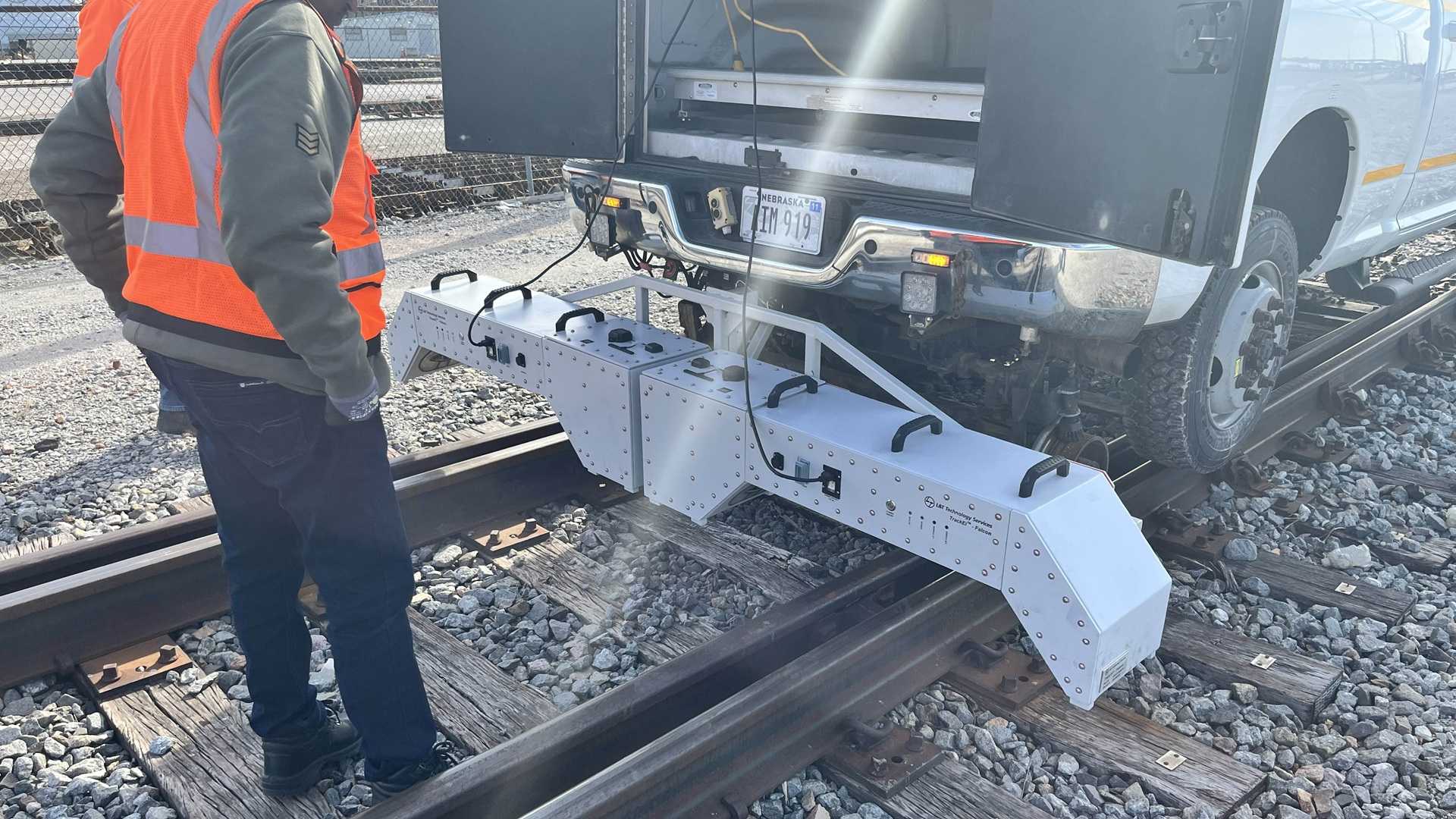
- Track inspection: AI-powered machine vision that analyzes track geometry data and flags changing conditions
- Office work: AI tools for customer communication and finance, and UP Chat, an internal generative AI assistant
What It Takes: UP Chat, Paired Leaders and Track Data
Union Pacific built its own generative AI tool. It bars employees from using public ChatGPT for business and offers UP Chat, which runs inside its secured network, according to a February 2024 company article. Employees must check outputs before sharing them, and the tool may not automate decisions.
Technology and business leaders share ownership of AI. CIO Rahul Jalali pairs technology and business leaders in a “two-in-the-box” model with shared accountability for outcomes, according to CIO.com in April 2026. Jalali said: “We start with the business problem, not the solution.”
Track data feeds the models. Union Pacific inspected more than 644,000 miles of track with geometry systems in 2025, generating more than 100 billion measurements, according to a May 2026 company story. Inspectors still decide where to repair track and when to slow trains.
At least eight to ten major AI projects are under way. Gehringer said in April 2026 that the projects across the company aim to improve service and drive efficiency.
Headcount fell sharply in 2025. Union Pacific had about 29,300 employees at the end of 2025, down from about 32,400 a year earlier. The sources reviewed do not link the drop to AI, and a planned merger with Norfolk Southern is under review by the Surface Transportation Board.
AI fluency, coded against the Lead with AI Fluency Matrix (September 2026 edition):
- Fluency floor: Not published. UP Chat is open to employees, but Union Pacific has set no AI training requirement or usage standard for all staff.
- Highest level evidenced: Level 3 (Integrating), company-claimed. AI informs dispatch plans in real time, and machine vision feeds the daily work of track inspectors. Union Pacific has published no results for this work.
- Portfolio design: Union Pacific concentrates AI on running the railroad and tests each project against service and efficiency.
How Union Pacific Measures Results
Union Pacific reports AI activity, without results. The figures below are company-claimed:
- Projects: at least eight to ten major AI projects across the company
- Inspection: more than 644,000 miles of track inspected with geometry systems in 2025, with more than 100 billion measurements
- Planning: dispatch plans laid out 12 hours ahead with an AI-informed planner
Gaps remain. Gehringer judges AI by car handling removed, dollars saved and service, but Union Pacific publishes none of those figures for AI. Reporting them is the step from AI adoption to AI value.
Next markers: more autonomous, fuel-saving locomotive controls, AI results in dispatch and terminals, the Norfolk Southern merger decision and headcount for 2026.
Change log
- February 2024: Union Pacific describes UP Chat, its internal generative AI tool, and its ban on public ChatGPT for business use.
- April 2026: Gehringer says AI must deliver value and counts at least eight to ten major projects.
- April 2026: Jalali describes the two-in-the-box model for AI ownership.
- May 2026: Union Pacific describes AI-powered machine vision for track inspection.
The Bottom Line
- Disclosure: 4 of 4. Union Pacific answers all four questions, the last only in part, with activity figures and no results.
- Value comes first: each AI project must improve service or efficiency.
- UP Chat replaces public ChatGPT for business use.
- Level 3 is evidenced in dispatch and track inspection, on company-claimed examples.
- The say-do gap is measurement. Union Pacific names the measures it cares about but publishes no AI results.
- Watch the locomotives. The test is whether smarter locomotive controls deliver the fuel savings Vena expects.
Revenue, Headcount and Revenue per Employee
What the numbers show: Revenue fell 1% from 2022 to 2025 while headcount fell 12%, so revenue per employee rose 12%, to about $837k. Most of the drop in headcount came in 2025, when it fell by about 3,150. These figures do not show that AI caused any change.
Revenue, headcount and revenue per employee, FY2022 to FY2025
- FY2022: $24.88bn revenue, 33,179 employees, $750k per employee
- FY2023: $24.12bn revenue, 32,973 employees, $731k per employee
- FY2024: $24.25bn revenue, 32,439 employees, $748k per employee
- FY2025: $24.51bn revenue, 29,287 employees, $837k per employee
Change, FY2022 to FY2025: revenue down 1%, headcount down 12%, revenue per employee up 12%.
Notes: Revenue is operating revenues, as reported. Headcount is employees at year-end. Union Pacific agreed in 2025 to merge with Norfolk Southern; the merger is under regulatory review, and these figures cover Union Pacific alone.
These figures give context on scale and productivity. They do not show that AI caused any change. Sources: Union Pacific 10-K filings.
How Union Pacific Compares with Logistics and Travel Peers
We looked at how Union Pacific compares with other logistics and travel companies in the index. Here is how they stack up.
| Company | Disclosure | AI owner | Fluency floor | Governance | AI value reported | Revenue per employee |
|---|---|---|---|---|---|---|
| Booking Holdings | 3 of 4 | Each brand; no group AI chief | Not published; AI tools for Booking.com staff | Not published | Yes: service cost per booking down 10% in 2025 | $1.11M |
| FedEx | 4 of 4 | Chief Digital and Information Officer | Level 1, AI literacy program for all staff | Capital review board; agents checked by audit agents | Use-case savings and adoption targets, no total | $179k |
| Uber | 3 of 4 | CTO; AI Law and Ethics Council for governance | Not published; near-universal use in engineering and finance | Six principles, a council and an outside review | Activity and process results, no total | $1.53M |
| Union Pacific | 4 of 4 | CIO pairs technology and business leaders | Not published; UP Chat open to employees | Public ChatGPT barred for business; humans make repair calls | Activity figures, no value | $837k |
| UPS | 2 of 4 | Chief Digital and Technology Officer | Not published; upskilling without a standard | Board Risk Committee covers AI risk | Process results; savings folded into network program | $193k |
Disclosure counts how many of the four strategy questions (where it is going, where it will focus, what it will take and how it will know it is working) a company answers in public. Fluency floor is the lowest level of AI fluency a company expects of all its people, on the five levels of the Lead with AI Fluency Matrix: Avoiding (0), Chatting (1), Collaborating (2), Integrating (3) and Transforming (4). The other columns summarize each company’s profile. Revenue per employee is for each company’s latest fiscal year, in US dollars. See all companies in the AI Strategy Index.
Frequently Asked Questions
What is Union Pacific’s AI strategy for its own work?
Union Pacific uses AI where it improves service or efficiency, mainly in dispatching, terminals and track inspection. It has at least eight to ten major AI projects.
Who leads AI at Union Pacific?
CIO Rahul Jalali pairs technology and business leaders who share accountability for AI. Executive Vice President of Operations Eric Gehringer leads AI in running the railroad.
What is UP Chat?
UP Chat is Union Pacific’s internal generative AI assistant, which runs inside its secured network. Employees use it to summarize documents, analyze data and draft content.
Is Union Pacific cutting jobs because of AI?
The sources reviewed do not link Union Pacific’s job cuts to AI. Headcount fell to about 29,300 at the end of 2025.
How is this profile put together?
Lead with AI profiles use public sources only, such as annual reports, earnings materials, filings and on-record interviews, dated at the time of writing. AI fluency is coded against the Lead with AI Fluency Matrix, and company figures are marked as company-claimed unless they have been independently verified.
About the AI Strategy Index
The Lead with AI AI Strategy Index profiles how the largest companies in the US and Europe approach AI, starting with the S&P 100 and the STOXX Europe 50. Each profile answers four questions: where the company is going with AI, where it will focus, what it will take and how it will know it is working. AI Pacesetters and notable companies outside the two indexes are profiled for contrast and are not counted. Profiles use public sources only, and AI fluency is coded against the Lead with AI Fluency Matrix.
See all company profiles