
Why documentation-first culture is the hidden advantage in AI adoption

Based on the Lead with AI PRO live session with Chase Warrington, Head of Operations at Doist, moderated by Phil Kirschner, Lead with AI Transformation Partner.
Most companies use AI. Very few have built their organization around it.
The difference matters. An AI-native organization doesn't just give employees access to AI tools and hope for adoption. It restructures how knowledge flows, how work gets done, and how teams stay aligned, with AI woven into the operating model itself rather than layered on top of it.
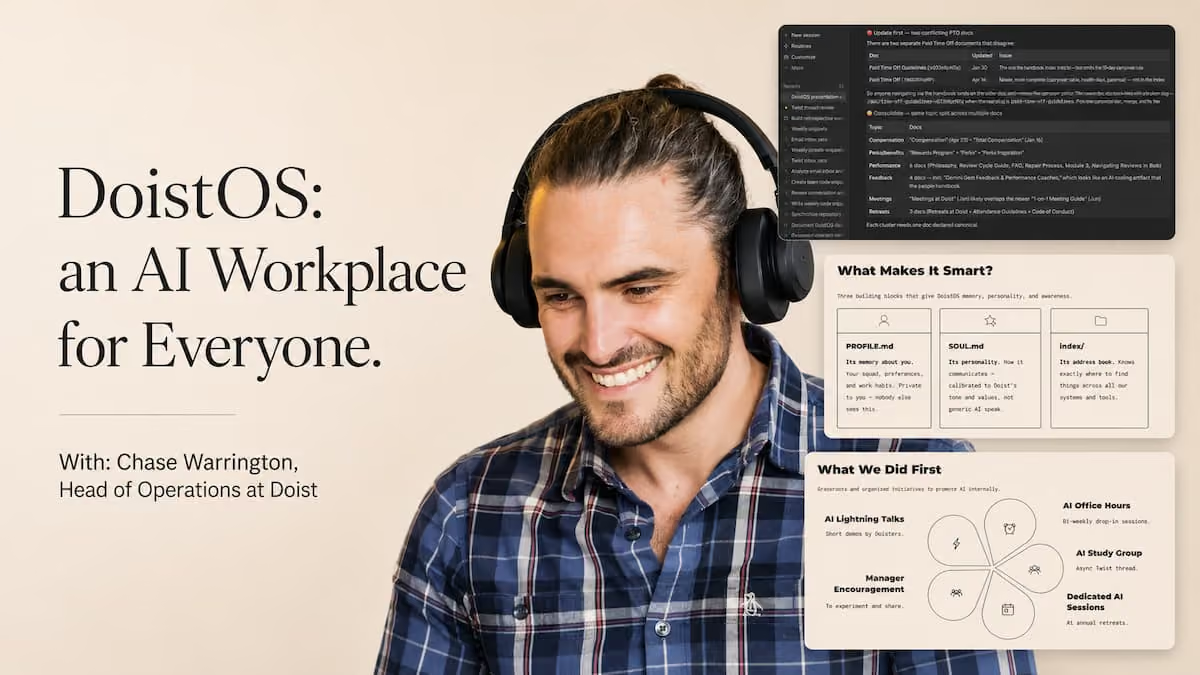
Doist, the 100-person, fully remote company behind Todoist and Twist, is one of the clearest examples of what this looks like in practice. Their internally built AI workspace, Doist OS, connects every tool where the company's knowledge lives and makes it accessible to every team member through plain-language conversation. It became the highest-scoring product in the company's history on their own product-market-fit survey.
In this session, Head of Operations Chase Warrington walked Lead with AI PRO members through how they built it, and why their pre-existing culture of documentation, async communication, and shared knowledge made it possible. For any organization asking "where do we actually start with AI?", this is the answer.
The most underestimated AI advantage most companies already have is their existing knowledge base. Doist has been fully remote and async-first since 2007, which means almost everything the company knows lives in writing rather than in meetings or hallway conversations.
"We have 1,800 pages of handbook content. A big part of my job is keeping that up to date and making sure everybody's contributing to it." – Chase Warrington, Doist.
When Doist decided to go all-in on AI, that documentation foundation meant there was already a rich, structured knowledge base to feed into a shared AI workspace.
The company didn't have to build context from scratch. They had thousands of Twist threads, a 1,800-page handbook in Outline, project data in Todoist, code in GitHub, and years of documentation in Google Workspace. All ready to be connected.
For companies that are more office-based, the same opportunity exists.
"Everybody's communicating some way," Warrington said. "Email, Slack, whatever it may be. You have a huge knowledge base there. If you connect something like your version of Doist OS to those sources and share that amongst the team, you instantly 10x your knowledge base organization-wide."
This is where AI fluency across the organization stops being theoretical and becomes practical: the more structured your documentation, the faster AI turns that context into action.