

Adapted from a live briefing I hosted for Lead with AI PRO members. Members can watch the recording here.
I have a small e-commerce store I am building with my wife. It is called Coffee Shopee, and it runs almost entirely on its own: orders come in, agents process them, and the whole thing just works.
That is also where I first started watching my token budget drop in real time while the agent was still working. It is exactly why I want to talk about token maxing versus budget maxing.
What Token Maxing Really Means, and Why Token Scarcity Showed Up So Fast
For the past few years, there has been a notion that AI is almost unlimited.
You pay $20 a month, and ChatGPT or Claude never really runs out of tokens, except for that one corner case where Opus got expensive. That subsidized, all-you-can-eat feeling shaped how an entire generation of professionals learned to use AI.
Everybody is now moving toward agent workflows and long horizon tasks, and that is where you can burn through tokens fast. Given the sheer number of data centers that have gone up, it is almost strange that we are talking about token scarcity at all, but that is exactly what demand has done.
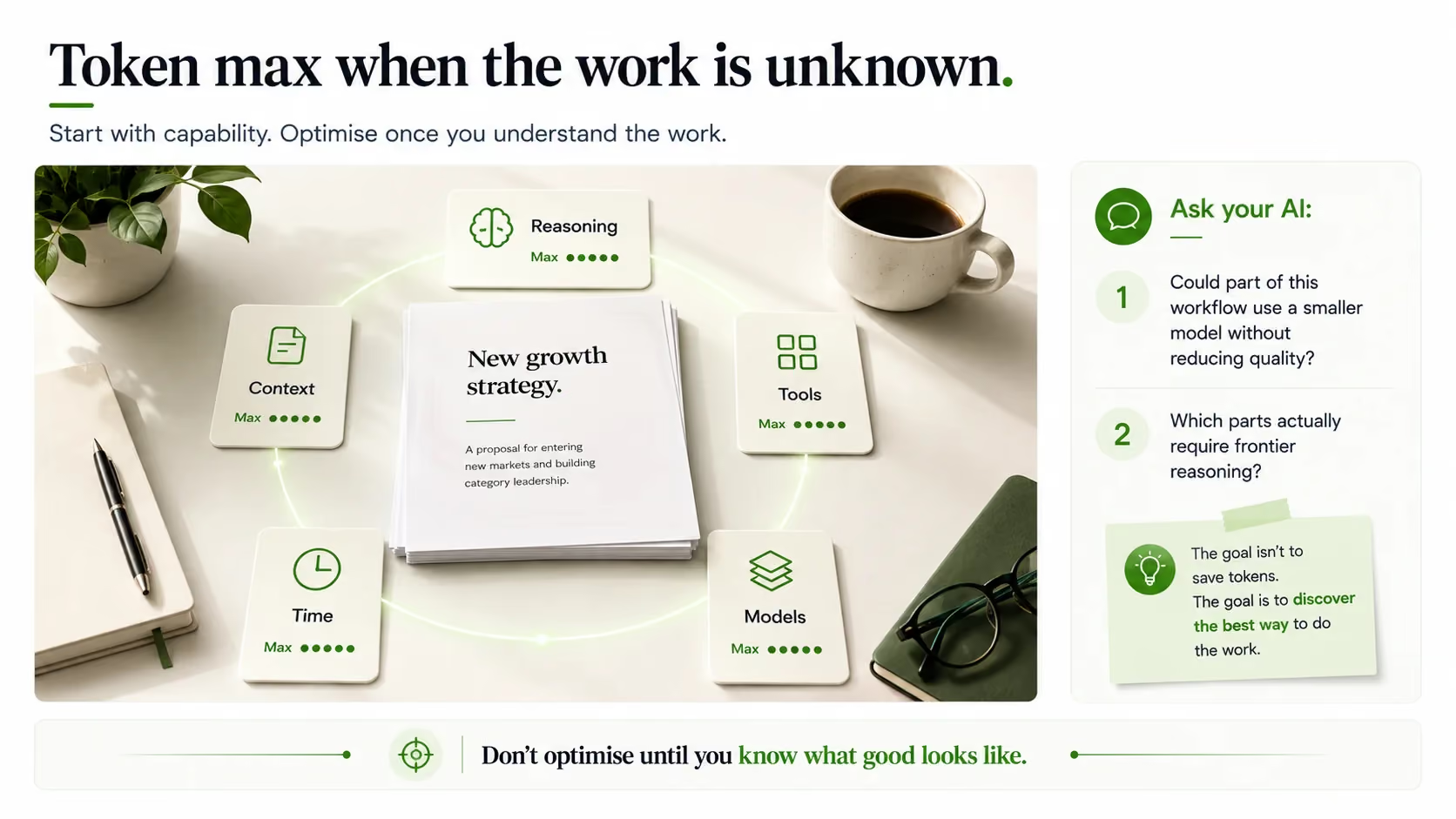
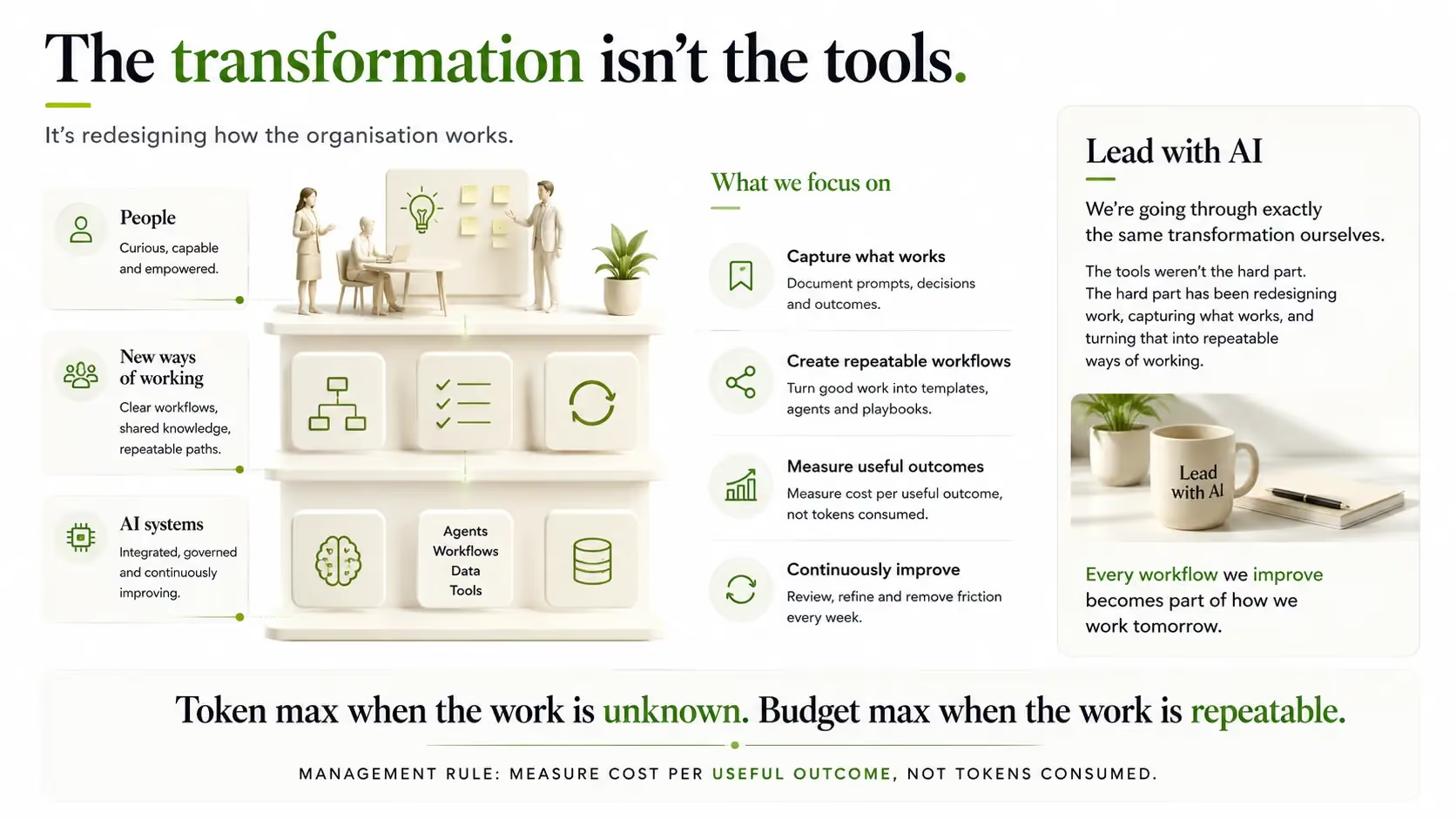
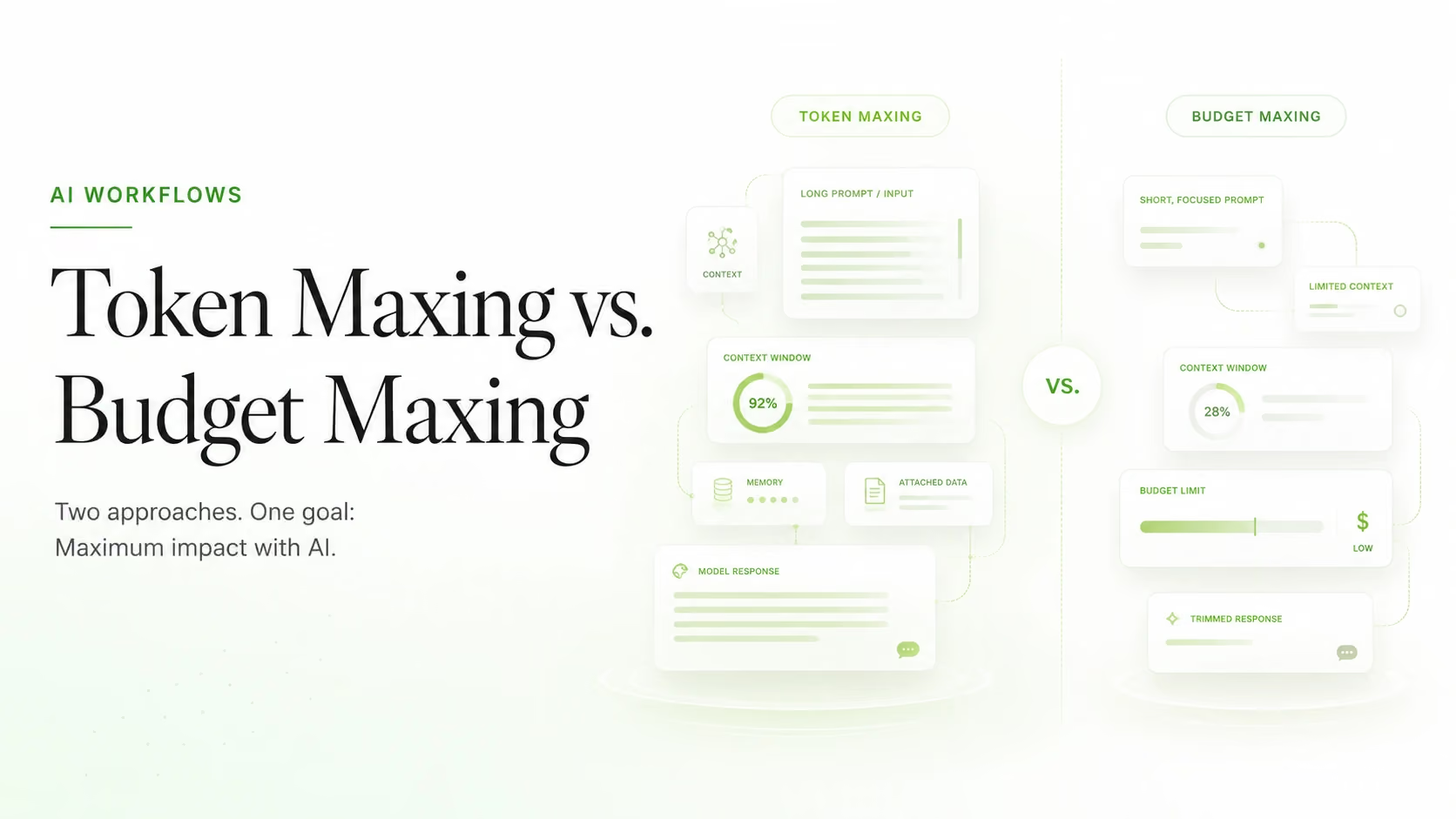
So you end up with token scarcity and token maxing happening at the same time. People are still trying to use as many tokens as possible, right as the supply gets tighter and the bills get real. Something has to give, and that is the phrase I have started using with our team: budget maxing against token maxing, knowing when to do one and when not to do the other.
How We Got Here: From Chatbots to Persistent, Always-On Agents
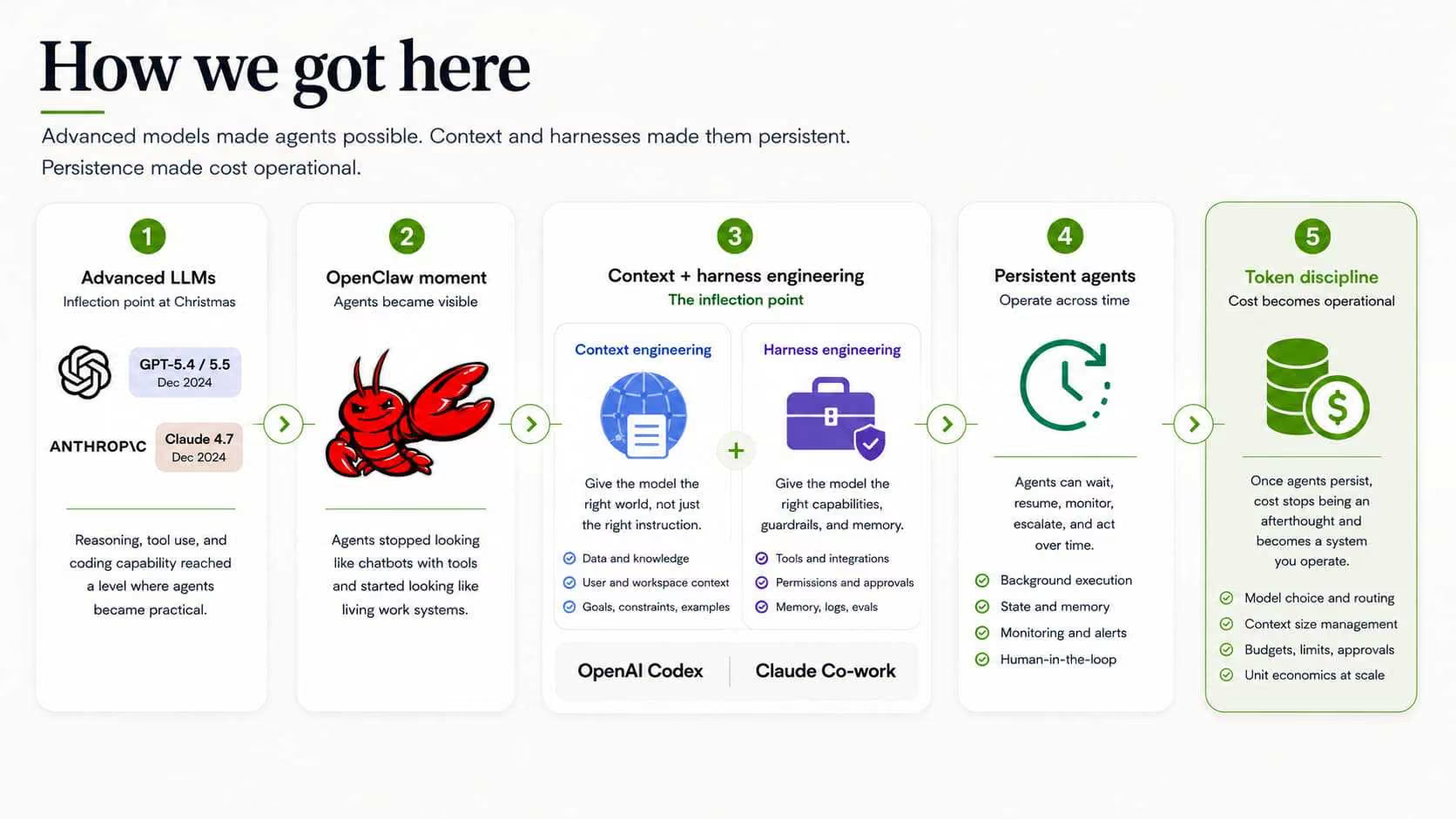
The advanced models that landed around Christmas gave rise to genuinely strong coding capability. Well-known coders like Andrej Karpathy went home for the holidays and came back saying this is amazing, coding is basically solved, and now it is about agency and direction rather than typing every line yourself.
Not long after that shift, OpenClaw happened, and models with real capability were suddenly sitting inside a framework anyone could run with almost no guardrails. It was originally a technical, open source project, but it hit the mainstream, went viral, and everybody was buying Mac Minis to run their own agent at home.
An agent harness is what turns a capable model into something active in the real world. The model already has the ability to do long horizon thinking and reasoning without getting lost, and a harness wraps structure around that: memory, a file system, runtime, and a lot of tool access.
Harnesses existed before OpenClaw too, mostly technical tools like Cursor. OpenClaw is just what pushed the idea into the mainstream.
After that came persistent agents, deployed in the cloud or on a dedicated machine, running 24 hours a day, seven days a week. That is exactly what is happening with Coffee Shopee. It just runs, taking orders and posting updates completely on its own, the same way some people are running actual businesses off a persistent OpenClaw or Hermes agent sitting in the background.
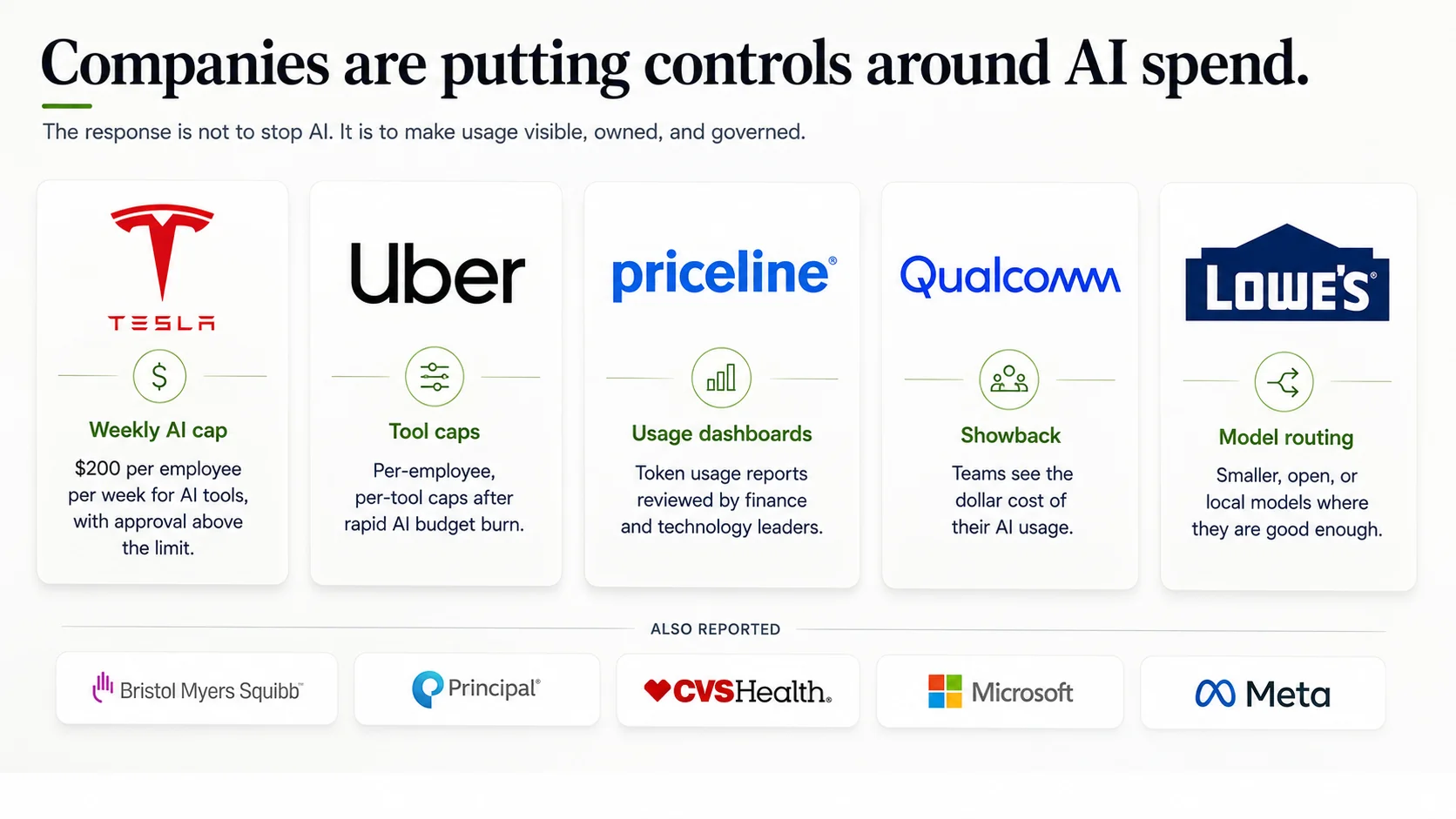
That is the point where cost stops being theoretical. You are no longer chatting with a model for $20 a month. You are running systems that work continuously on your behalf, or your team's behalf, and the token spend goes up like a hockey stick.
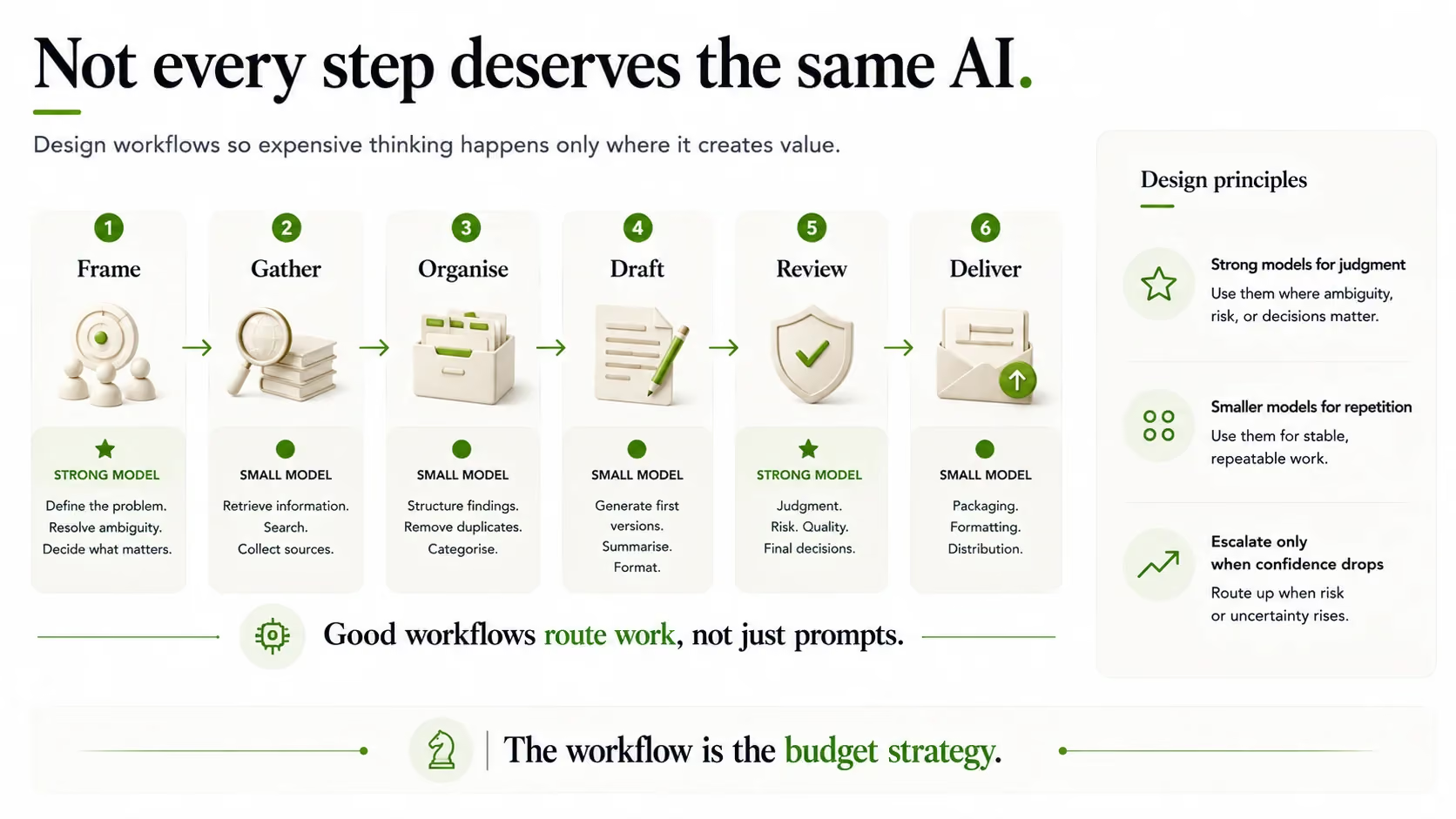
That is when model choice, routing, context management, budgets, limits, and approvals start to matter. It is also the point where the CFO gets involved, which is never a comfortable conversation.
The mechanical reason for this is simple once you see it. A chatbot is linear: you put something in, it does something, you get an answer, you say something else back.
An agent works through an agent loop instead. It creates a plan and executes that plan in a loop, sometimes many loops or many agents at once, and it keeps going until it hits the goal you set.
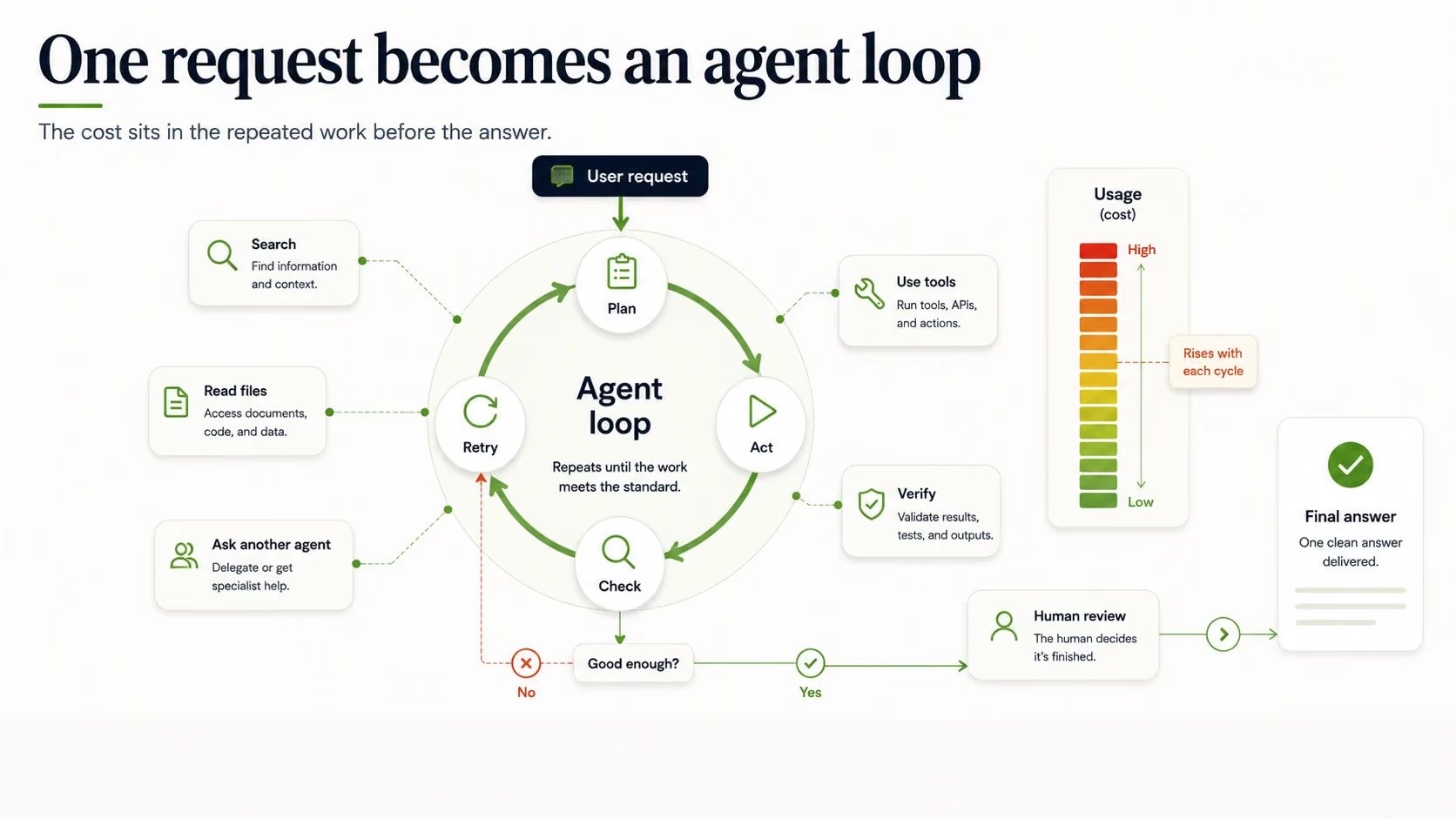
While it does that, it is reading files, calling tools, and touching your file system, and every one of those steps costs tokens. That is why one request into an agent can turn into a huge amount of token use compared to a normal chat exchange.
This is also why the newest frontier models feel so expensive to run in an agent loop. Fable 5 is eye-wateringly expensive when you are using it. You can genuinely watch your token budget tick down while it is still working, even with Anthropic subsidizing it at 50 percent off.