
July 24, 2026

The Capability Overhang: Why AI Can Do More Than You Ask It To

The capability overhang is the growing gap between what AI can do and what we actually use it for. Here is what it means and how leaders can close it.
Daan van Rossum
By
Daan van Rossum
Founder & CEO, Lead with AI

What the Capability Overhang Actually Is

Presented by

Here is an uncomfortable fact about this moment in AI. The tools already open on your screen are more capable than almost anyone is asking them to be.

That gap has a name.

The capability overhang is the distance between what AI can already do and what people and organizations actually use it for.

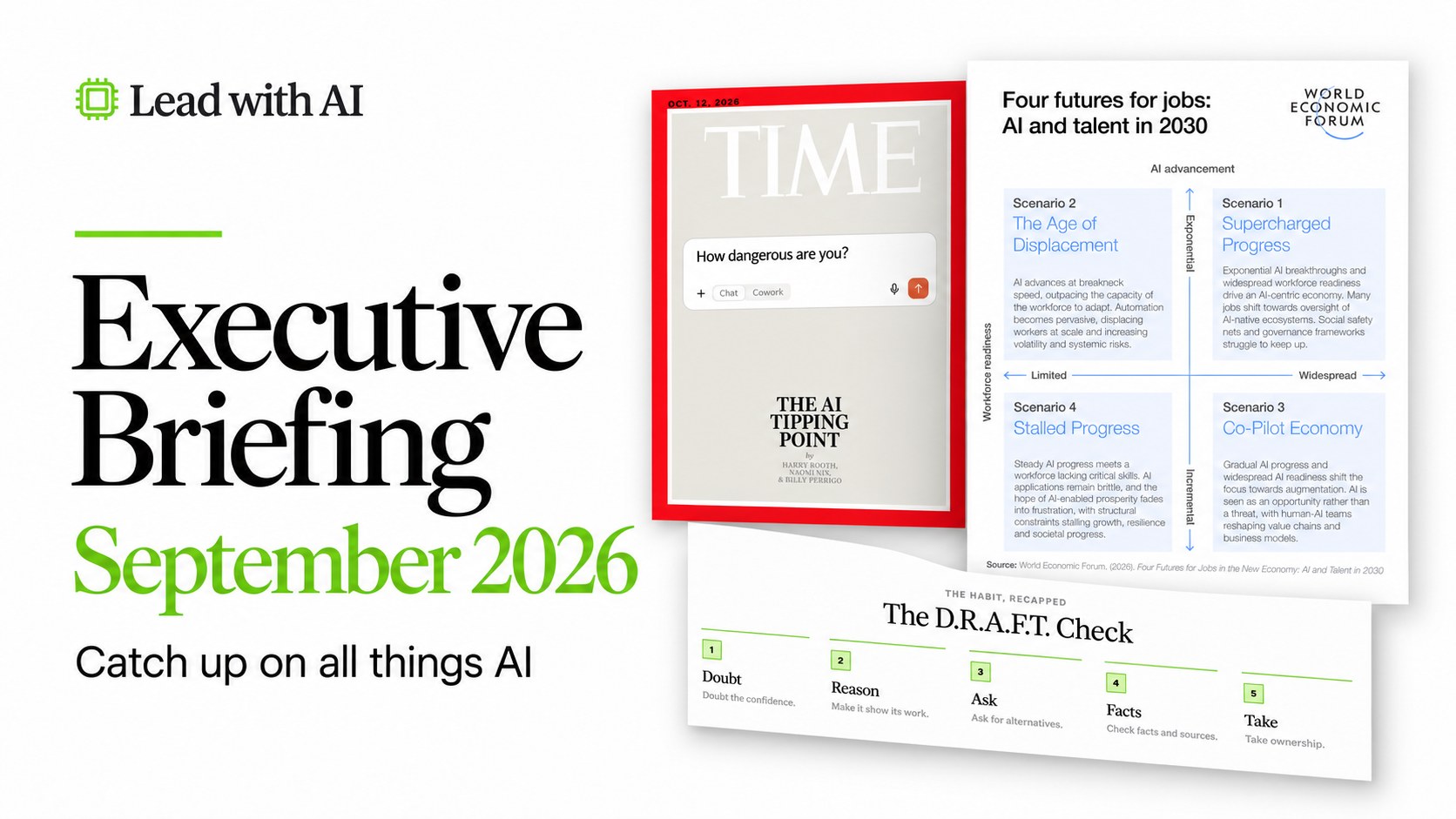
The models keep getting stronger. Our habits do not keep up. So the gap widens. (We first dug into this in Lead with AI's June Executive Briefing.)

The "Capability Overhang"

The term is not new, it has floated around AI circles for a few years.

The Verge used it back in 2022 to describe the hidden skills, and hidden risks, buried inside new models. More recently, Microsoft's CTO Kevin Scott turned it into a boardroom phrase.

He describes today's systems as "more powerful than what people are using them for," and argues the real work now is applying what we already have with judgment and purpose.

OpenAI made the same point in its January 2026 paper 'ending the capability overhang', predicting that progress toward AGI will depend as much on helping people use AI well as on building better models.

It all points to the same idea: the bottleneck for truly benefit from AI is not the model or the platform, but us humans.

Flagship AI Newsletter
The AI Newsletter That Makes You Smarter, Not Busier
Join over 30,000 leaders and receive our insights on AI platforms, implementations, and organizational change management.
FlexOS Course - AI Content Accelerator - Testimonial Badge

Why We Keep Waiting for the Wrong Thing

Most leaders are waiting: we tell ourselves the current tools are not quite ready, and that the next release will finally unlock the value. Or we think that AI is just not good enough for what we want to do.

Stanford AI professor Jeremy Utley countered that idea: "it's not an AI problem, it's a you problem."

And Kevin Scott's advice is blunt and simple: stop waiting and "do the damned experiments." The capability is already sitting there, unused, like a race car in a parking lot.

Why does this happen? Because access is easy and fluency is hard.

Buying a license is as easy as pressing 'purchase', but learning to redesign your actual work around AI, what we call Workflow Literacy, takes months of deliberate practice.

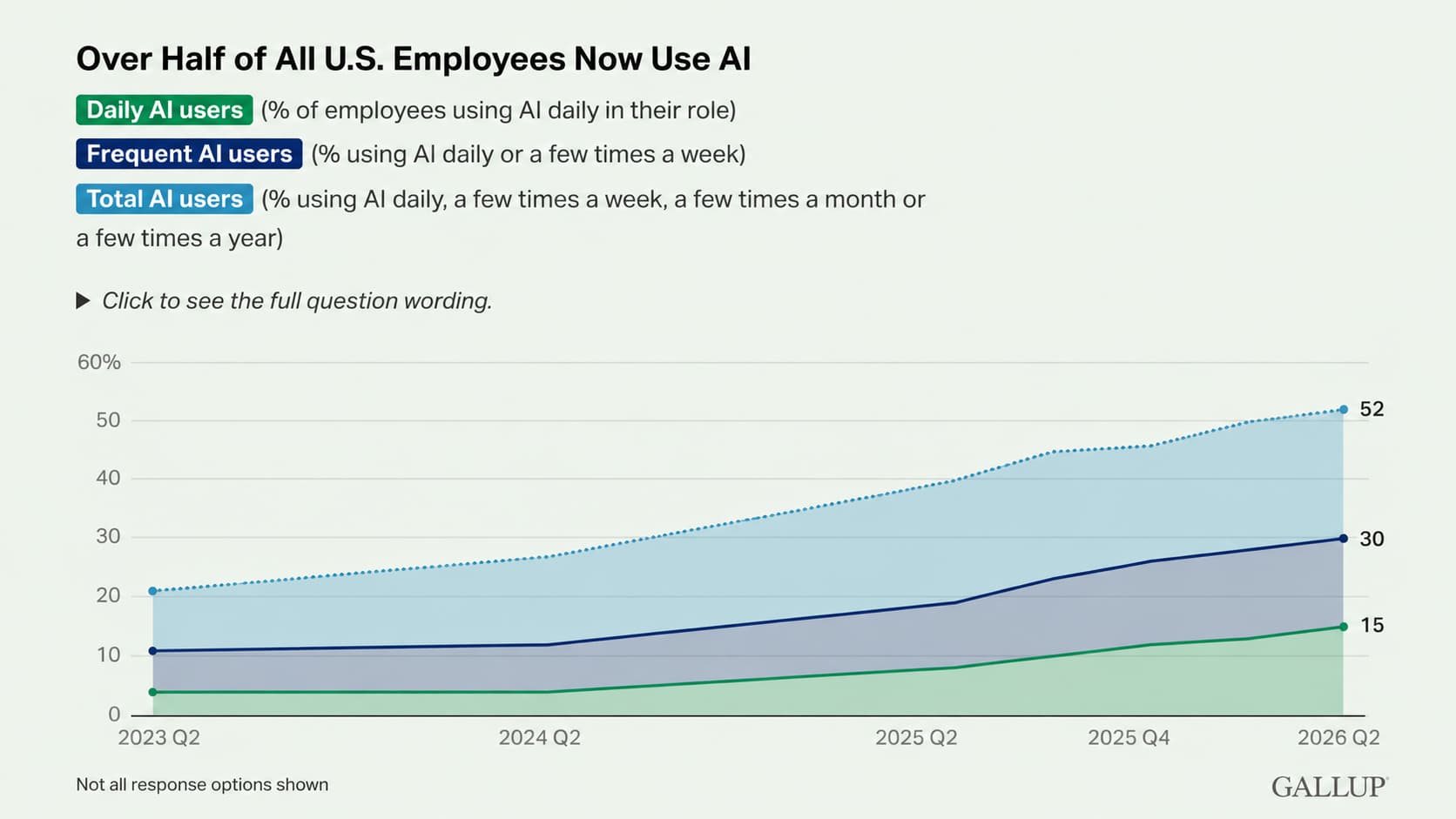
That is why Gallup's latest workforce research shows AI adoption still climbing: most employees barely touch the tech, or avoid it alltogether:

The AI statistics keep rising, yet the share of companies seeing real performance gains has not kept pace.

Want to reach 30,000+ business leaders applying AI in their work, teams, and organizations?​
Advertise with us​​.

How It Connects to What We Teach

This is the whole reason Lead with AI exists, and it is where the overhang connects directly to our themes.

First, literacy is not fluency. Knowing that a tool exists, and having real AI fluency with it, are two different things. The overhang is simply the gap between literacy and fluency at scale.

Second, closing the overhang looks like climbing a ladder.

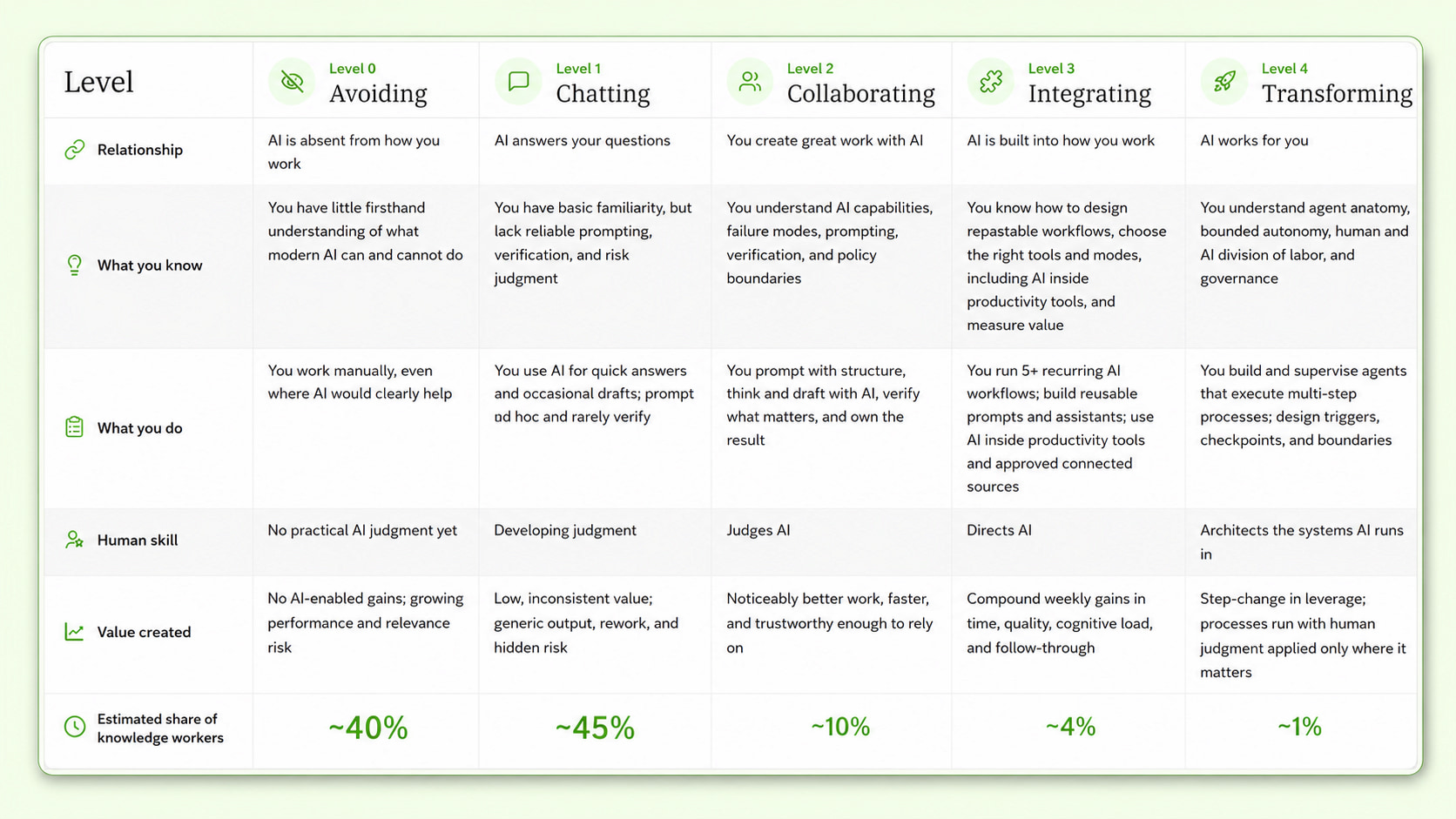
Our AI Fluency Matrix describes five levels, from avoiding AI, to chatting with it, to collaborating, to integrating it into workflows, to transforming how work gets done inside AI native organizations.

Data shows that 80% of people are stuck near the bottom of that ladder while their tools sit near the top.

__wf_reserved_inherit
The Lead with AI Fluency Matrix – 85% doesn't use AI or uses it for basic features

The overhang is the space between those two points, and we see daily that you can really only close it one level at a time.

Third, the value is often already hiding inside your organization.

Wharton AI professor Ethan Mollick calls these people Secret Cyborgs. BCG calls them the Independent Explorers: the employees quietly getting extraordinary results from AI (often without telling anyone.)

They are the living proof that the capability is reachable. The leadership job is to find them, learn from them, and build AI champion programs around what they know.

Finally, no model update fixes this for you. Scott's own conclusion was that there is no silver bullet.

The overhang closes through people-centric transformation, through skills, trust, and workflow design, not through waiting. Something we recently heard from the People and Talent team at Zapier.

That is a leadership problem, which is good news, because you can actually act on it, soon.

The Bottom Line

  • The capability overhang is the widening gap between what AI can do and what we actually use it for.
  • The constraint is human and organizational, not technical. The next model will not close it for you.
  • Access is not fluency. Rising adoption numbers are not the same as rising value.
  • Treat it as a ladder, not a switch. Use the AI Fluency Matrix to move your people up one level at a time.
  • Start with your Champions. The proof that the overhang can be closed is probably already on your payroll.
Want to reach 30,000+ business leaders applying AI in their work, teams, and organizations?​
Advertise with us​​.

Frequently Asked Questions

What is the capability overhang in AI?

It is the growing gap between what AI systems are technically capable of and what most people and organizations actually use them for. As models improve faster than the habits and workflows around them, the gap widens, which is why closing it depends on human fluency and leadership rather than on the next model release.

Who coined the term "capability overhang"?

No single person coined it. The phrase circulated in AI research circles for years before it reached the boardroom. The Verge used it back in 2022 to describe the hidden skills buried inside new models. What changed recently is who is saying it. Microsoft’s CTO Kevin Scott has become its most prominent voice, using it to describe how today’s systems are more capable than the work we ask of them. So it is more accurate to say Scott popularized the enterprise version of the term than that he invented it.

How do leaders close the capability overhang?

You close it the way you build any skill, one level at a time. Start with the real work rather than the tool, and find the specific tasks where AI already helps. Redesign those workflows so AI carries more of the load. Then find the people who are already getting results, your Champions, and spread what they know across the team. The gap does not close because you bought better software. It closes because your people learn to use what they already have.

Is the capability overhang just another word for slow AI adoption?

No, and the difference matters. Adoption measures access, whether people have the tools and use them at all. The capability overhang measures depth, how much of what those tools can do actually gets used. You can have high adoption and a wide overhang at the same time, which is exactly where most organizations sit today. Everyone has the tools. Very few are close to their limits.