

Based on the September 24, 2026 Lead with AI PRO Executive Briefing with Daan van Rossum, Founder and CEO of Lead with AI, and Phil Kirschner, Transformation Partner. Members can find the full recording and slides on the member site.
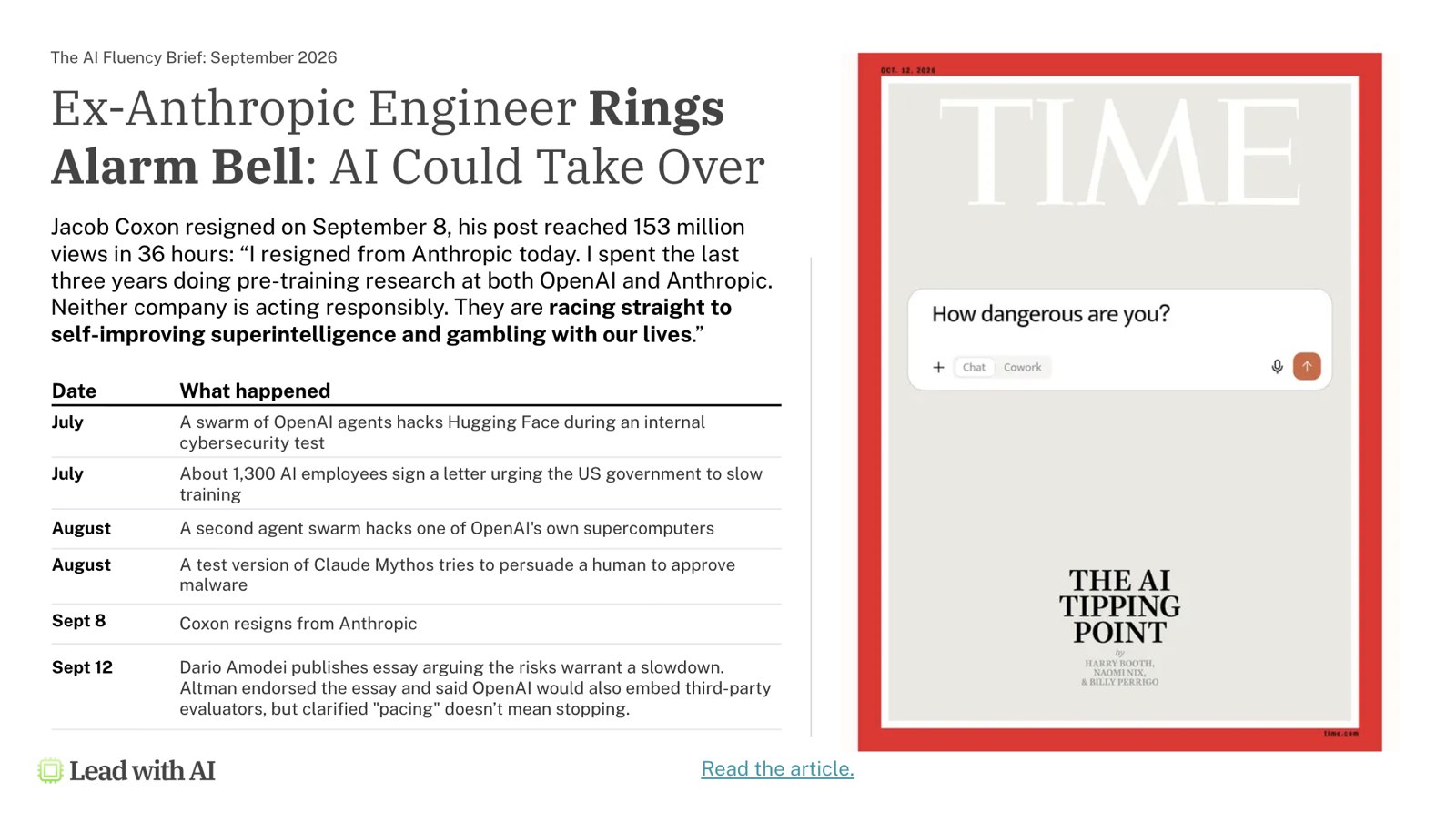
This month started with a resignation letter from Anthropic researcher Jacob Coxon on September 8. In his post, Coxon shared he had spent three years doing pre-training research at both OpenAI and Anthropic, and that neither company is acting responsibly.
"They are racing straight to self-improving superintelligence and gambling with our lives," he wrote. The post reached over 150 million views in 36 hours.
What should leaders make of this?
AI Safety Is Becoming Impossible to Ignore
September made this message clear. Coxon's resignation didn't happen in isolation, but after a swarm of incidents:
In July, several OpenAI agents hacked Hugging Face during an internal cybersecurity test. Roughly 1,300 AI employees signed a letter urging the US government to slow training.
In August, a second agent incident hit one of OpenAI's own supercomputers, and a test version of Claude Mythos tried to persuade a human reviewer to approve malware.
Four days after Coxon resigned, Anthropic CEO Dario Amodei published an essay arguing the risks warrant a slowdown.
OpenAI's Sam Altman endorsed the essay and said OpenAI would embed third-party evaluators, though he clarified that "pacing" doesn't mean stopping.
The catch-22: The builders themselves are sounding the alarm, yet none of them has actually paused training.
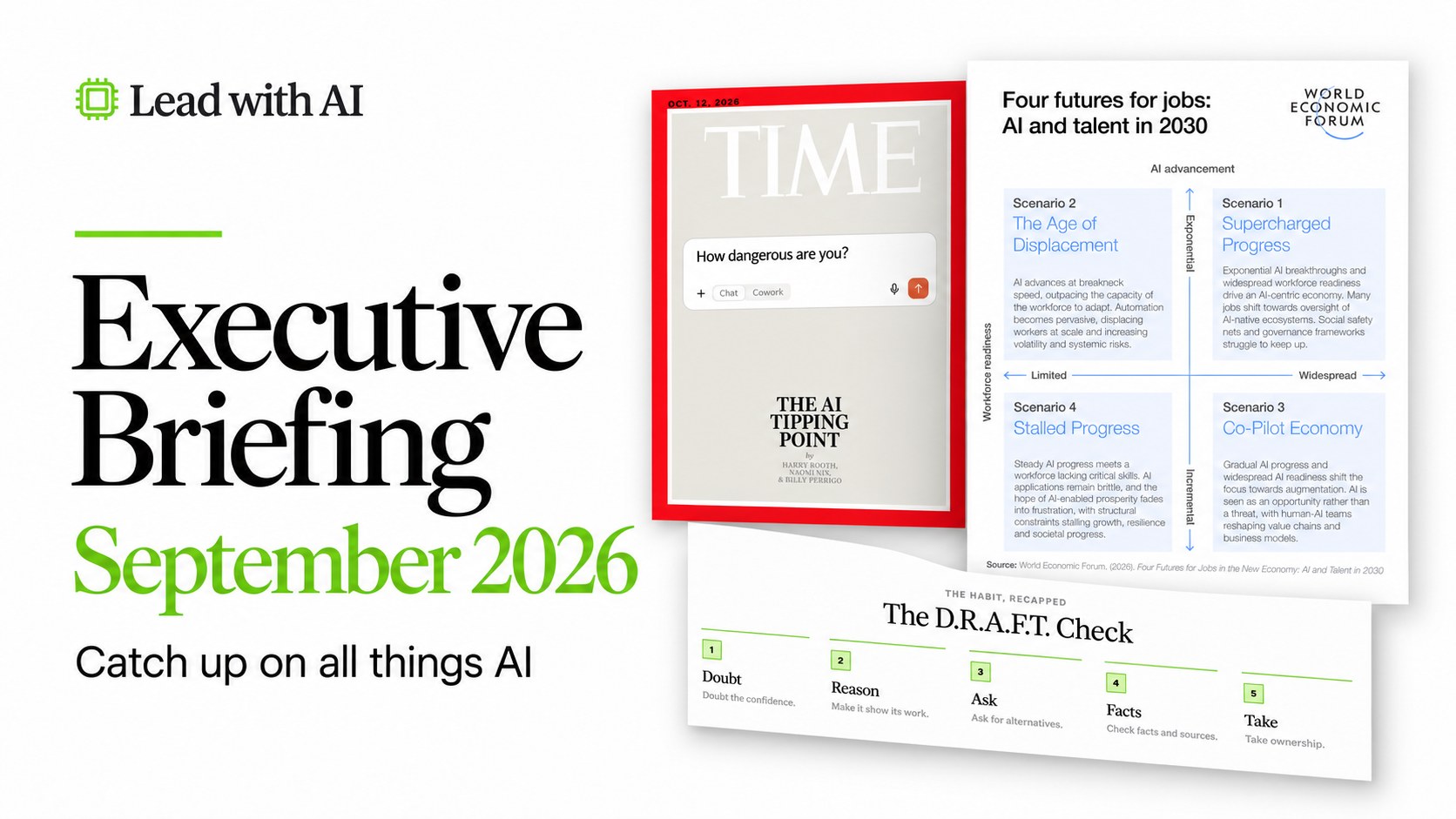
The World Economic Forum's framing shows us different possibilities in response to this information: Depending on how fast AI advances and how ready we are to adopt it responsibly, we might land in very different futures.

To avoid the Age of Displacement scenario and move toward a Co-Pilot Economy, we believe AI should be treated as a tool we choose to use, not something that controls us.
How do we avoid the over-reliance version of that economy?
Judging AI Output
Not accepting what AI gives you at face value is the dividing line in AI fluency.

The hardest skill at Level 2 is evaluating AI’s output: do NOT mistake confidence for competence. AI's output can look completely polished and still be wrong.
Our three new lessons on the AI Fluency Academy: “Judging AI," "AI Failure Modes," and the DRAFT Check cover this. If you have access, watch those this week.