
Choosing an AI platform can feel like a once-a-decade decision: one supplier, one contract and one big rollout.
The largest companies keep changing their AI platforms. In a July 2026 Morning Consult survey of US business decision makers, 36% of companies with 5,000 or more employees said they may replace a current primary AI platform within the year. Only 27% run a single primary platform across the company.
The companies furthest ahead have gone direct to the leading AI labs. In our AI Strategy Index of the S&P 100 and STOXX Europe 50, 19 of the 22 companies that publish an AI strategy have a company account with OpenAI, Anthropic or both. Among the other 128 companies, 66 do (as of November 21, 2026).
So what does a good platform decision cover? We break it into five choices, each with an output you can take to your leadership team:
- Decide how many AI suppliers to run. Your output is a supplier policy.
- Pick the AI assistant everyone gets. Your output is the staff assistant decision.
- Decide what you build and what you buy. Your output is a build list and a buy list.
- Equip the people who build, and cap the cost. Your output is a coding tools policy with a usage budget.
- Connect AI to your data and systems. Your output is the data platform and the connection standard.
AI Strategy Index, November 2026
Nearly half of the 150 largest companies have a company account with Anthropic, and more than a third with OpenAI
Share of the 150 with a company account on record
Company account with OpenAI or Anthropic on record
Source: Lead with AI, AI Strategy Index. Public records behind the main web addresses of the S&P 100 and STOXX Europe 50 companies, November 21, 2026. A company account shows that the account exists, not how widely the tool is used.
What Is an AI Platform?
An AI platform is the set of AI tools a company approves for its people and systems: the assistant everyone uses, the AI models behind it, the tools for building with AI, and the connections to company data.
Most large companies end up with several pieces from several suppliers. The model inside each tool changes every few months, so the decisions that last are the rules around the tools: who may use what, what it costs and which data it can reach.
The five choices below are where those rules get set. Each one comes with what the 150 largest companies chose, named examples and what to copy at your size.
The AI platform decision
The five AI platform choices, and the paths the largest companies took
1Decide how many AI suppliers to run
Your output: a supplier policy
One long-term partner
UniCredit, with Google Cloud
A supplier for each job
Banco Santander
Many models on one platform
BNY, Cisco
2Pick the AI assistant everyone gets
Your output: the staff assistant decision
ChatGPT Enterprise
BBVA
Microsoft 365 Copilot
Barclays
Claude
Bristol Myers Squibb
Gemini
Air Liquide
3Decide what you build and what you buy
Your output: a build list and a buy list
Own tool, then Copilot
AXA
Own assistant next to Copilot
UBS, Citigroup
Own platform for the whole company
JPMorgan Chase, Siemens
Own models and agent system
Capital One
4Equip the people who build, and cap the cost
Your output: a coding tools policy with a usage budget
Codex
Oracle
Claude Code
Verizon, Uber
Cursor
Nvidia
A usage allowance per person
Walmart
5Connect AI to your data and systems
Your output: the data platform and the connection standard
Cloud and data partnership
Unilever, with Google Cloud
Shared data platform
Southern Company, Caterpillar
Approved channels for agents
American Express
A gateway for outside agents
Walmart
Examples from the company announcements and coverage cited in this guide.
1. Decide How Many AI Suppliers to Run
One supplier is simpler to govern, and several give you leverage and the best model for each job. AI models leapfrog each other every few months, so a single-supplier bet can leave your people on the weaker model for a year.
Among the 150, the split is close to even. As of November 21, 42 have company accounts with two or more AI model makers, 43 with one, and 65 show none on record. US companies combine suppliers more often: 32 of 100 have accounts with both OpenAI and Anthropic, against 8 of 50 in Europe.
AI model makers per company
Among the 150, two AI model makers on record are about as common as one
Model makers with a company account on record
Accounts with both OpenAI and Anthropic
Model makers counted: OpenAI, Anthropic and Mistral. Companies can also reach AI models through their cloud provider without an account on record. Source: AI Strategy Index, November 21, 2026.
Companies that run several suppliers route each task to a model. The BNY AI strategy runs on Eliza, an AI platform that BNY says is built to bring in models from OpenAI, Google and Anthropic, according to its first-quarter 2026 call. The Cisco AI strategy does the same through Circuit, which gives more than 100,000 users several AI models through one secure interface (Cisco, company-claimed).
Some banks say the flexibility is the point. BNP Paribas Group CIO Marc Camus said a multi-model approach gives the bank "the flexibility to select, for each case, the right model" when it signed a five-year partnership with Google Cloud in September 2026.
Others split the work by job. The Banco Santander AI strategy extended AI access to all 185,000 employees in June 2026 (Santander). Microsoft Copilot covers everyday productivity, and ChatGPT, Claude and Gemini serve more specialized jobs.
A few standardize on one partner for the long run. UniCredit signed a 10-year agreement with Google Cloud in May 2025 to run its AI on Vertex AI and Gemini models across its 13 core markets.
Across a much broader set of US businesses, Anthropic has overtaken OpenAI. In October 2026, 44.8% of the more than 85,000 US businesses in the Ramp AI Index paid Anthropic, up from 16.6% a year earlier. The share paying OpenAI was 40.6%, the same as a year earlier, and 56.8% paid for at least one AI service.
Ramp AI Index, July 2023 to October 2026
Anthropic passed OpenAI among US businesses on Ramp in May 2026
Share of US businesses on Ramp paying each AI supplier
Source: Ramp AI Index, share of the more than 85,000 US businesses on Ramp with spending on each supplier's AI models, subscriptions, tokens or APIs, data through October 2026. Ramp counts payments made through its platform, so free tools and personal accounts are missed.
At your size, one primary assistant plus access to a second supplier's models is enough. The major clouds each offer models from more than one supplier, so a second supplier rarely needs a new contract.
Your output is a supplier policy: a primary supplier, an approved second one, and contract terms that let you switch within a year.
2. Pick the AI Assistant Everyone Gets
Most staff will judge your AI program by the assistant they get. It is the tool they open every day, so this choice decides how quickly AI becomes part of normal work.
Surveys put Microsoft Copilot in the most large companies. Morning Consult found ChatGPT Enterprise approved or in use at 44% of the largest US companies, Microsoft Copilot at 73% and Gemini at 47%.
The work of the 150 mostly lives in Microsoft. As of November 21, 116 of the 150 show Microsoft 365 in the public records behind their web addresses, and 11 show Google Workspace. Copilot usually arrives through that existing contract, so many companies never announce it, and those records cannot show it.
Each of the four leading assistants has a company-wide rollout among the 150. The BBVA AI strategy extends ChatGPT Enterprise to its more than 120,000 employees (BBVA, December 2025). Barclays rolled out Microsoft 365 Copilot to about 100,000 colleagues in 2025 (Computer Weekly).

Claude and Gemini have company-wide rollouts too. Bristol Myers Squibb made Claude a shared AI platform for more than 30,000 employees in May 2026. Air Liquide gives Gemini to all 65,000 employees through its digital workplace, according to CHEManager.
Many companies give people more than one assistant. The Citigroup AI strategy gives nearly 180,000 colleagues its own Stylus Workspaces and Citi Assist alongside Microsoft 365 Copilot Chat (Citi).
Only 22 of the 150 say what AI fluency they expect of all staff. On our AI Fluency Matrix, 21 of them set the floor at chatting with AI, and one expects everyone to collaborate with it.
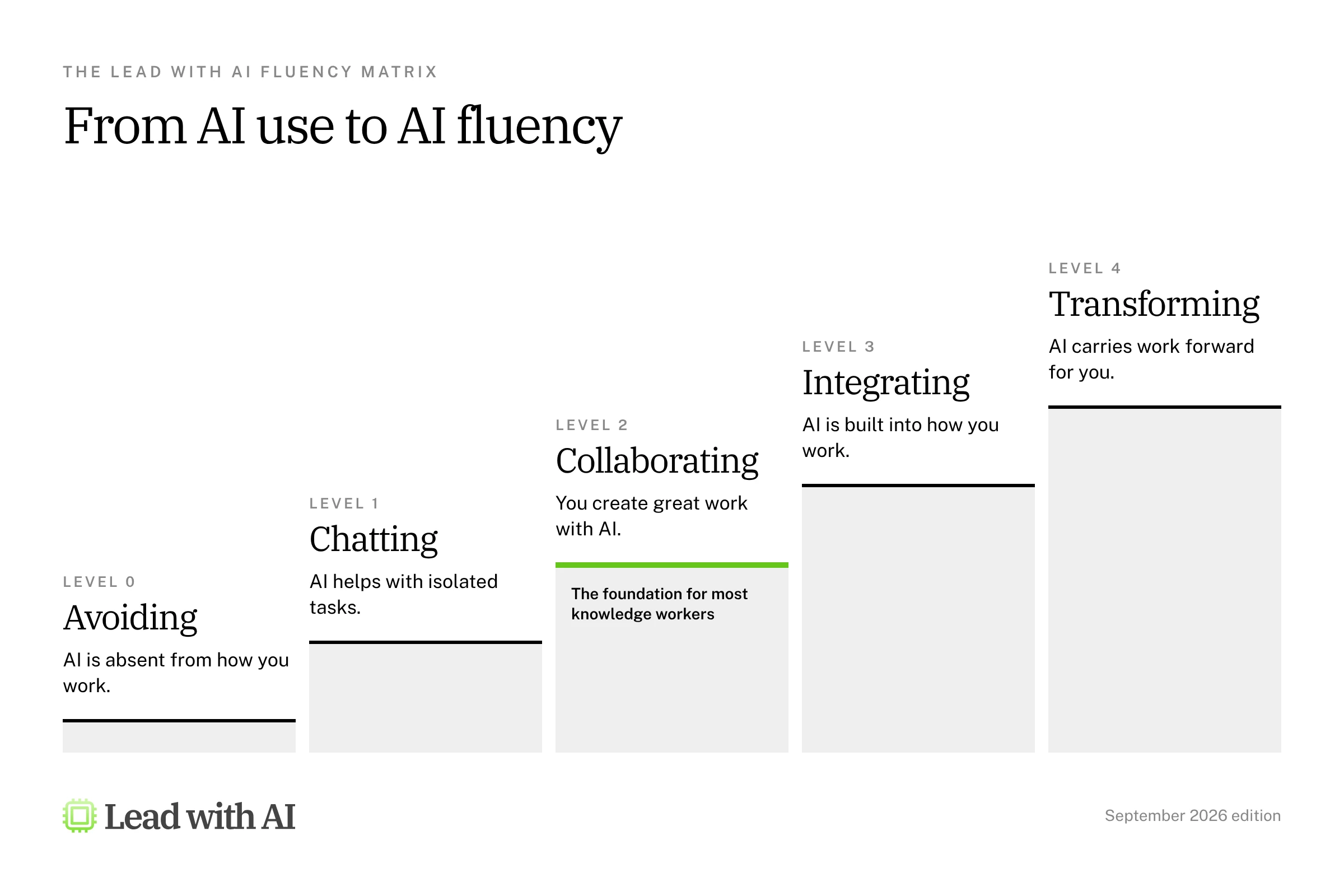
The assistant has to fit that floor. If you expect people to build their own agents, it has to let them, and if you expect them to draft and summarize, any of the four will do. Our AI tools directory shows what each assistant can do in everyday work.
At your size, choose for where the work already lives and for the fluency you are aiming for, then train people before you scale.
Your output is the staff assistant decision: which assistant, for whom, at what fluency floor and with what training.
3. Decide What You Build and What You Buy
Several of the largest companies run their own AI platform, and several use it to bring outside models to their own data. The JPMorgan Chase AI strategy rests on LLM Suite, the bank's own generative AI platform, which nearly a quarter of a million people can use, according to Chief Analytics Officer Derek Waldron (McKinsey).
Own platforms reach the whole workforce. Siemens CEO Roland Busch told shareholders in February 2026 that 175,000 colleagues use Siemens' own AI tool every day (company-claimed). At BNY, more than half of employees are building AI agents into their work (company-claimed).

Capital One goes furthest. It says it fine-tunes open-weight models with its own data and has built its own system for running teams of AI agents, in a VentureBeat article it sponsored.
Building is not a one-way door. AXA launched its own Secure GPT tool for employees in 2023, then began rolling out Microsoft 365 Copilot to employees worldwide in July 2026. The UBS AI strategy runs its in-house assistant, Red, next to Microsoft 365 Copilot.
At your size, almost never build a platform. Build the connections to your data and the one or two workflows that set you apart, and buy the rest.
Your output is a build list and a buy list: the connections and differentiating workflows you build, and everything else you buy.
4. Equip the People Who Build, and Cap the Cost
Adoption of AI coding tools can move in weeks. Verizon put Claude Code in the hands of 33,000 employees in its technology organization by June 2026, up from fewer than 500 users in January, according to Light Reading. At Uber, Claude Code use among engineers rose from 32% in February 2026 to 84% in March (CFO Dive, citing Forbes).
The tools differ, and the pattern is the same. The Nvidia AI strategy puts more than 30,000 developers on Cursor, according to Tom's Hardware (vendor-reported). Oracle rolled out ChatGPT Enterprise and OpenAI's Codex coding tool in April and May 2026 (The Next Web), and Barclays plans to give Claude Code to half its developers by the end of 2026 (IT Brief UK).
Company accounts with Cursor show up most in technology and least in banking. As of November 21, 27 of the 150 have one, including 8 of 27 technology companies and 1 of 24 banks. Many banks may use GitHub Copilot through their Microsoft contracts, which these records cannot show.
Company accounts with Cursor
AI coding accounts show up most in technology and least in banking
Share of companies in each industry with a Cursor account
Industries with at least nine companies in the Index. Banks may use GitHub Copilot through their Microsoft contracts, which these records cannot show. Source: AI Strategy Index, November 21, 2026.
Fast adoption brings a bill, and the spread is enormous. Among US businesses paying for AI in the Ramp AI Index, the median firm spent $16.32 per employee per month in October 2026, while the top 1% spent a median of $10,199.20.
Ramp AI Index, October 2026
The top 1% of AI spenders pay more than 600 times as much per employee as the median firm
AI spend per employee per month, US businesses paying for AI
Median firm
Top 10% of firms (median)
Top 1% of firms (median)
Source: Ramp AI Index, transaction data from more than 85,000 US businesses on Ramp, data through October 2026. Ramp counts paid transactions only. The multiple is our arithmetic.
Large companies are already setting limits. In June 2026, Walmart gave each employee a fixed allowance of AI usage in Code Puppy, its own AI assistant, after demand ran ahead of plans (PYMNTS).
At your size, give your builders an approved tool and a budget before they bring their own. Our guides to ChatGPT Work and Codex and Claude Cowork and Claude Code show what these tools can do beyond engineering.
Your output is a coding tools policy with a usage budget: which tools, for whom, and the monthly allowance per person.
5. Connect AI to Your Data and Systems
AI is only as useful as the data it can reach. Several of the 150 tied their AI plans to a long data and cloud commitment. The Unilever AI strategy rests on a five-year partnership with Google Cloud, signed in February 2026, to move its enterprise applications and data platforms and build an AI-first foundation on Vertex AI and Gemini.
Some of the most useful AI sits on a shared data platform. Southern Company's storm tool, SCOUT, brings outage, customer, map, weather and terrain data together on a Databricks data platform, according to a Databricks case study. The Caterpillar AI strategy organizes the data from its connected equipment with Snowflake.
AI agents raise the stakes, so the leaders set rules for how agents connect. American Express CEO Stephen Squeri said in October 2026 that agents will reach its systems only through approved API or Model Context Protocol channels (The Next Web). The Model Context Protocol is an industry standard for connecting AI tools to company systems.
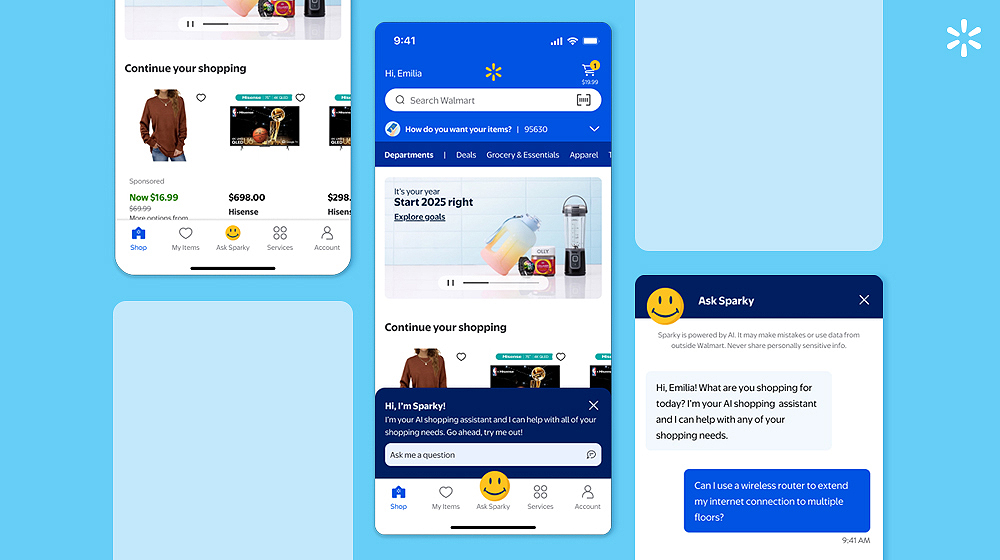
The same standard now opens the door to outside agents. The Walmart AI strategy uses it for Walmart's own agents and for an Agent Gateway that lets approved outside assistants shop for customers (TechCrunch).
At your size, choose the connection standard before you choose agents, so that every new agent comes in through the same controlled doors.
Your output is the data platform and the connection standard: where your AI-ready data lives, and the one approved way for AI tools and agents to reach it.
A 90-Day Plan for Your AI Platform Decision
- Days 1 to 30: take stock and set the supplier policy. List every AI supplier your teams already use, including accounts tied to your company's web addresses, and name your primary and second supplier.
- Days 31 to 60: pilot the staff assistant with training. Set the fluency floor, roll the assistant out to a first group with training, and give builders an approved coding tool with a budget.
- Days 61 to 90: decide what to build and how AI connects. Agree on the build list and the buy list, set the connection standard, and start a monthly report on usage and cost.
90-day plan
Where each of the five outputs lands in the first 90 days
Days 1 to 30
Take stock and set the supplier policy
Days 31 to 60
Pilot the staff assistant with training
Days 61 to 90
Decide what to build and how AI connects
Numbers refer to the five choices in this guide.
The platform decision is one part of a wider AI strategy, which our enterprise AI strategy guide covers step by step.
Eight Questions to Answer Before You Sign
If you cannot answer these, you are not ready to sign a company-wide AI contract.
- Which AI suppliers do our teams already use, with or without approval?
- Could we switch our main AI supplier within a year without rebuilding?
- Where does our work already live: Microsoft, Google or elsewhere?
- What AI fluency do we expect of every employee, and does the assistant support it?
- Which one or two workflows are worth building ourselves?
- Who approves new AI tools, and how quickly?
- What will AI usage cost per employee per month, and who owns that budget?
- Which data can AI reach, and through which approved connection?
The AI Strategy Index tracks these choices for the 150 largest companies in the US and Europe, and we update this guide as the data changes.