I want to be precise here, because this research is going to get overclaimed.
The report is descriptive, and it says so repeatedly. The unit of analysis is a message, not an hour, a project, or a job. The researchers do not observe whether the output was used, how good it was, how much time it saved, or whether a specialist reviewed it afterward. The sample is not representative of the US workforce.
They are also explicit that this is not a story about occupations disappearing. AI may make a task easier for an outsider to attempt while specialists remain critical for expert-level judgment and review. Their words are that the division of work is shifting, not that particular jobs are being eliminated.
That distinction is the same one we draw in people-centric AI transformation. There is no fixed ceiling on how much can be automated, but there is a hard line on accountability.
And the report lands on that line itself. Its conclusion notes that if this becomes permanent, workers will need training to evaluate AI-assisted work outside their established expertise, and organizations will need clear processes for review and accountability.
A marketer generating a financial model is a capability gain. A marketer generating a financial model that nobody qualified ever checks is a liability with a nice chart on it.
Your Org Chart Is Drifting From Reality
Buried near the end is a line that deserves far more attention than it will get.
The researchers point out that most studies of AI and work begin with a fixed list of tasks and ask which ones a model can perform. Their evidence suggests the list itself is changing. And if AI changes which workers perform which tasks, then measures built only on existing job descriptions will gradually drift away from how work is actually organized.
Your org chart is becoming a less accurate description of your company every quarter.
This is why we keep insisting that you start with tasks, not tools, and why Workflow Literacy is the skill underneath all the others. Work has to be broken down to the atomic task level before AI can be applied to it well. OpenAI arrived at the same unit of analysis from the data side.
It also explains the capability overhang we keep running into. The capability is already available to almost everyone. The breadth of use is what separates the leaders from the dabblers, and that is a question of AI fluency, not access.
The Bottom Line
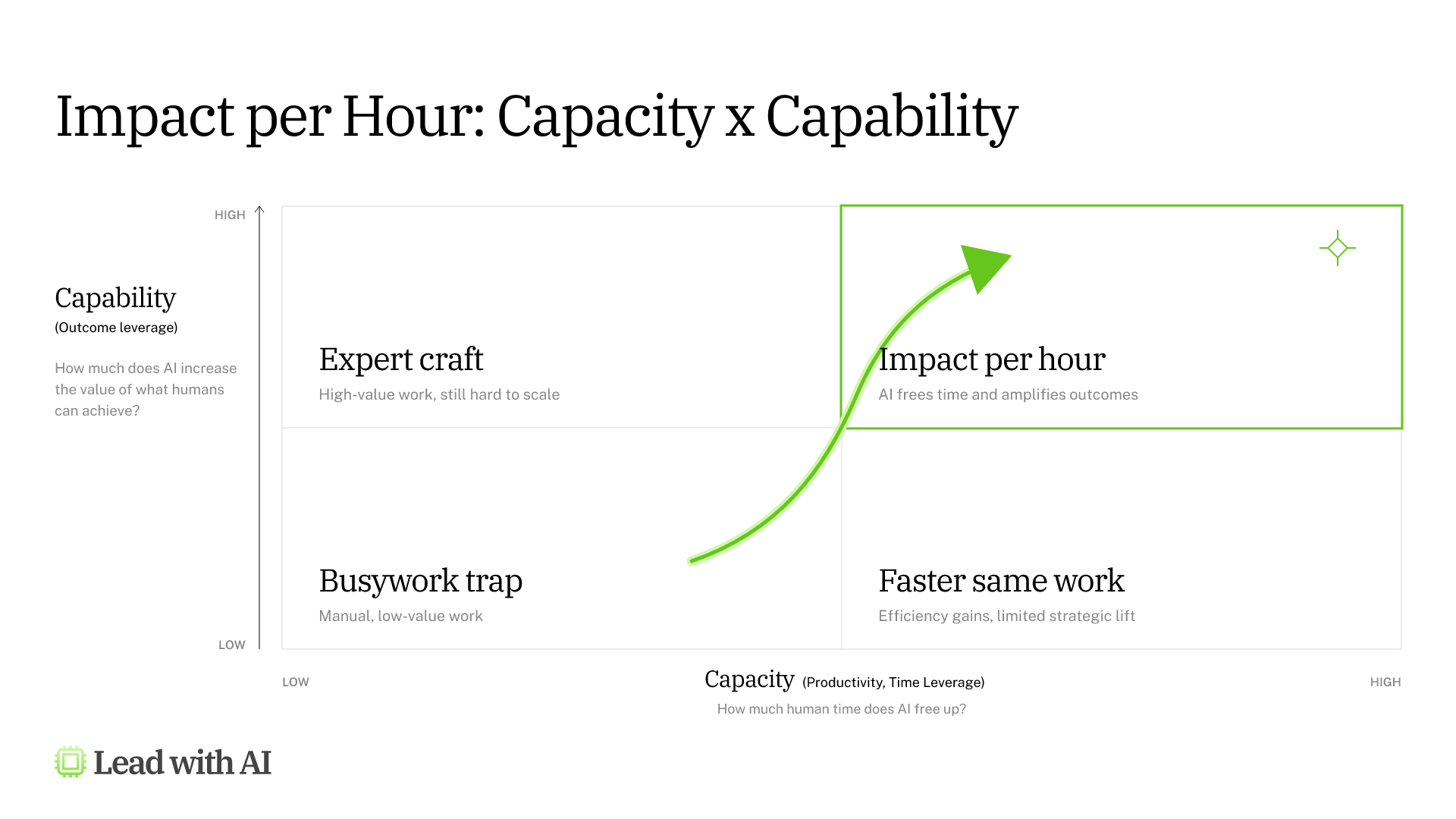
- Capacity is the easy half of impact per hour, and capability is where the leverage is. Time saved on your existing tasks has a ceiling. Doing work you previously could not do at all does not.
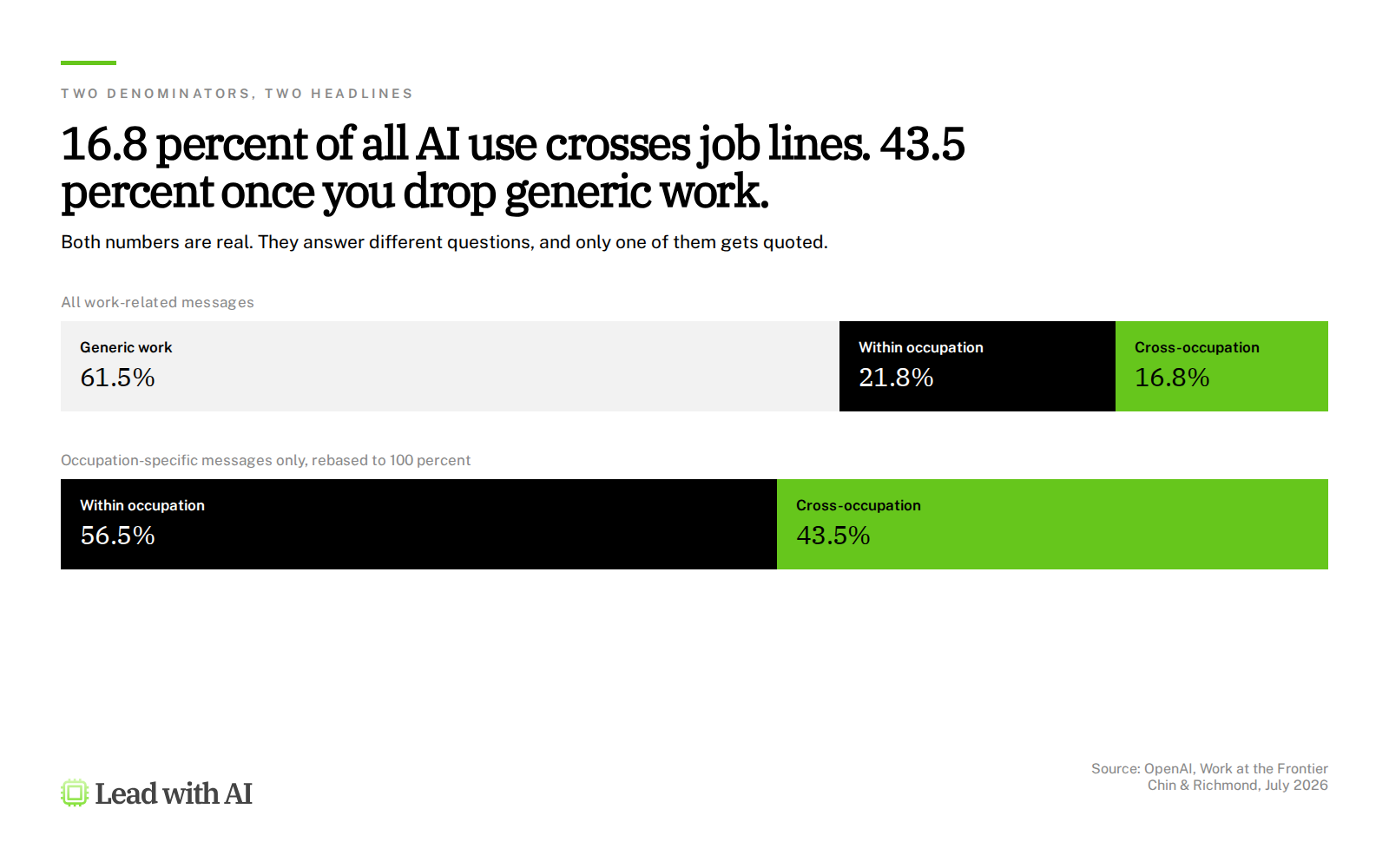
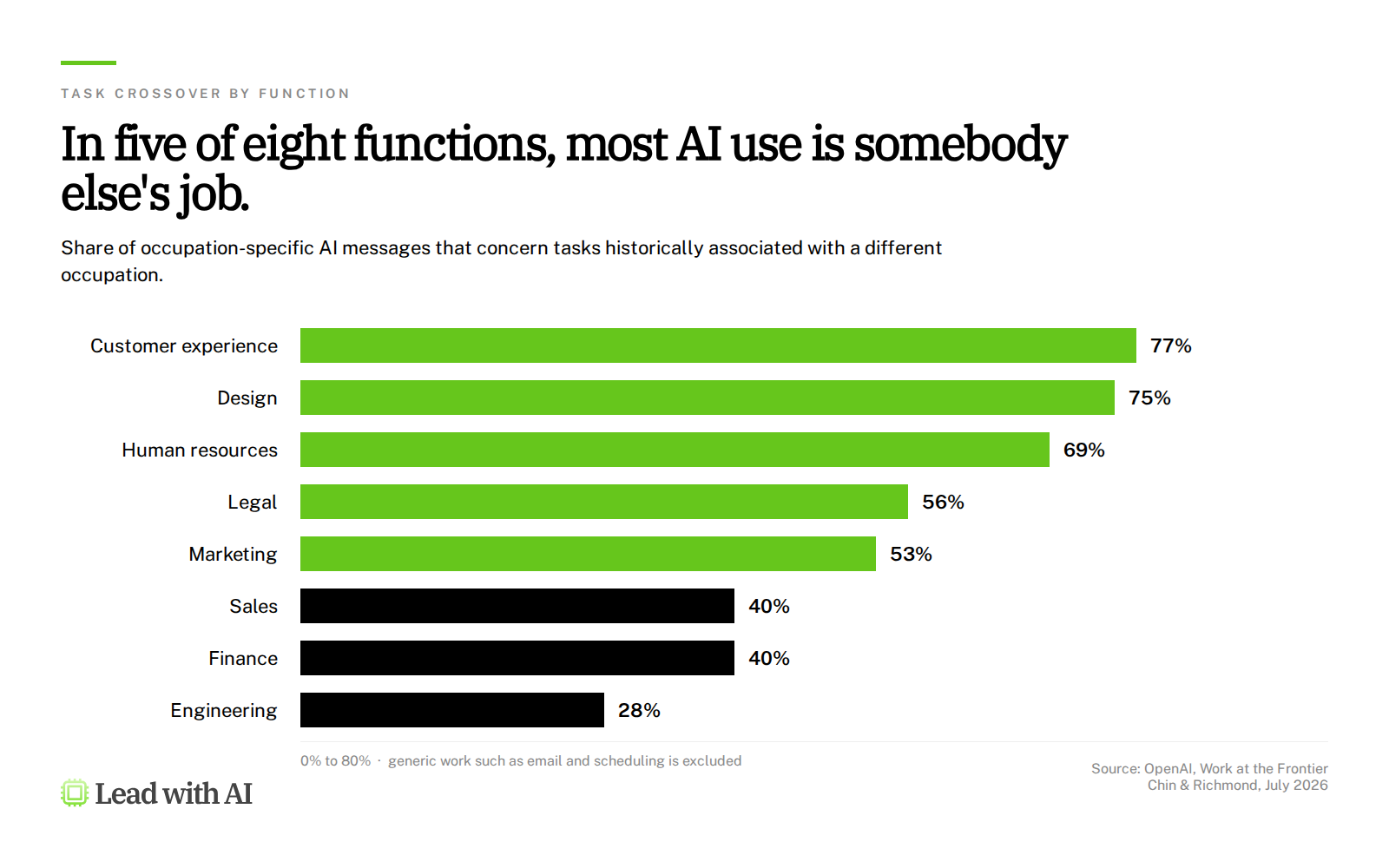
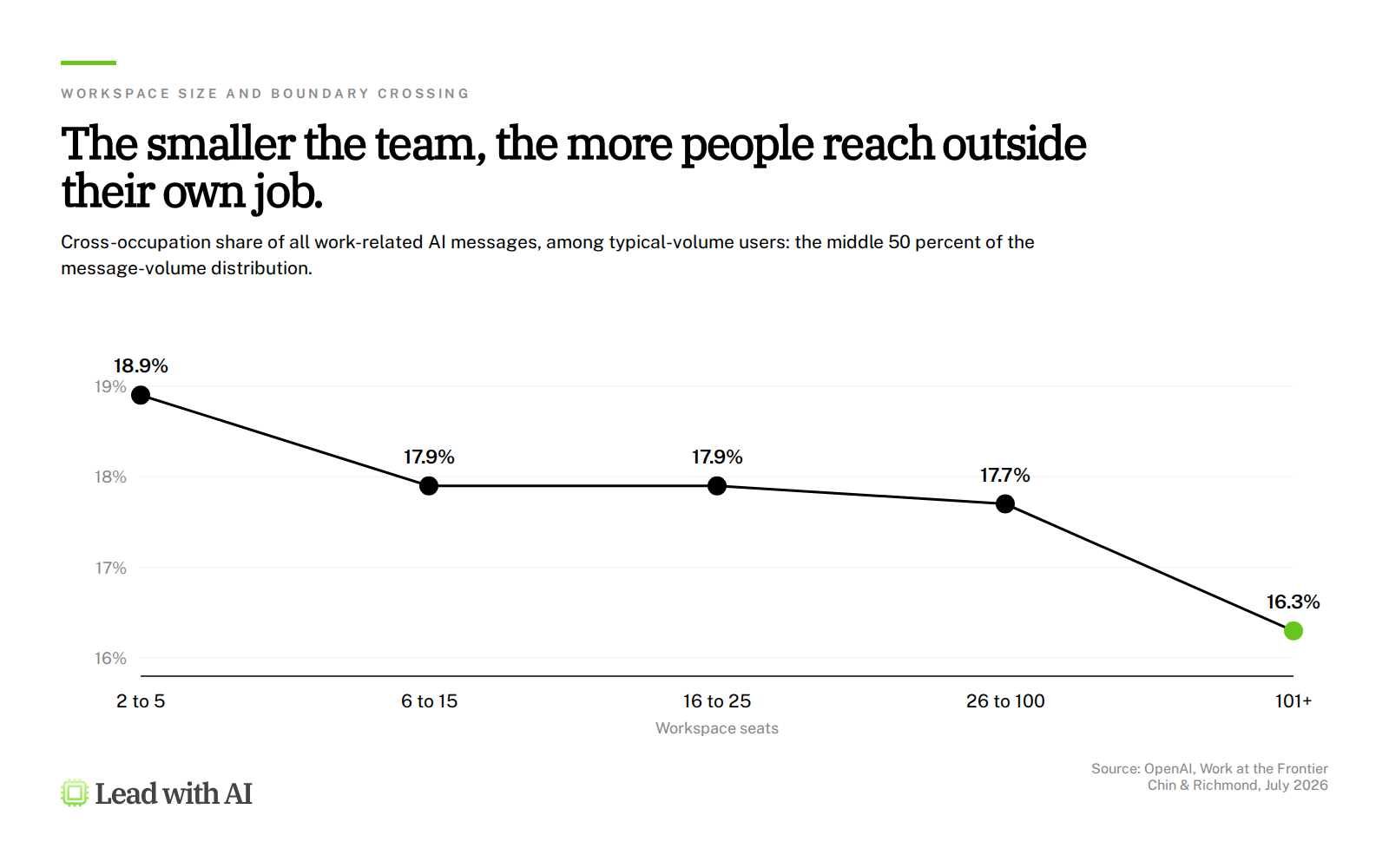
- 43.5 percent of occupation-specific AI use now involves another occupation's work, according to OpenAI's July 2026 analysis of over 800,000 messages. Use 16.8 percent when you want the conservative figure across all work-related use.
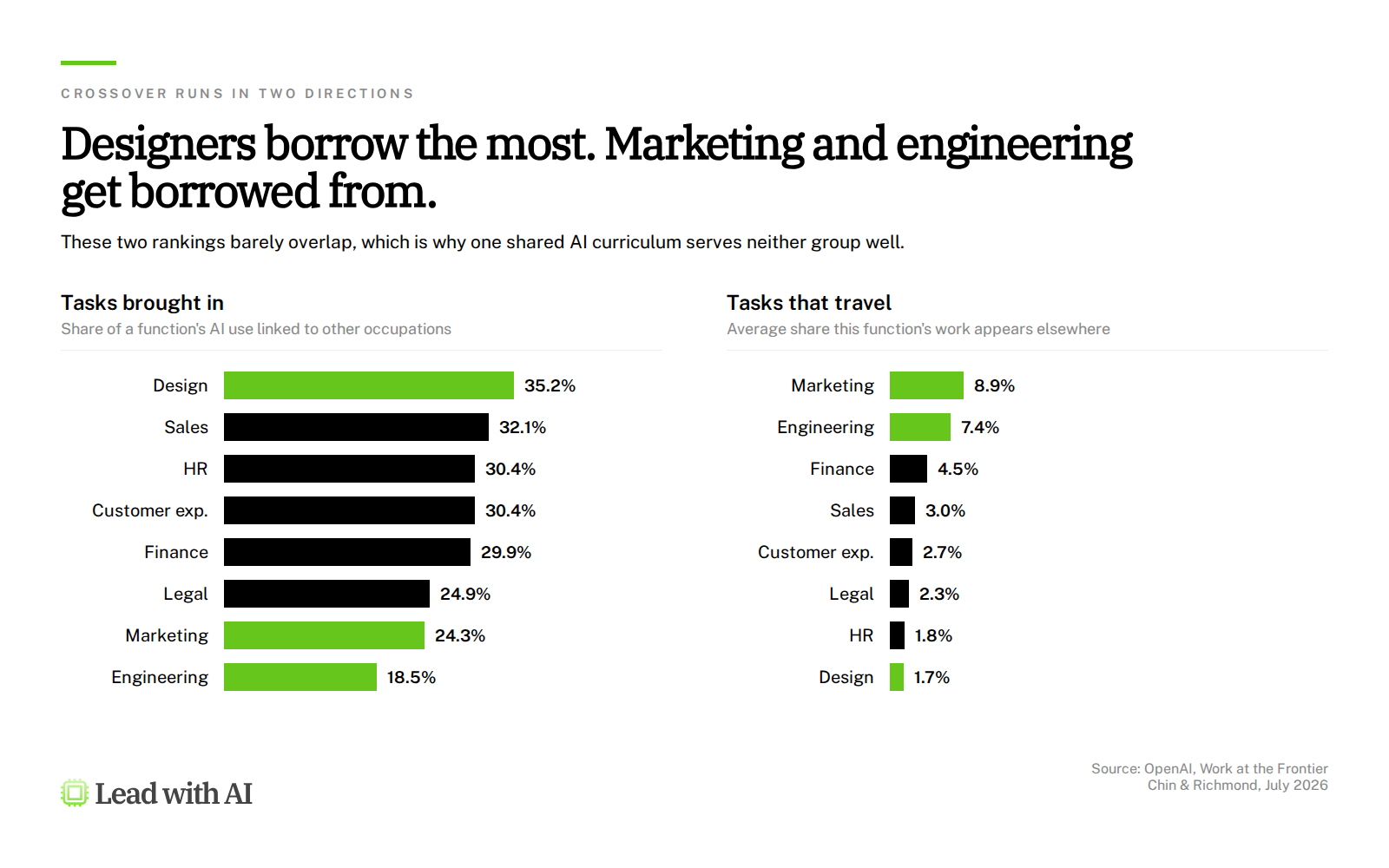
- Marketing and engineering tasks travel furthest. If you are choosing where to build shared capability across your organization, start with the ability to make things and the ability to troubleshoot things.
- Train by direction, not by average. Some functions borrow constantly and some get borrowed from. Use the GED-RT framework to decide which of those borrowed workflows are worth building for first.
- Capability without review is a liability. Decide now who is accountable for judging AI-assisted work that falls outside the person's own expertise.
The most important question this research raises is not whether your people are using AI. It is whether you have decided what the expanded version of each role is supposed to look like, or whether you are going to let it happen by accident and find out from a dashboard.
This connects to something I wrote about recently on measuring useful work rather than adoption. Counting who has a license tells you nothing. Counting how far outside their old job description someone can now operate tells you a great deal.
We do not fix a broken world of work by doing yesterday's tasks faster. We fix it by deliberately raising what a person is able to do, and then deciding what that new capacity is for. That is the work we do with leaders in AI Leader Advanced.