
Why Work Is Broken, and What We're Doing About It

Work is broken, and it does not have to be.
Gallup's 2026 State of the Global Workplace put global employee engagement at 20%, the lowest in five years and the second straight year of decline. Four out of five workers are not engaged. Not thriving, not doing their best work and feeling good about it. Just present.
AI is a turning point, and there is nothing inevitable about which way it turns.
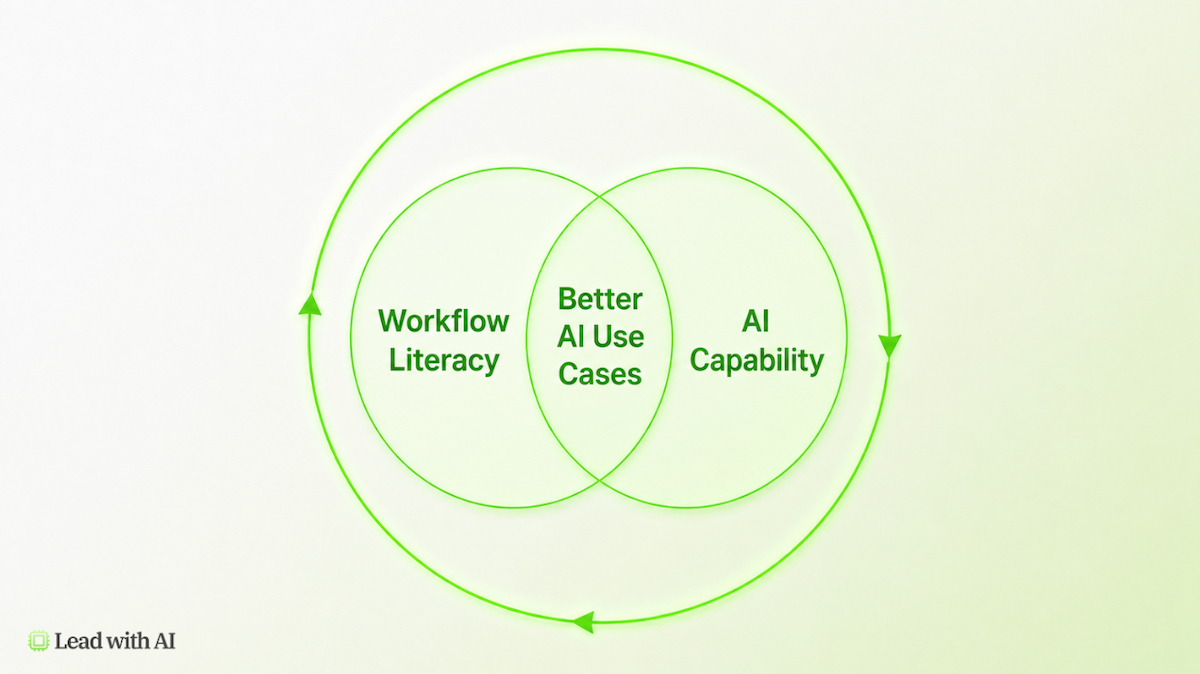
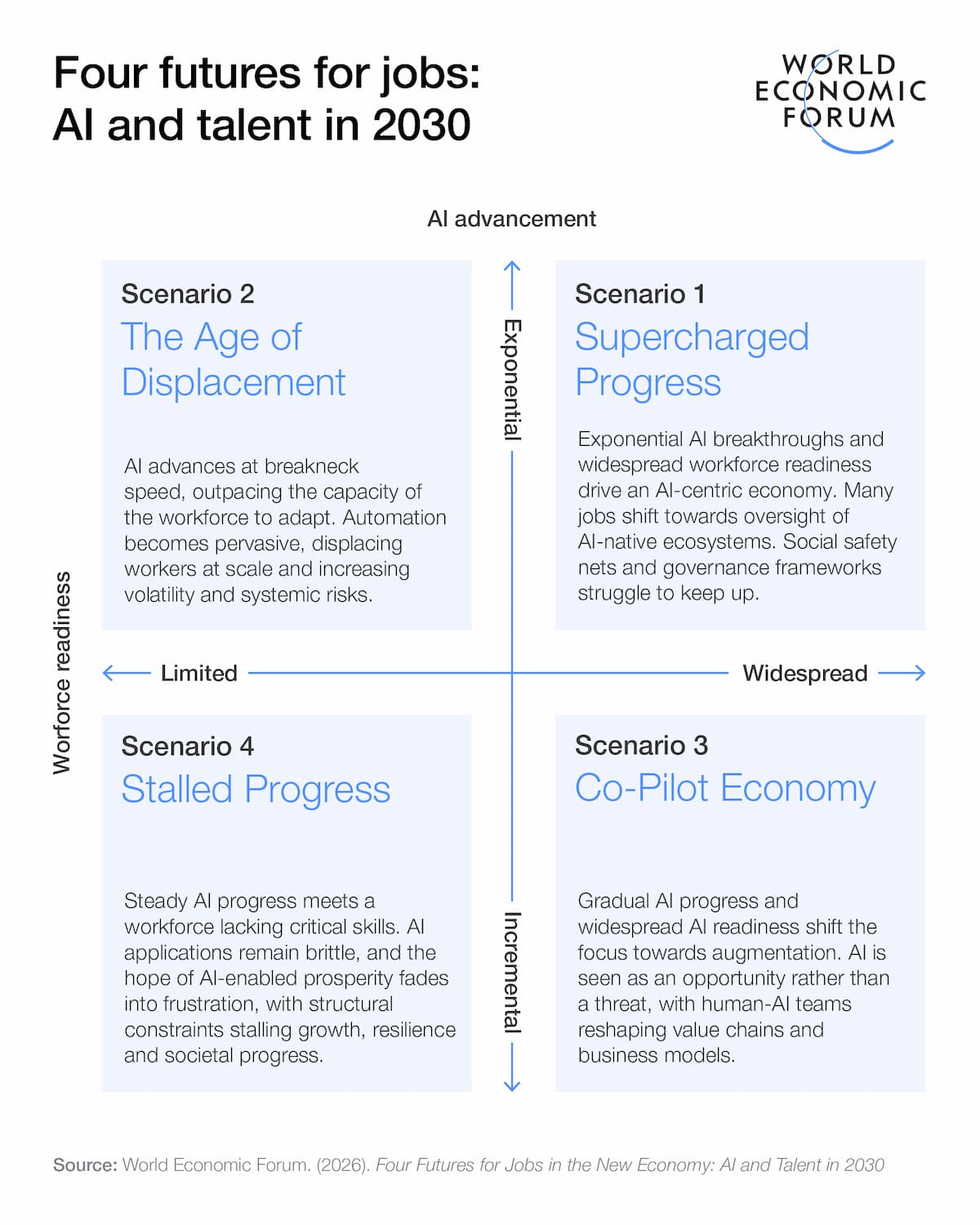
The World Economic Forum lays out four plausible futures for how AI reshapes work by 2030, shaped by two forces: how fast AI capability advances, and how ready the workforce is to meet it.
These are not futures that happen to us.
They are futures we choose, every day, through how AI actually gets deployed inside organizations.
Deployed without intent, AI displaces people faster than they can adapt. Adopted without changing how work actually happens, it stalls and frustrates everyone. And where readiness is uneven, a small group pulls ahead while everyone else falls behind.
As Lead with AI, we build for the Co-Pilot Economy, because it is the only one of these four futures that preserves productivity, dignity, and resilience at the same time.
Our Role: Impact Per Hour
Our answer to a broken world of work is to increase human impact per hour, deliberately, practically, and at scale.
Impact per hour measures the value someone creates in an hour of work, not the hours they log, and it grows along two distinct dimensions.
The first is capacity: freeing people from the roughly 30 to 40 percent of their time typically lost to low-value, repetitive tasks. This does not just mean doing the same work faster. Often it means redesigning the workflow itself so the low-value part disappears entirely.
But freed capacity is not the same as captured capacity. Time you reclaim and never direct behaves like budget nobody allocates, which is to say it leaks away in small pieces and produces no return. This is why we ask every leader to set a North Star for the time AI gives back before that time arrives, deciding in advance what the reclaimed day is actually for.
The second is capability: AI enabling people to do things they simply could not do before. Someone who is not a strong writer produces strong writing. Someone who never learned design creates good design. Someone who struggles to craft presentations now builds excellent ones. Capability is an expansion of what a person is able to do at all, not of how much time they have.
OpenAI surveyed 9,000 workers across almost 100 enterprises and found that 75 percent could complete tasks they previously could not perform at all. The list runs well past writing and design into code review, spreadsheet automation, and building custom agents.
Several studies find AI has an equalizing effect, helping lower-performing workers disproportionately. OpenAI's own data is consistent with that. Capability expansion is where the people-centric case gets strongest, because this is AI making individual people more able, not making them redundant.
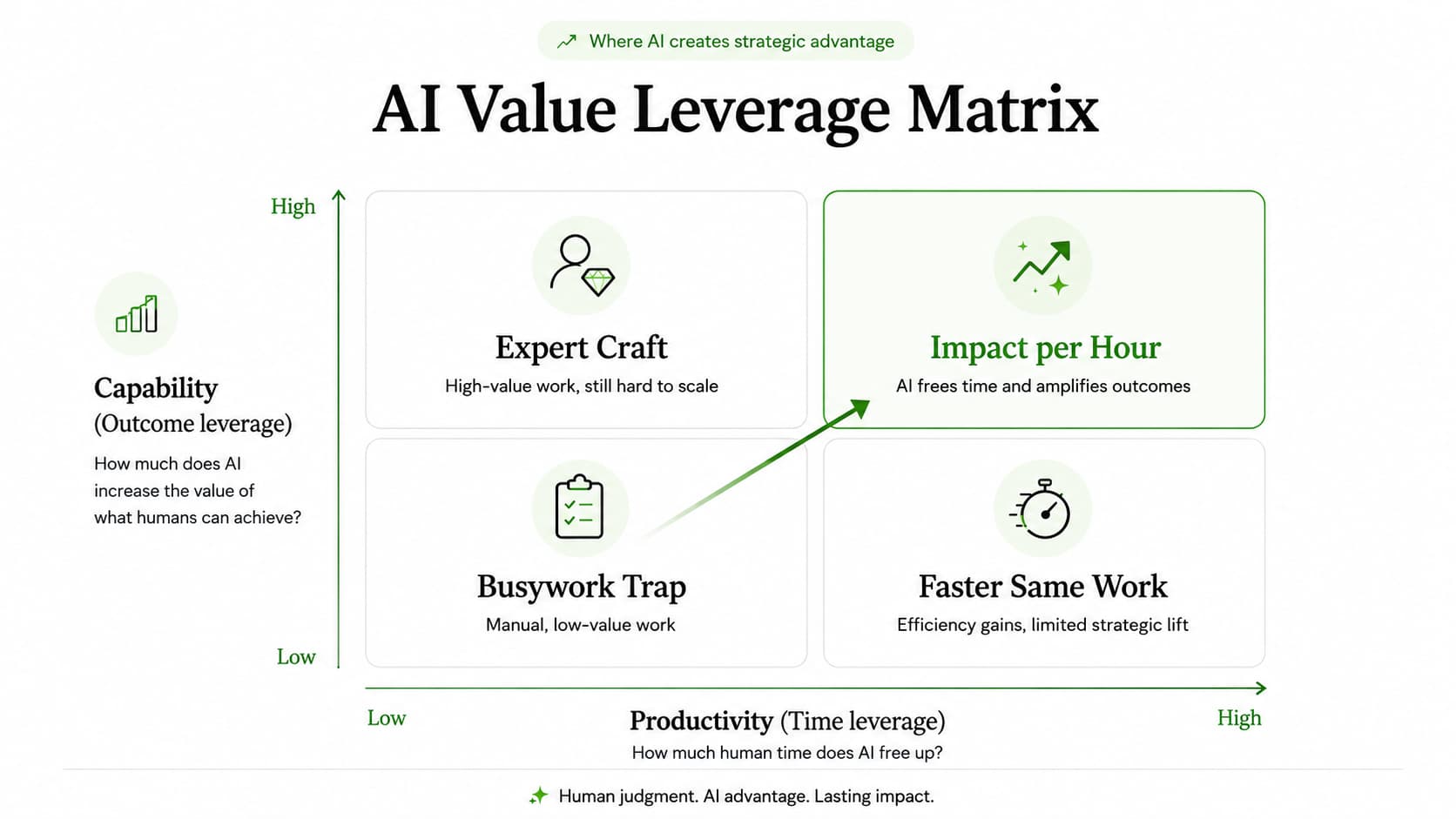
Increase capacity and capability together, and a person's overall impact grows faster than either change would deliver on its own.
We do not achieve this by teaching people AI tools. We help leaders continuously redesign work around judgment, better systems, and AI-native execution, in alignment with their own personal and professional goals, beliefs, and values.
Transformation succeeds when it starts with real work, real workflows, and real leadership behavior. It fails when it starts anywhere else.
There are three ways this goes wrong, ranked by how much damage each one does. People-centric AI transformation is our answer to all three.